

Modern Military Training Solutions: From Virtual Reality to Live Simulation
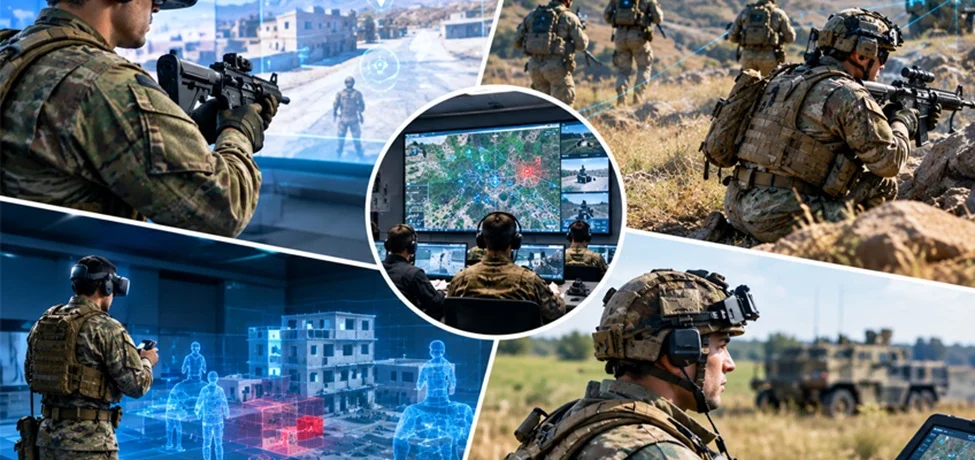
Quick answer: Modern military training solutions combine virtual reality, constructive computer models and live simulation to prepare soldiers for realistic combat conditions. They cut cost and risk, let units rehearse the same mission many times, and give commanders hard data on how people actually perform.
Why Military Training Looks Nothing Like It Did 20 Years Ago
Not long ago, preparing a soldier for a firefight meant a firing range, a few hundred rounds and a lot of hope. Today, that first firefight often happens inside a headset, where a wrong call costs nothing and the replay shows exactly what went wrong. Now add live exercises with laser sensors, AI-driven opponents and battlefield data, and you can see why the way armed forces train is changing fast.
That is military training today, and it is a long way from drill squares and paper maps.
Governments everywhere are rethinking defence training because the old model has real limits. Live-fire ranges are expensive. Large exercises take months to plan. Some scenarios, like a chemical incident or a missile strike, simply cannot be rehearsed safely in real life. Military training simulation fills those gaps, and it does so without putting anyone in danger.
In this guide, we will walk through the main types of simulation, where each one fits, and how to choose the right mix.
What Is Military Training Simulation?
Military training simulation is the use of computer-generated environments, devices and models to recreate operational conditions for training. Trainees practise skills, decisions and teamwork in a controlled setting that behaves like the real world.
- Most experts group military simulation into three categories, often called the LVC model:
- Live: real people and real equipment on real terrain, with simulated effects (think laser tag, but far more advanced).
- Virtual: real people using simulators, such as flight trainers, driving rigs or VR headsets.
- Constructive: simulated people and simulated equipment, usually run by software to test command decisions at scale.
None of these replaces the others. The strongest military training solutions blend all three.
How Does Virtual Reality Military Training Work?
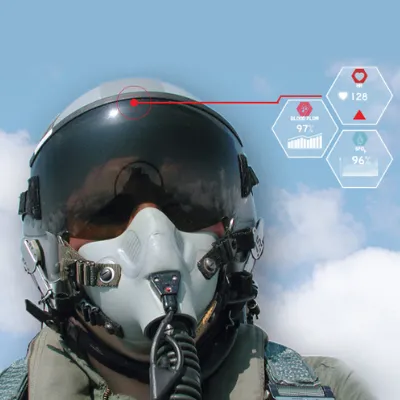
Virtual reality military training places the trainee inside a 3D environment using a headset, motion tracking and often haptic gear that lets you feel recoil or impact. The scenario reacts to what the trainee does.
The appeal is simple. A soldier can fail safely, learn from it, and try again in minutes.
Where VR shines
- Individual skills: weapon handling, vehicle drills, first aid under pressure.
- Situational awareness: spotting threats in crowded or confusing environments.
- Rare or dangerous events: ambushes, crashes, hostile crowds, hazardous materials.
- Pre-mission rehearsal: walking through a recreated location before arriving there.
Where VR falls short
VR cannot fully reproduce fatigue, weather, weight on your back or the stress of physical exertion. That is exactly why it works best as a partner to live training, not a substitute.
What Is Live Military Simulation?
- Live military simulation keeps people in the field. Soldiers wear sensors, vehicles carry transmitters, and engagement systems calculate hits, misses and casualties in real time, without a single live round.
- This matters because it trains the things a headset cannot: moving over real ground, communicating over real radios, managing real exhaustion and working as a physical team.
A typical live system includes:
1. Laser or RF-based engagement devices on weapons
2. Wearable sensors that register hits and injury effects
3. Instrumented vehicles and buildings
4. A central control room that tracks everyone
5. After-action review tools that replay the exercise from multiple angles
That last item is the quiet hero. Seeing exactly where a patrol went wrong teaches more than any lecture.
VR vs Live Simulation: Which Is Better?
Honest answer: neither, on its own. They solve different problems.
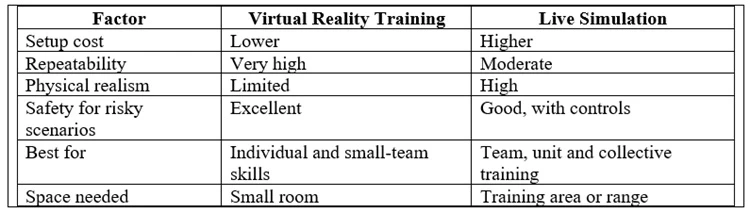
A sensible path is to build skills in VR, then test them in live exercises. Trainees arrive at the field already knowing the basics, so expensive range time is spent on harder problems.
Key Benefits of Modern Military Simulation Technology
Military simulation technology has moved from "nice to have" to core infrastructure for good reasons.
1. Lower long-term cost. Fuel, ammunition, vehicle wear and range time add up quickly. Simulators cut repeat expenses once the initial investment is made.
2. Safer practice. Dangerous skills can be rehearsed hundreds of times with zero physical risk.
3. Consistent standards. Every trainee faces the same scenario, so instructors can compare performance fairly.
4. Measurable results. Modern systems record reaction times, accuracy, communication and decision paths. Training stops being guesswork.
5. Faster readiness. Units can rehearse a specific mission, location or threat before deployment.
6. Less environmental impact. Fewer live exercises mean less noise, fuel use and land disturbance.
Emerging Trends in Defence Training
The field is moving fast. Here is what is shaping the next few years.
- AI-driven opponents. Computer-controlled adversaries adapt to a trainee's tactics instead of following a script, so scenarios feel less predictable.
- Mixed reality. Headsets overlay virtual threats on a real environment, blending live and virtual training.
- Cloud and networked training. Units in different locations can train together in one shared scenario.
- Digital twins. Detailed virtual copies of real terrain, bases or equipment support realistic rehearsal and maintenance practice.
- Data analytics. Performance data highlights weak spots early and helps tailor training to each individual.
The common thread is realism backed by data.
How to Choose the Right Military Training Solution
Buying technology first and asking questions later is the most common mistake. Start with the training problem instead.
Ask these questions:
1. What skill or decision are we trying to improve? Individual marksmanship needs a different tool than brigade-level planning.
2. Who is being trained? Recruits, specialists and commanders have very different needs.
3. How realistic does it need to be? Higher fidelity costs more, and not every task needs it.
4. Will it connect with existing systems? Interoperability saves money later.
5. How will we measure success? Look for strong after-action review and analytics.
6. What is the total cost of ownership? Include maintenance, updates, instructor training and content creation.
7. Can it scale? Training needs grow, and good platforms grow with them.
A short pilot programme, tested with real trainees and instructors, tells you more than any brochure.
Common Mistakes to Avoid
- Treating simulation as a replacement for field experience rather than a complement
- Choosing flashy graphics over solid training design
- Ignoring instructor training, since the best system is useless if instructors cannot use it well
- Skipping the debrief, which is where most learning actually happens
- Failing to update scenarios as threats change
Frequently Asked Questions
What is military training simulation?
It is the use of virtual, live and computer-modelled environments to recreate operational conditions so personnel can practise skills and decisions safely and repeatedly.
Is virtual reality effective for military training?
Yes, especially for individual skills, situational awareness and rehearsing rare or dangerous events. It works best when combined with live training.
What is the difference between live and virtual military simulation?
Live simulation uses real people and equipment in the field with simulated effects. Virtual simulation places people in computer-generated environments using simulators or headsets.
Does simulation reduce training costs?
Over time, usually yes. It lowers spending on ammunition, fuel and equipment wear, though upfront investment and upkeep still matter.
What does LVC mean in defence training?
LVC stands for Live, Virtual and Constructive, the three types of simulation combined in modern training programmes.
Can simulation fully replace live training?
No. Physical stress, terrain and real-world teamwork still need live exercises, which is why a blended approach works best.
Final Thoughts
The best modern military training simulation solutions do not chase technology for its own sake. They start with a clear training goal, combine virtual and live methods intelligently, and use data to keep improving.
Virtual reality builds the skills. Live simulation tests them under real pressure. Constructive models stretch decision-making across entire units. Together, they give armed forces something training has always aimed for: people who are ready before the real moment arrives.
If you are planning or upgrading a defence training programme, begin with the problem you need to solve, run a pilot, and let the results guide the investment.
 Our Services
 Media Pack Download
 Newsletters
 Industrial Events