

Advanced AI-Powered Military Simulation and Training Software for Modern Armed Forces
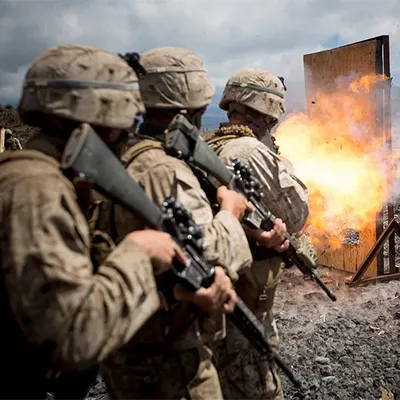
The battlefields of the modern world are changing simultaneously. Electronic warfare and multi-domain operations, real-time decision-making, autonomous systems, and militaries all over the world are challenging the way militaries train their troops. It is precisely at this point that the Defense preparedness is being changed by Advanced military simulation software of the modern armed forces. The trend toward AI-based systems of training, defense, and combat readiness indicates a new age in which technology is used to increase the tactical and strategic properties of troops, minimize the risk of training, and improve the accuracy of the missions.
The article discusses the way Military Simulation, Defense Training Systems, AI in Defense, Combat Training Software, and AI Military Training Solutions are radically redefining military training. It goes deep into the leverage countries are making using Advanced Defense Simulation Systems, Virtual Military Training Platforms, and Intelligent Combat Training Software in order to prepare for the real world.
The Strategic Urgency Driving Advanced Military Simulation
Why is it that today nations are spending a lot of money on Military Simulation? It is more than the complexity of war in these times. Real-world training is costly, dangerous, and is seldom typical of the uncertainty that is experienced in real battle situations. The traditional approaches also are not suitable to incorporate cyber warfare, UAV swarms, AI-controlled weaponry, and hybrid conflicts - factors that define contemporary warfare.
This divide is driving the world leaders towards the adoption of Advanced Defense Simulation Systems, which are a blend of virtual worlds, physics-based modelling, AI-based decision engines, and mission-specific training environments. As AI in Defense can speed up all the processes of military action, simulation software serves as the transition between the theory of training and the practical implementation on the battlefield.
It is finding that AI Military Training Solutions enable soldiers to fail, learn, and improve with no consequences in the real world. This is a learner-based training that is establishing a new standard among the world’s defense forces.
The Rise of AI in Defense Training Environments
Introducing AI in Defense has been a revolution and not an upgrade. Traditional systems were only able to replicate simple battle habits. However, modern AI-based training programs in defense and combat preparedness are capable of learning how soldiers behave in the present moment.
This is a new generation of Combat Training Software that employs the reinforcement learning algorithm to establish dynamic enemy behavior, unpredictable battlefield conditions, and changing mission scenarios. To militaries, this implies training against opponent thinkers, reactors, and strategists like real opponents.
The outcome is groundbreaking: intensive soldiers who underwent Intelligent Combat Training Software have a dose of realistic pressure, stress, and tactical pressure, all of which are preconditions of a high-stakes mission.
How Virtual Military Training Platforms Enhance Preparedness
One of the significant changes in military pedagogy is the use of Virtual Military Training Platforms. These games recreate terrain, weather, battlefield, and communication issues at an astute level of precision. They are seamlessly integrated into weapon systems, vehicles, command centers, and wearables by the soldiers.
Virtual Military Training Platforms are the new favorite of many modern armed forces since they provide the opportunity to conduct joint forces training activities on a large scale with no logistical restrictions. Regardless of whether it is counter terrorism operations, border security operations, naval operations, or multi-domain operations, such platforms provide scenario-driven learning, and their scale is immense.
Together, along with AI Military Training Solutions, virtual environments simulate either foreseeable or unforeseeable combat scenarios. Teachers are able to add new variables immediately, which would not be possible in battlefield training.
Advanced Military Simulation Software for Modern Armed Forces: Core Capabilities
The scope of Advanced military simulation software is growing with the passing of years in the modern armed forces. These are motion-capture infantry simulators, high-fidelity tank and artillery trainers, which combine AI, VR, AR, and data analytics to create an immersive training experience.
The major competitive advantage is the systems of AI in Defense that would be combined with the real-time performance analysis. This allows the commanders to assess soldier decision-making, situational awareness, and communication and tactical execution in quantifiable terms. This kind of assessment enhances mission preparedness much more than old-fashioned training.
Advanced Defense Simulation Systems are becoming a mandatory element in the training doctrine of more and more militaries, as they acknowledge that, even though data-backed simulation is not a new phenomenon, it is more of a strategic imperative than an add-on.
Market Insights: The Growth of AI Military Training Solutions
The AI Military Training Solutions market is growing at a high pace all over the world. The following table depicts the projected market trend as observed by the analysts and the trend of the defense procurement.
| Year | Market Size (USD Billion) | Growth Driver |
| 2020 | 9.5 | Shift to Virtual Training |
| 2023 | 13.7 | AI Integration in Defense Systems |
| 2025 | 18.4 | Autonomous Warfare Simulation |
| 2030 | 32+ | Full-scale Multi-Domain AI Simulation |
These observations support the growing use of artificial intelligence-based training environments in the area of defense and combat preparedness as real-life exercises become ineffective and more expensive.
Countries with high investments in digital transformation also like simulation-based learning because it is flexible and has the benefits of a life-cycle cost. With the increase in the level of geopolitical tension, the Intelligent Combat Training Software will only keep on growing in demand.
How Intelligent Combat Training Software Recreates Real Missions
Contrary to the older simulation tools, Intelligent Combat Training Software responds to user input. As a trainee varies his tactic, an AI-created enemy adapts immediately. The environment changes when disrupted communications do not occur. In case of a serious error on the part of a soldier, the simulation is changed to represent real-world outcomes.
This amount of intellectual strain is needed to train troops to the requirements of modern war. Armies can train their troops using the Combat Training Software, which operates on neural networks and predictive behavior modelling to train the troops on complex tasks such as hostage rescue, cyber defense, UAV interception, urban warfare, and large-scale coordinated operations.
The more detailed the role-playing, the performance in real life becomes more violent.
Defense Training Systems: From Classroom to Battlefield
The change from the theoretical education to the practical combat-like experiences has been shocking. There is integration of sensors, AR helmets, haptic feedback vests, and advanced simulators in Defense Training Systems. Such systems enable soldiers to train using imitated weapons, simulate night vision, and even train coordinated operations with critical feedback loops.
These Defense Training Systems can level the difficulty, which is set through AI Military Training Solutions, to the learning curve of individual trainees. This customization will boost the retention rate and early detection of the weakness.
The best thing about Military Simulation is that it can condense months of field training into hours of simulated training. This is even more advanced in modern Advanced Defense Simulation Systems, which also permits combined training between infantry, air forces, navy, cyber commands, and intelligence units.
The Role of AI-Driven Training Systems for Defense and Combat Readiness
Predictive analytics is one of the most disruptive elements of AI-based training systems related to defense and combat preparation. These systems monitor all the movements, decisions, weapon use, patterns of communication, and reactions to stress.
This information is subsequently utilized to come up with a holistic performance review of each soldier. This enables the commanders to monitor the level of readiness and predict the results of the missions with a great degree of precision. Combined with the Advanced military simulation software used by the modern armed forces, predictive insights can speed up the learning processes several times.
After-action reviews can also be automated with the use of AI. Rather than hand-scanning logs, AI systems point out the tactical mistakes, unattended targets, and communication failures.
This data analytics, simulation, and intelligence hybrid is the future of military training.
How Militaries Are Integrating Virtual and Real Training
Modern military services are combining Virtual Military Training Platforms with work on real equipment. As an illustration, the Combat Training Software can be used to first subject soldiers to virtual mission rehearsal, provide them with tactics, environmental dynamics, and perfect their approach.
As soon as they have attained this virtual mastery, they can promote to live training with much better confidence and effectiveness. This combination of the Military Simulation helps in saving a lot of training time and money.
Those countries that have used such hybrid models have recorded a reduced number of operational errors, making decisions during crises, as well as enhanced fighting capabilities.
Advanced Defense Simulation Systems as a Strategic Asset
In a world where asymmetric warfare, drone warfare, and cyber-enabled attacks are increasing, the militaries cannot afford to stick to past training doctrines. The strategic flexibility of Advanced Defense Simulation Systems provides the possibility to simulate futuristic warfare scenarios.
The operations of space command to the threat of electronic warfare, AI Military Training Solutions challenge the armed forces to be able to think outside the box of combat. This readiness becomes a decisive factor in missions at the ground level.
Countries that invest in Advanced military software simulation in support of the modern armed forces are constructing training facilities that can adapt to the technology, threat capability, as well as geopolitical evolution.
The Future of Military Training: AI, Autonomy, and Immersion
In the coming decade, further integration of AI in Defense, robotics, digital twins, mixed-reality battlefields, and autonomous systems will happen. Combining real-time data, simulating sensors, and smart scenario creation will transform military capabilities.
Futuristic Defense Training Systems will not only be able to simulate environments, but will also simulate whole wars. Soldiers will be trained in AI-created battles that will develop unpredictably, and they will learn to adapt on the spot.
This is a future where AI-based training systems to combat readiness and defense are already in operation, so that soldiers are ready for the unknown, the unforeseen, and the unbelievable.
Conclusion
Modern warfare requires accuracy, flexibility, and high preparedness. The readiness to that end starts with Military Simulation, Advanced Defense Simulation Systems, and AI Military Training Solutions, which provide realistic, intelligent, and dynamic training environments.
With the introduction of Combat Training Software, Virtual Military Training Platforms, Intelligent Combat Training Software, and AI-based systems to train and prepare defense and combat readiness, armed forces become unmatched in terms of readiness. With the changing world threats, the armed forces that invest in the early development of the Advanced military simulation software will be at the forefront, swift, and possess a strategic edge.
 Our Services
 Media Pack Download
 Newsletters
 Industrial Events