

Best AI Simulation Tools Enhancing Military Training Capabilities
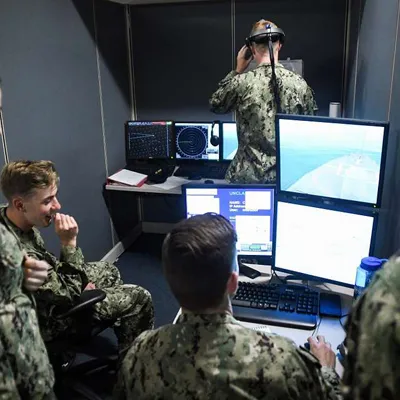
The Age of AI Simulation: Revolutionizing Military Readiness
The requirements of the modern military preparedness have grown increasingly multidimensional in the contemporary global security setting that changes quickly. Live combat simulations and field exercises used to be very useful but are no longer adequate. As the simulation of AI takes popularity globally, militaries are quickly jumping into a new era of training. Convenience and cost reduction are not the only concepts behind this shift; it is also focused on increasing precision and flexibility and readiness at scale.
The requirements of the modern military preparedness have grown increasingly multidimensional in the contemporary global security setting that changes quickly. Live combat simulations and field exercises used to be very useful but are no longer adequate. As the simulation of AI takes popularity globally, militaries are quickly jumping into a new era of training. Convenience and cost reduction are not the only concepts behind this shift; it is also focused on increasing precision and flexibility and readiness at scale.
AI Simulation and the Modern Battlefield
The differentiating factor is that AI simulation can bring dynamic intelligent behavior to training environments. Artificial Intelligence-based simulation training systems can learn and improve rather than obey preset rules in conventional software programs. They are able to mimic the actions of the enemy, drive situational changes, even to assess the performance of a trainee to customize a later session to his or her performance.
This ability is particularly important due to modern battle to be more digital and multi-dimensional. The level of change the battlefield brings makes soldiers require a training environment to change at the same pace. Urban warfare, drone swarms, electronic warfare, and cyber threats require that soldiers be trained in the environment that changes as fast as the combat setting does. AI in training gives exactly what is needed - the realism that is adjacent to flexibility.
The Core Technologies behind Military AI Tools
The fact that several technologies, such as machine learning, natural language processing, predictive analytics, and 3D rendering, will work in concert is another feature of these systems' architecture. It is such forces that fuel the current cutting-edge military training simulation technology.
An interesting case is applying the AI-based adaptive training systems. These technologies scale up the simulation and measure trainees' live outputs. In case a soldier is progressing well in a given field but performing poorly in another, the system re-aligns.
The customized process will provide each trainee with precisely what he or she requires to achieve a higher level, which minimizes skill deficit and maximizes the state of operational preparedness.
In the meantime, defense virtual training systems are using AR and VR technology to produce a high-fidelity environment that immerses the trainee. These worlds come to life through the means of AI simulation though. Be it simulating counter-insurgency in dense terrain or orchestrating aerial and ground forces in a synchronized event they have a depth and scale previously unavailable.
Real-World Applications and Success Stories
Countries that are on the forefront of incorporating AI in the training of military personnel already feel the positive results even in the quantitative sense. AI-powered simulation training has been an investment area for the U.S. Department of Defense: for example, the SIMNET simulation tool and the STE (Synthetic Training Environment) platform have set new heights. The platforms permit thousands of soldiers to practice alongside one another in a continuous, simulated combat zone which is similar to the intricacies in the real world.
The Israeli defense forces have also incorporated AI-based military simulations into training on urban warfare where the AI agents act as human opponents. These algorithms evaluate cover, organize flanks, and react against varying battle stimuli - which pushes soldiers to learn and think tactically.
With its own defensive simulators that simulate armored vehicles and thematic air fights, India is now breaking into the AI space. This objective is to lessen the dependence on foreign solutions and develop an environmentally friendly ecosystem of military artificial intelligence tools that can be specialized to the threats and landscape unique to the country.
Comparative Table: Key Players in AI Military Simulation
| Tool/Platform | Key Feature | AI Functionality | Adoption |
| Bohemia Interactive VBS4 | Whole-world virtual training platform | Real-time AI enemy behavior | NATO, U.S., and allies |
| CAE GESI | Command and control simulation | AI decision-making, scenario creation | European and Asian militaries |
| Thales Training Suite | Full-spectrum military training suite | AI-based skill assessment and feedback loop | France, UAE |
| Cubic LVC | Live-virtual-constructive training integration | AI-driven adaptive training systems | U.S. Army |
| VirTra V-300 | Immersive marksmanship and threat response system | AI simulation for behavioral responses | Law enforcement, military |
Market Insights: Where Is AI Simulation in the Military Headed?
It is believed that the military training simulation technology market will grow tremendously within a period of ten years. Market intelligence sites have revealed that this industry is likely to be exceedingly large beyond the $20 billion mark by the year 2030, with the major segment of growth being traced to AI-powered simulation training.
Especially the Asia-Pacific region is turning into a dominating base. Next-generation virtual training programs are being augmented by defense modernization initiatives and geopolitical issues.
In the meantime, NATO member states are spending money on networked artificial intelligence (AI)-based military simulators to enhance interoperability in joint operations.
The flip is, however, the hardware-to-software-defined shift in training and warfare. As the defense sector examines the cost of its budgetary expenditure, AI in defense training can serve as a manageable, scalable, and sustainable alternative to bulky field exercises. And the AI layer makes these systems constantly evolve, and they cannot be compared to traditional methods.
Ethical Dilemmas and Challenges: Is AI Simulation Foolproof?
However, as fast as it is being adopted, concerns are legitimate. What gives you confidence that the AI simulation platforms you have chosen are legitimate? When bias or a tilt of the tactical decision-making process is introduced by an AI-driven an adaptive training system, what then happens? And does excessive use of simulation water down instincts of the soldier?
These are not just some hypothetical questions. They are indeed real issues of military planners and creators of military automation instruments. As a force multiplier, but not as a vulnerability, transparency, oversight, and on-going testing is essential to ensure that AI-powered simulation training is used effectively.
Besides, concerns over information security, state security, and system hacking are taking centre stage. The simulations by their very nature create a lot of behavioral data. It is necessary to make sure that this information does not go wrong or leak especially when simulations are carried out across nations that are allied and using shared platforms.
The Next Frontier: Integration with Real-Time Combat Systems
A tantalizing (and lengthy) trend is the overtime convergence of AI simulation tools and real-time combat. Consider the following situation: Under pressure of a situation on a battlefield, a commander can in several seconds simulate a maneuver of a fictitious enemy and see what may be regarded as the most likely result before he gives an order. This is no longer sci-Fi.
Combining AI-driven simulation training with real-time C4ISR (Command, Control, Communications, Computers, Intelligence, Surveillance and Reconnaissance) networks, decision-makers can be provided with predictive analysis of the mission results, equipment casualties, or troop exhaustion levels- prior to a decision.
These applications make differentiating training and support in actual combat difficult.
Although military training is the main applied context, all these platforms are now used to facilitate operational set-ups during active operations.
Why Curiosity around AI in Defense Is Just Beginning
Although the usage is increasing, the possibilities of using AI simulation in the realm of the military have not been exhausted yet. Would AI weapons in the future learn to distinguish emotion and stress in the military members? Would AI-guided adaptive training be able to do psychological warfare or cultural interactions in peace-keeping missions?
And what does it mean when these tools are given autonomy - when they do not simply learn data but learn to learn, that is, learn among themselves? Will AI powered military simulators make co-decision makers in command centers? These are the questions that are making defense think tanks to stir up serious investigations and ethical discussions.
The combination of AI and military preparedness has been a Pandora box of opportunities yet to be combined and which may prove to be dangerous. The trick is to use these technologies to prevent a war as well as to prepare to wage war, by superior strategy, deterrence and diplomacy.
Conclusion: The Simulated Soldier of Tomorrow
It is the final successor of training muscle memory in the end or marksmanship in the end. It is not so much about developing keen judgment in a stressful situation, quick flexibility, and strategic thinking. AI simulation software is being used to do exactly that. Training simulation technology in the military is changing how it is to be combat ready, and this is due to the fact that it is making failure into a learning experience and success into a measurable session.
In terms of the immersive virtual training systems in defense to highly intelligent AI-based responsive training systems, the world is changing neck-breaking fast. And in this age where the soldier who learns, and trains, smarter wins, the one who uses AI is alive to learn.
The future of combat readiness will no longer created on the battlefield- but within the smart algorithms of AI-powered simulation combat training systems. It is no longer a question of whether AI will be relevant in the field of defense but of how prepared we are to allow it to take the lead.
 Our Services
 Media Pack Download
 Newsletters
 Industrial Events