

Miniaturized Drones for Covert Operations: Advancing Stealth and Precision in Modern Warfare
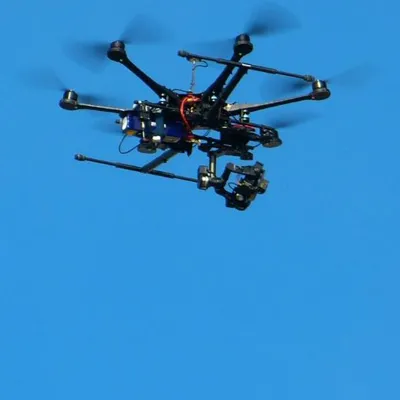
How large a warfighting platform can be turned into a ghost? The development of Miniaturized Drones in Special Forces operations makes those that challenges the heart of the contemporary defensive thought. With sensors becoming smaller, processors becoming smarter, and materials becoming stealthier, the border between an inconspicuous insect-like object and a tactical asset becomes unclear - and that both brings in strategic potentials and ethical dilemmas in equal measures. The emerging industry and scholarly literature indicate that Miniaturized Drones for Special Forces have ceased to be a science-fiction prototype, but rather, research and limited-deployment systems that are capable of delivering situational awareness and deniability as never before.
Why the miniaturization trend matters: from visibility to survivability
What does the process of miniaturization purchase within the field? The benefit is not just a reduced footprint; it is actually a qualitative transformation in the surveillance and reconnaissance practices. Small UAV Systems are able to infiltrate urban clutter, fly behind the eaves, or squeeze down ventilation shafts when their bigger counterparts cannot. These platforms are being designed with advanced surveillance features of miniature UAVs, real-time feeds, low-latency sensing, and mission-specific payloads that focus on information rather than firepower. This change is reflected in the market response: AI-enabled airborne sensing is becoming increasingly invested in, with the AI-enabled mini drone’s segment recording double-digit growth projections as defence and civilian use-cases intersect.
From Special Forces, need to produce roadmaps: what the industry is doing
What systems are coming to the point of maturity, and which are lab curiosities? There are two parallel tracks that are evidenced by defence technology expos and military trials. On one of these is the custom-designed Tactical Reconnaissance Drones, which is meant to supplement small-unit tactics - durable, safe, and compatible with current command systems. Also on the other track are the experimental insect-sized prototypes that are aimed at extreme stealth and persistence. The trend is usually started by a practical, low-priced Miniaturized Drones for Special Forces prototype being operated by military laboratories or regional industry, and upgraded into licensed small-UAV systems when dependability and repeatability are proven. According to recent field tests and industry demonstrations, the practicability of transitioning towards deployable Covert drone surveillance systems with an optimal balance between survivability and cost is emphasized.
Stealth by design: how “low visibility” is achieved without telling soldiers how to build one
In discussing Stealth Drone Technology, we need to isolate the design concepts of the technology and the manual construction of the technology. Miniature platforms can be stealthy by using a combination of materials, acoustic management, and signature management - though the important aspect of the strategist is the effect, and not the recipe. The low observability is converted into the operational capacity to execute deniable observation and shortening of detection windows in the contested urban corridors. This provides the tactical advantage to units armed with Tactical Reconnaissance Drones; longer time-on-target to sense, less exposure to operators, and an option to explore enemy territory without dedicating greater resources. The studies of radar cross-section modeling and probability of detection are still used to guide the evaluation of Stealth Drone Technology at procurement and doctrine-writing levels.
Brains in a tiny body: the role of onboard AI
Intelligence is the true multiplier in the case of the enabler that should be operationalized is hardware miniaturization. The mini drones with AI capabilities alter the mission equation, taking sensing, classification, and certain decision-making all to the edges. Covert drone surveillance systems are less prone to jamming and bandwidth limitations, as onboard models can do person detection, threat association, and adaptive waypointing with very little comms. Both the scholarly literature and the market research project that AI-enabled autonomy will enable miniature UAVs to achieve Advanced surveillance functionality over swarms and cooperative formations of miniature UAVs in the future, but also both fields raise governance-related, robustness-related, and adversarial-risk concerns that militaries will have to address before giving full autonomy, unsupervised functions to miniature UAVs.
Urban warfare’s invisible assistant: where Drone technology for urban warfare fits in doctrine
The most challenging, and at the same time, the most luring, arenas of miniature ISR (intelligence, surveillance, reconnaissance) are the urban ones. It is not a matter of whether or not there will be the use of Drone technology in urban warfare, but how doctrine will evolve.
At the point where there is a fragment of line-of-sight, Tactical Reconnaissance Drones can give situational awareness on a very fine granular scale in alleyways, in multi-storey buildings and underground routes. This changes the speed at which decisions are made: Miniature UAV Systems allow commanders to explore an environment and reduce the chances of collateral damage because combatants and civilians can be detected in near real-time.
However, this capability poses both legal and ethical issues: what is the way to make sure that there is reasonable use, what about privacy, and what about accountability in case an airborne sensor becomes the virtual eye of a mission. Legal and political systems should keep up with the technology to maintain authority.
Tendency in the market, and procurement reality and cost dynamics
Who is buying and what are they buying? The procurement image is disjointed. Unlike smaller firms, established primes still deploy larger MALE (medium-altitude, long-endurance) systems, and an ecosystem of startups and targeted special-purpose companies is rapidly developing Miniaturized Drones to serve Special Forces and Miniature UAV Systems to meet niche mission sets. The market intelligence reflects a high growth of revenues in the AI-in-drones sector and a strong demand for modular and certifiable small UAVs with a quick fielding capacity. To defense planners, it is not product cost that is the point of reckoning as much as it is the lifecycle cost of training, secure comms, and countermeasure integration. The combination of inexpensive throwaway platforms and certifiable military-grade miniature drones will define the purchasing practices in the next five-10 years.
The counterpoint: defensive ecosystems and the cat-and-mouse cycle
With the increasing spread of Low-visibility surveillance tools, the defensive side speeds up as well. Anti-drone software Anti-drone systems in the form of sensors, jammers, and artificial intelligence-based detection suites are being implemented to ensure the protection of critical infrastructure and sensitive locations. Practical computers that monitor and intercept miniature platforms are also getting better, forcing operators to balance the values of the undercover drone surveillance systems with the risks of quick neutralization in contested airspace. The resulting cat-and-mouse game is where the better stealth is developed, the better the detection algorithms, the more the autonomy, the more defensive AI tries to intercept or spoof. The military strategic observation is that miniature drone capability should be considered a component of a complex ISR architecture, but not a silver bullet.
Ethics, legality, and the political mirror
What should democracies strike between good and bad?
Implementation of Miniaturized Drones to special forces and Covert drone surveillance systems begs the question of what lies beyond the capability, what controls proportionality? What are the measures against illegal domestic use or theatres where there are large numbers of civilians? Considerate governance systems should respond to data storage, the identification of the subjects to be held accountable, as well as the kinetic escalation thresholds following surveillance. Planners in the industry and military should insist on open policy discussions, which will contextualize the Drone technology in fighting in urban centers in the international humanitarian law and the domestic privacy laws. These are not abstract concepts of the academy; they are the circumstances and circumstances in which the populace legitimizes or otherwise against these technologies.
What success looks like - and what failure smells like
The achievement of the integration of Tactical Reconnaissance Drones and Miniature UAV Systems will not be evaluated by a list of specifications. Success will become a doctrine that incorporates these platforms in the mission planning, logistics supporting quick scaling, and legal frameworks that ensure that the use is proportionate and responsible. Loss will manifest itself in the form of disjointed procurement, the loss of public support on the issue of privacy intrusion, and its dependence on weak autonomous systems that can be easily compromised or brought down by its rivals. The wise course of action is the gradual adoption followed by intensive testing, monitoring, and red-team drills that emphasize technology and policy.
Closing questions: where will the next surprises come from?
Which of the two will prove to be the more game-changer: a new sensor that will enable Low-visibility surveillance devices to view concrete, or an AI advancement that will enable AI-enabled mini drones to work in denied GPS locations reliably? Will the regulatory regimes be globalized, or will they be a patchwork of rules and safe havens of abuse? What will the non-state actors and proxy armies use the Convert drone surveillance systems for, and what can be done by governments to ensure the technology can better serve lawful defence purposes and less so as a weapon of evil? These do not sound as clean questions; however, they are the ones that defence planners, technologists, and ethicists will continue to wrestle with, as the Stealth Drone Technology and the high-tech surveillance of miniature UAVs continues to evolve.
In short:
The reconnaissance playbook is being rewritten with miniaturized Drones in Special Forces and Miniature UAV Systems. They are nimble and deniable, and they allow something like precision where only larger platforms could previously be expected to provide it, and they make us re-evaluate the doctrine, law, and ethics hand in hand. The calculation of risk and reward will not only be required of engineering, but it will be required of governance, training, and imagination necessary to implement small things in a big responsibility.
 Our Services
 Media Pack Download
 Newsletters
 Industrial Events