

AI-Driven Autonomous Combat Drones: The Future of Modern Warfare
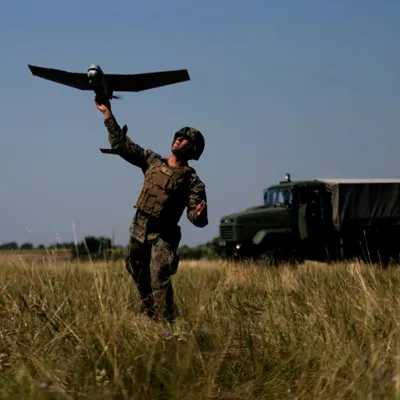
Picture a place of warfare where troops operate well outside the danger zone while machines use their quick judgment to address or avoid an enemy attack. This is real life today, not the plot of a sci-fi movie, because AI combat drones are already in action.
A New Age of Warfare: Introducing Autonomous Military Drones
Many changes are happening in defense technology due to the introduction of AI. Not only are these changes improving how wars are fought, but they are changing the nature of warfare. Independent drones are being relied upon more by countries to support their defense efforts.
Traditional drones have to be controlled by humans, while autonomous drone warfare depends on machines almost completely without human support. These drones controlled by artificial intelligence can survey areas, carry out attacks on targeted spots and make on-the-spot decisions. They are so important because they can study, change and act on their own which makes them very valuable for the military. This evolution highlights the growing military applications of autonomous drones, which are expanding in both strategy and scale.
How Do AI Combat Drones Operate?
Many people wonder: What are the main operations of AI combat drones? These drones use advanced programming based on learning from lots of combat examples. They notice patterns, estimate any threats and bring actions to fruition very fast. With help from onboard sensors and advanced machine learning, they analyze the environment to spot threats, get around roadblocks and communicate with nearby friendly units all at the same time.
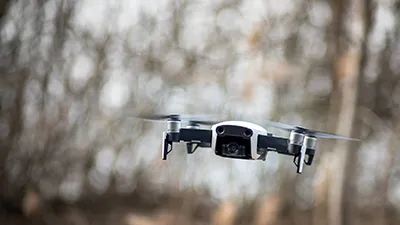
AI gives drones the ability to differentiate between people fighting and innocent people on the ground. Having this capability cuts down on damaging civilians and makes sure the mission is successful. Feedback from cameras, heat imagery and sensors is first processed by AI which handles both tasks by following mission requirements and threat assessments.
What Are the Benefits of Autonomous Drones?
There is a rising interest among experts in finding out: What are benefits of autonomous drones? The explanation is in their many benefits.
Speed and Precision: Using AI in combat drones allows for faster reactions than what a human pilot could provide, making missions run more smoothly in tough circumstances.
Reduced Casualties: Automated combat greatly lowers the risk of soldiers being hurt in armed force operations.
24/7 Operations: They operate all hours of the day and night. They are able to patrol borders, supervise various zones and respond to threats whenever they happen.
Scalability and Coordination: Drone swarm technology allows multiple drones to talk to each other and act together, covering a vast area in collective actions.
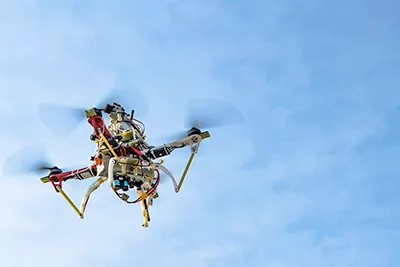
Because of these features, autonomous drones are now necessary for all forms of military action. These advantages represent only a portion of what are benefits of autonomous drones and continue to evolve with technological improvements.
Table: Comparison of Human-Piloted vs AI-Driven Combat Drones
| Feature | Human-Piloted Drones | AI-Driven Combat Drones |
| Decision Speed | Slower due to human delay | Real-time decision making in drones |
| Operational Hours | Limited by human fatigue | 24/7 Autonomous Operations |
| Accuracy | Depends on pilot skill | AI-powered target identification ensures precision |
| Risk | High for human operators | Minimal direct human involvement |
| Cost Over Time | High training/maintenance | Lower long-term costs |
Why Use AI in Combat Drones?
What is the purpose of AI in combat drones? It leads us to the objectives that lay behind using autonomous systems. In a world of modern armaments, control is determined by strength and also by how much information and automation countries have. Defense technology with AI gives the edge needed to be competitive.
When drones are equipped with artificial intelligence, military leaders get equipment that can adjust during a flight, select the best mission pathways and manage threats in places where transmissions are blocked. Furthermore, using AI means drones need less satellite communication which helps prevent hacking and outside interference. This autonomy reinforces the military applications of autonomous drones, especially in complex or communication-restricted environments.
It is no longer just theory - the combination of autonomous drones and safety is clearly changing how the world’s armies defend themselves.
Innovations in Combat Drone Technology
This area cannot be fully examined without being impressed by the endless new developments in combat drone technology. Recent progress has made it possible for drones to use vision, coordinate their actions in groups and make predictions.
Example of these types of drones are Israel’s Harpy and Harop, the U.S. Loyal Wingman and Turkey’s Bayraktar Akinci. They have AI to find targets and also can use the drone swarm technology for more difficult group actions.
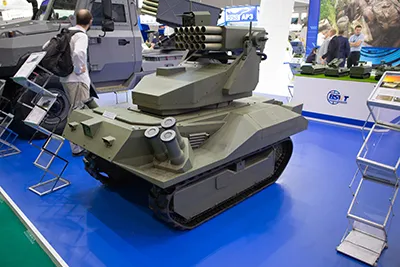
As they improve, drone autonomy and safety are making sure they follow global laws and ethical principles, so they can continue to win in battles.
Case Insight: Swarming Drones in Simulated Urban Combat
A team of 50 AI-commanded drones was commanded to search for and eliminate an enemy fighter hidden in a complicated urban location in a recent NATO simulation. Cooperative search grids, target finding and the final strike were all decided and carried out in real time by the drones.
The simulation was distinctive because the drones were able to cooperate without any central direction, address sudden challenges by correcting their course and adjust their mission goals on their own. It explained the way AI combat drones are operated. In a forceful and alluring way, it suggested that autonomous drone warfare could change everything.
Market Insights: Growth of AI in Military Drone Technology
AI in defense technology is having a worldwide exponential rise. Let’s review some predicted trends:
| Metric | 2023 | 2025 (Projected) | CAGR |
| Global Autonomous Drone Market | $11.2 Billion | $22.5 Billion | 14.6% |
| Military Applications of AI | $9.8 Billion | $18.9 Billion | 12.7% |
| Investment in Swarm Technology | $1.2 Billion | $3.7 Billion | 21.4% |
This fast increase shows that more and more military applications of autonomous drones are being relied on. Big companies such as Lockheed Martin, Boeing and Northrop Grumman are working hard on cutting-edge drone technology to remain ahead in the market.
Challenges and Ethical Considerations
Even though combat drones rely on AI, the technology still has some problems. Securing that drones are autonomous and safe when used among the public is a serious issue. The risk of blunder in choosing targets or an increase in escalation of force still exists.
Also, people are now debating the ethical aspects of allowing machines to make decisions about life and death. This makes the question "Why equip combat drones with AI" more important when it is hard to determine individual responsibility.
AI ethicists are helping governments and the military to create rules, ethical guidelines and measures that give humans authority over important decisions.
The Future of AI in Military Drones
Looking at the next steps for AI in military drones, they will transform strategies more than just create smarter machines.
Imagine drones that are able to perform repairs while flying, communicate with satellites via encryption and stop cyber attacks in the sky.
It is likely that adding natural language processing will soon allow drones to work based on voice instructions or combat chatter, relieving commanders from handling more information. Similarly, these models might predict what the enemy will do, so that drones can be sent to the proper place and stop trouble before it happens.
Intelligence is now the key factor in shaping how wars are fought.
Conclusion: Are We Ready for Autonomous Drone Warfare?
As we are now in the process of transitioning from old to new ways of fighting, the rise of AI-powered combat drones deserves careful thinking. They are a representation of the blend of automation, ethics, strategy and survival. AI now speeds up not only the selection of targets in drones but also the decision making and these improvements are only growing faster.
People continue to ask: In what ways are AI combat drones controlled? Why are autonomous drones helpful? Why is AI a good choice for battle drones? They go beyond understanding technology; they play a key role in building the policies for current-day military action.
Widespread use of autonomous military drones will rely on how well the entire world balances progress with trustworthy use. What are benefits of autonomous drones is a question that leads directly into global policy discussions, as the world prepares for the next evolution in defense strategy. AI will continue to play a bigger role in military drones. The virus is now out in the atmosphere.
 Our Services
 Media Pack Download
 Newsletters
 Industrial Events