

Military Drones and Remotely Piloted Aerial Vehicles for Advanced Intelligence Gathering

Introduction: The Rise of Aerial Intelligence
Modern warfare is no longer all about tanks, guns or fighter jets. In the contemporary world, UAV Technology and Military UAV Systems are the buzz words in the defense circles. Countries worldwide are greatly investing in Drone Technology in Defense because they understand that unmanned platforms are not only cost effective but they are also very versatile. Remotely Piloted Aerial Vehicles (RPAVs) are the key players in this revolution and have transformed precision operations, reconnaissance and surveillance. As Military grade RPAVs keep evolving, the future battlefield is being dominated by machines capable of seeing, analysing and hitting without the need to be as efficient as possible.
The big question is: What are the implications of RPAVs in intelligence collection to the warfare and defense surveillance? The solution is that they have unmatched capabilities to provide real-time information, extremely long range, and safe distance information and are necessary both in peacetime and war conditions.
UAV Technology: The Backbone of Modern Surveillance
The main driving force of this revolution is the UAV Technology that has enabled the development of sophisticated aerial platforms that can be flown over long distances, in dangerous environments and send information in real time. In contrast to the conventional airplanes, Military UAV Systems do not need the pilot on board, and the risks to the human life are enormous.
What is even more reliable about Unmanned aerial surveillance is the combination of AI, machine learning and real-time analytics. The transition of the manual to semi-autonomous and currently fully autonomous systems has made Remotely piloted aerial vehicles in defense surveillance one of the most important national security assets.
Next-generation UAVs in military reconnaissance are not only machines to defense strategists, but a crucial part of the decision-making process. They make sure that the chain of command always has eyes in the sky so that nothing is lost in the fog of war.
The Evolution of Military UAV Systems
Military UAV Systems started as a simple reconnaissance drone back decades ago. The primitive communication links and short endurance restricted the early models. Nowadays, the RPAVs created by the military are capable of flying longer than 24 hours, with high resolution sensors, infrared cameras, radar, and even sophisticated electronic warfare systems.
The capability of RPAVs in intelligence collection to conduct multi-purpose missions is what has indeed revolutionized the game. The list of ways drones are being used in the intelligence of the modern war is ever-growing, whether it is to monitor borders and intercept enemy communication or to guide artillery fire and search and rescue.
In the era of hybrid warfare, when cyber threats and misinformation are the main issue, and physical conflicts are only one step behind, the use of Unmanned aerial surveillance will make sure that the militaries are always one step ahead.
Drone Technology in Defense: A Global Market Outlook
Drone Technology in Defense is a market that is experiencing a rocket growth. Reports in the defense industry show that total expenditure on Military UAV Systems in the world has reached and will exceed 30 billion in the coming 10 years.
The following is a brief market overview that points to the boom:
| Region | Investment in UAV Technology (2024) | Projected Growth by 2030 | Key Focus Area |
| North America | $12.5 billion | $18.2 billion | Long-endurance Military-grade RPAVs |
| Europe | $7.8 billion | $12.1 billion | Counter-terrorism and border security |
| Asia-Pacific | $6.9 billion | $15.4 billion | Next-generation UAVs for reconnaissance |
| Middle East & Africa | $3.2 billion | $7.6 billion | Surveillance of conflict-prone regions |
The growing market is an indication of the growing significance of Remotely piloted aerial vehicles in defense surveillance. Countries are not merely buying drones, but also investing their own production to become self-sufficient in UAV Technology.
RPAVs for Intelligence Gathering: Changing the Defense Landscape
Possibly the most striking quality of the Military-grade RPAVs is that they are capable of collecting, processing and relaying information with a degree of accuracy unheard of before. In the past, reconnaissance missions would require fighter jets to be in danger of fire or satellites because of cycles of orbiting. Conversely, intelligence collection RPAVs can overcome these gaps, as they are able to provide continuous surveillance at reduced prices.
Next-generation UAVs that undertake military reconnaissance missions in combat zones can give vital information like movements of enemy troops, location of weapons, and even the logistics of supply chain. During peacetime, they guard the borders, keep watch over the maritime areas, and support the response to the disasters.
The transition to the use of drones in contemporary warfare intelligence and the emergence of drones as the most valuable currency in defense is exemplified in this way. An army with real time intelligence is always at an advantage.
Remotely Piloted Aerial Vehicles for Defense Surveillance
In the case under review of remotely piloted aerial vehicles in defense surveillance, their effect can be perceived in three different ways:
- Tactical Surveillance: Highly portable RPAVs on the ground level offer real time situational awareness to ground troops.
- Strategic Surveillance: Extensive Military UAV Systems help in long-range missions and cross-border missions.
- Covert Surveillance: Smaller RPAVs with stealth capabilities are able to enter enemy-controlled areas without being noticed and gather important information.
Every use of Drone Technology in Defense confirms the need that they have in the new era of complicated geopolitical environment.
Next-Generation UAVs for Military Reconnaissance
The prospects of Military UAV Systems are even more interesting. Military reconnaissance Next generation UAVs are being developed that incorporate stealth technology, electronic warfare and AI-based decision-making. In contrast to regular RPAVs, such systems will operate under the assumption of doing predictive analysis, implying strategies, but not simply passing information along.
Consider, as an example, Unmanned aerial surveillance platforms that could have been able to intercept enemy radar, jam threats using jamming devices and automatically divert themselves to prevent detection. These development in UAV Technology may change the entire doctrines of defense.
Applications of Drones in Modern Warfare Intelligence
Applications of drones in modern warfare intelligence are not limited to the use of drones on the battlefield. An example of some of the important functions is:
- Monitoring of communication and signal interception.
- Anti-smuggling and border security affairs.
- Targeting and Laser coordination of strike.
- Humanitarian aid in case of natural calamities.
- Supervising chemical, biological or nuclear dangers.
The expansion of the scope makes Drone Technology in Defense an omnipresent one, as it is equally valuable in peacekeeping and full-scale conflicts.
Challenges and Ethical Questions
Military-grade RPAVs have some serious questions even though they have advantages. To which extent should Next-generation UAVs be provided with autonomy in the process of military reconnaissance? Is it right to leave the decision of life and death to the drones?
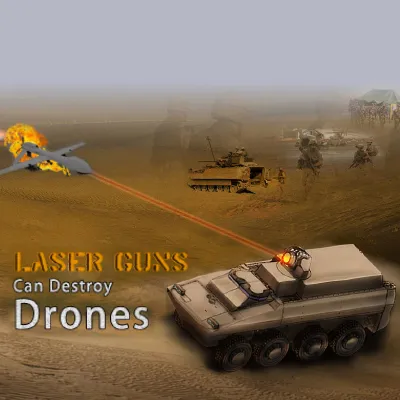
The other threat is the risk of competitors coming up with counter-drone systems. Although RPAVs as a tool of intelligence collection can be of immense benefit, jamming, hacking, or being shot down by sophisticated missile defense technology can be considered their weaknesses.
These challenges give it a guarantee that the debate on the Military UAV Systems is not only on the technological front but also on the political, ethical, and strategic front.
Future Outlook: Where Do We Go from Here?
The future of Drone Technology in Defense shows that Unmanned aerial surveillance will be advanced further in the next decade. A miniaturized sensors, the improved communication networks, and AI-based analytics will transform the operation of Remotely piloted aerial vehicles enabled defense surveillance.
The drones used in the intelligence side of modern warfare are most likely to be used in the future in swarm technology, where hundreds of small UAVs are used, overwhelming the enemy in the air and collecting intelligence in a scale never before seen.
Simultaneously, cooperation between states can lead to the application of Military-grade RPAVs in the joint operations to address global security issues like terrorism, piracy and cyber threats.
Conclusion: Intelligence in the Age of UAVs
The age of UAV Technology and Military UAV Systems has revolutionized the intelligence gathering. Through the ability to conduct Unmanned aerial surveillance, Remotely Piloted Aerial Vehicles have become indispensable in defense strategy. Drones have become integral to warfare intelligence, whether on the border security front, complete war, disaster management or anti-terror, the uses are inexhaustible.
The battlefield of the future will stop being a competition of forces in terms of sheer numbers of troops and tanks but a battlefield where a nation that learns how to master Next-generation UAVs in military reconnaissance and use them in real-time intelligence acquisition. The question is not whether militaries will be putting drones into action as Drone Technology in Defense keeps on improving, but how well they would incorporate the RPAVs into the intelligence-gathering strategy.
The world is taking notice, and the skies already are altering.
 Our Services
 Media Pack Download
 Newsletters
 Industrial Events