

How Space Technology is Revolutionizing Defence Strategies?
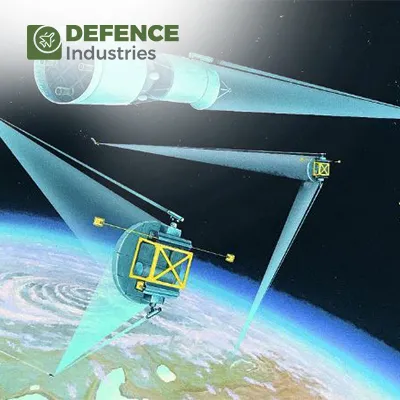
The ever-expanding frontier of space technology is not just about exploration or understanding the cosmos - it is also a vital force shaping modern defence strategies. As technologies develop and satellites increase in usage this technology that is associated with military usage is becoming adopted to improve national security in an effort to counter new threats. This study specifically focuses on the influence of space technology on defence and as a result analyses its opportunities, risks and trends.
The Need for Space Defence
The conflict area described today has gone beyond the familiar ground, water and air environment to the space environment. Space security and defense is becoming more critical now as satellites and other materials found in space are widely used to conduct ISR. Today, these technologies are critical for the military since they allow it to watch the enemy, assess possible threats and make decisions. Space parameters’ integration with defence strategies means the countries can protect their own interests on earth and in space- a shift from ‘rifle to Rafale’ typical application of space in defence.
Technology in Space & Defence
Novelties derived from space technology primarily in military uses are changing the way defense operation is conducted by providing enhanced capability in communication, navigation and observation. Advanced imaging systems including radio frequency mapping are fundamental tools that are employed in contemporary defence policies. The use of satellites in security and intelligence creates a situation whereby countries can attain a real time appreciation of the environment which is vital when conducting attacks and defense.
In addition, satellite-based surveillance enables photographic surveillance, which is invaluable when tracking combat operations or estimating the extent or intensity of destruction; it even assists in directing accurate-fire weapons. The implementation of these capabilities into defence frameworks demonstrate that space is indeed one of the war-fighting domains.
Space as a Strategic Military Domain
When the space medium is claimed as a war fighting domain, it is considered a strategic asset for warfare capability. Space is seen as an operational theatre in a way that shows how much of an advantage control of this environment is to any country. Expenditure on space security and defense has increased significantly and that tells us that this domain needs to be secured. The world budgets on space defense are now emerging and key states invest significant funds in the creation and maintenance of space resources.
Conventional approaches to defence actions are transformed into space technology to allow militaries to mitigate new threats and counterspace systems, including anti-satellite weapons (ASATs) and cyberattacks. This change, they say, is necessary to sustain the technology superiority, and, therefore, security of nations.
Leveraging Satellites for Security and Intelligence
Satellites are the essential part of actual defence system. They are used for support to intelligence, surveillance and reconnaissance (ISR), which involves feeding the operator important information on the movement of an opponent, launch of missiles and for overseeing the communication on the field of battle. The fact that this is achievable through satellites has revolutionized how wars are fought and won.
In addition, the application of satellite mapping increases situation awareness by detecting and tracking frequencies for communication. This capability proves most useful in electronic warfare where cues are made central when dealing with enemies’ signals to emerge victorious.
Emerging Threats and Counterspace Capabilities
Space is a critical resource in modern organization, and the use of space leads to the emergence of risks as well. New types of threats and counterspace capabilities comprise ASAT systems, electronic warfare with space objects, and cyber operations against space infrastructure. These threats call for effective Space Security and Defense mechanism.
Today many nations are spending good money to develop more secure systems to meet these threats. The transition to resilience and multiplication implies the use of clusters of small, interchangeable satellites that are able to function in the event of the failure of some of their members. This approach provides sustenance and improves the resiliency of strategic space-located properties.
Role of Commercial Entities
The industry role is growing dramatically with its contribution to bring about advanced technology in the space and its operative military use. Entities as SpaceX, Blue Origins and many others continue to invest in improvements in technology that can help civil and military uses. The commercial players have participated in constructing and deploying spacecraft, creating reusable launch vehicles, and improving space technologies to make space even more accessible.
Similar to its public-sector counterparts, the commercial industry is also forming partnerships to determine the future of space security and defense. These collaborations utilize commerce knowledge and decrease in costs to improve defence solutions and opportunities for synergy and collaboration between the public and commerce domains.
Integration of Space and Defence Strategies
Space and defence should be synchronized because the modern world faces new types of threats that have to be considered and combated. This involves integrating space-based applications with conventional military forces so as to form a distinctive strategy. For example, to get better results ISR satellites are made fully compatible to ground-support platforms and enable more precise targeting on the field.

Dispensing and shading methods are also applied to guarantee confidentiality of information and operational security. These measures show that complexity space technology includes symbiosis defence use protecting efficiency and security at the same time.
Global Expenditures in Space Defense
The fact that space has such a strategic value, is further proven by the fact that nations invest heavily in it. Total spending in space defense is expected to rise, Russia, China, and the United States being the primary spenders. Such investments include programs of creating new forms of sophisticated satellites and financing studies of counterspace capabilities.
Since space has been discussed and considered now as an important strategic formation of the new military domain, the above article demonstrates that space is recognized of the fact that it can influence the future of warfare. Due to the carved nature of international relations where countries demand superiority, more development of evolution of space assets shall be observed in future, especially in its military linkage.
Impact of Defence Space Capabilities on National Security
Let alone the role of defence space capabilities in bringing about change for national security. Most space-based systems offer crucial back up to almost all aspects of life such as disaster response, to military operations. Thus, these systems as well as those that collaborate satellites for intelligence and security purposes concisely improve a nation security.
Similarly, the rise of a proper space security and defense system makes sure that nations can respond to the new threats and counterspace capabilities. It also not only protects essential facilities, but also strengthens the position of a particular state on the international level.
Conclusion
The combination of space technology and its military power has supplemented contemporary warfare and modified the means of combat for defense from territorial extents to space. Satellite based rediscovery, radio fundamental plotting, and Information, Vigilance, Surveillance, and Recognition (ISR) technologies enable each nation to respond to security threats.
Thus, roles of commercial entities, transition to resilience and proliferation, and a growing global trend for space defense expenditures will define future warfare. When space is accepted as another warfare domain, countries will be able to implement the various strategies that are bound to come with space. In this era, the journey from "rifle to Rafale" truly underscores the transformative power of space for defence.
 Our Services
 Media Pack Download
 Newsletters
 Industrial Events