

Powering Tactical Superiority: Secure Workstations for Military Command
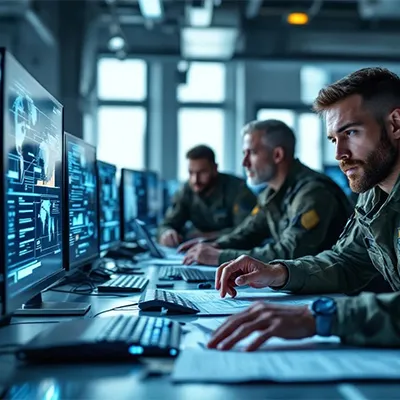
Since the dawn of the modern day era of high stakes defense planning and rapidly changing digital warfare, the backbone of all successful operations is not only boots on ground or air superiority, but rather the digital command centers' resilience. In secure military, workstations are no longer optional security features, but rather, essential government appendages in terms of their missions. The high-performance defense electronics and high-security, secure computing will provide the secure digital backbone to the modern tactical operations with computing environments that evolve on the fringe of incoming computing technology.
The threats we are facing in the world today are increasingly complex and sophisticated and the enemies more technically advanced and thus the military needs to keep up. That is exactly where the role of rugged military computers and the secure defense hardware comes in - a type of technology that is designed to work in adverse environments, quickly process highly-sensitive information, and secure it with the help of physical and electronic security mechanisms. What makes such systems so powerful however, is the fact that they help to transform decision-making processes with real-time data security in command centers and secured with heavy encrypted military communication.
The Strategic Imperative of Secure Command Infrastructure
Whether in the deserts of the Middle East or aboard ships in the Arctic, military units need data transmissions to be uninterrupted, secure and at lightning speed. A command center's digital integrity breach has the potential to disrupt whole operations. It is because of this that investment in secure military workstations is no longer an issue of technology upgrade - but a strategy issue.
These workstations have embedded military-grade computers and command and control that has end to end security, which is highly integrated at every level of operation - i.e., hardware, firmware, software, and communication protocols. Whether dealing with watching surveillance feeds, the deployments of UAVs or coordinating a multi-unit combat engagement, these platforms create the technological core of the tactical command center technology.
Rugged military computers are conceived to be extremely reliable unlike the commercial systems. They are resistant to all electromagnetic noise, elevated heat, humidity and shaking, and also possible physical interference.
Coupled with secure hardware used on defense, these computers are capable of working in places of war, submarines, command and control vehicles, and many others and at all times they can have type of communication channels with high safety and encryption.
Anatomy of Military-Grade Secure Computing
What is military grade secure computing? It is a multi-dimensional architecture in which every component plays a role of mission assurance. So, what are the essential layers? Let us divide them:
| Layer | Function | Security Highlights |
| Hardware | Rugged, tamper-resistant builds | BIOS-level encryption, hardware root of trust |
| Firmware | Custom-coded for defense purposes | Immunity to commercial exploits |
| Operating System | Hardened and isolated environments | Secure boot, sandboxing |
| Communication | Real-time, encrypted transmission | AES-256 encryption, VPN tunneling |
| Interface | Minimal human error margin | Role-based access control |
This ecological stratification is such that it does not ensure that cybersecurity among military workstations remains merely reactive in nature but proactively designed. It defends against attacks before they happen thus protecting data and also human lives.
Command and Control: Where Speed Meets Security
Imagine a former-base detect to hostile action. Direct communication to the command and situational analysis in real time could potentially save lives. In this case, the security of the command centers is made necessary with real-time data. Computers used in command and control must also deliver this information with high speed in addition to keeping the information confidential and secure against alterations.
At this stage, tactical command center technology is linked to speed and security. There can be no allowances when it comes to compromising the infrastructure of the military unlike its civilian counterparts that can afford lags every now and then, as well as security breaches. All the information Is to be not only instantaneous but also secure - whether the information is thermal imaging, satellite telemetry or communication through the field.
As defense electronics develop and integrate AI, predictive analytics and edge computing, the systems are now able to predict the patterns, identify anomalies and assist in autonomous decision making. As an example, it is possible to prioritize communication lines on the platforms of AI and ensure that encrypted channels are also used, as well as in milliseconds detect cyber penetrations into a secure fabric in secure military workstations.
The Role of Rugged Military Computers in Harsh Environments
The environment under which such systems operate is not normal. The ordinary is sandstorms, exposure to saltwater, changes in altitude, and shock vibration. But when it comes to rough military computers they still work resiliently. These machines are subjected to MIL-STD-810 to ensure their performance under pressure.
What is the importance of ruggedization? Due to the fact that tactical advantage is not limited to indoor command centers. Battlefield logistics centers, mobile units, and command bridges on sea need computing environments, which are equally capable. The design and configuration of military grade secure computing and secure protection hardware for defense is such that, despite a loss of infrastructure, there will still be continuity of command.
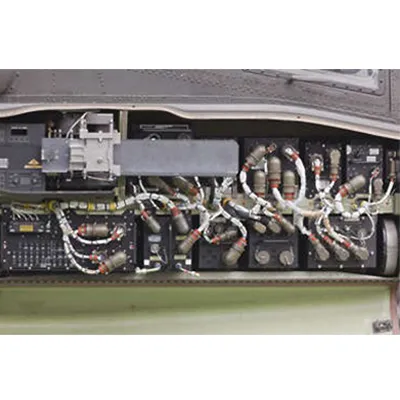
In addition, these systems are well coated in cooling systems, radiation shields, and sealed chassis, which safeguards them against environmental harm and possible threats of EMP (Electromagnetic Pulse) - which could be a new concern in today warfare.
Encrypted Military Communication: The Silent Shield
The intelligence of the military communication systems is down played. All radio frequencies, satellite messages, or responses of any kind on drones will have to pass through dozens of security checks. Coded military signal allows them to know that their enemies cannot decode the information they will be sending out on their missions, or be able to pose as command authorities.
More recent secure military workstations have Trusted Platform Modules (TPMs), dedicated crypto-processors, and storing secure keys to provide such encryption as AES or higher. All these are not noises, they are the core of cybersecurity in military workstations and establish a wall that is impervious to any spoofing, interception, or leakage of data.
More so, adaptive security procedures and on-the-go decryption enable dynamic threat response. In the event of an anomaly detection - e.g., an unrecognized attempt to log in, or dramatic surge in traffic - the system would be able to quarantine, raise alarm and heal itself.
Market Trends and Industry Insights
Secure hardware market facing defense and rugged military computer is witnessing its unprecedented rise. According to the latest reports on defense procurements, nations within NATO, Indo-Pacific and the Middle East are also spending considerable resources on buying military grade computers with command and control systems. This is necessitated by hybrid warfare situations, the emergence of cyber terrorism and the digitalization of the battles field.
This is the snapshot of what is happening in the market now:
| Market Driver | Growth Indicator |
| Increased defense budgets in Asia-Pacific | CAGR of 7.8% from 2024 to 2030 |
| Rising cyberwarfare threats | Surge in procurement of encrypted computing systems |
| Advancements in AI and IoT in military | Edge computing integration into secure military workstations |
| Demand for mobile command centers | Growth in rugged military computers and vehicle-based workstations |
This path highlights the most important fact: that countries are remodeling warfare with a focus on digital dominance. The ability to succeed in a tactical manner will become less dependent on the number of personnel or weapon system and more on the robustness of the defense IT and the data sovereignty.
The Human-Machine Interface in Tactical Settings
Technology can bring miracles, yet, its effectiveness depends on its usability. A very important aspect of a tactical command center technology that is ignored by many is the human-machine interface. Analysts, commanders, and soldiers deal with secure military workstations during the stressful situations. Therefore, UI/UX design should be responsive, simple, and easy to use.
Touchscreen with glove friendly controls, voice controls, and augmented reality with overlay displays are examples of newer systems such as iPhone 7 and Samsung Galaxy S series. Such upgrades minimize that turnaround time so that decisions can be turned around quicker - an aspect of tactical superiority.
At the same time, the biometric identification is used to secure access to systems by people only on the lists of authorized employees. This reduces threats within and introduces an additional data security (in command centers) in real-time.
The Road Ahead: Future-Proofing Tactical Superiority
As quantum computing, drone swarms and AI become near-future aspects of the battlefield, military-grade secure computing needs to scale. Not only will the future command centers be home to rugged military computers, but they will be AI powered, cloud synced, self-healing, and may operate independently of a network connection.
There is already work going on to introduce decentralized models of command, so that secure military workstations are independent nodes which can desync and sync at the whims of a tactical situation. Such breakthroughs will challenge the edge of cybersecurity when it comes to military workstation, necessitating the integration of zero-rust systems and quantum-resistant algorithms to an even greater extent.
At the same time, predictive maintenance through embedded sensors on secure hardware in the defense industry will be used to prevent failures and keep systems ready to go without the requirement of manual diagnostics modes.
Conclusion
The importance of safe military desktops cannot be overestimated in the era of war, where a single cyber-attack can destroy all the activities. These are not simple tools - they are the nerve cells of the contemporary tactical advantage. By integrating defense electronics, military grade secure computing and encrypted military communications, they offer the secure, high intelligence, resilient infrastructure that is required to conquer the multifaceted battlescapes of today.
From the frontlines to strategic bunkers, from moving command vehicles to remote outposts, the silent strength of rugged military computers and secure hardware for defense keeps mission-critical operations running flawlessly. As nations race to fortify their digital fortresses, the role of military-grade computers for command and control will only grow, making secure computing the unsung hero of modern defense.
 Our Services
 Media Pack Download
 Newsletters
 Industrial Events