

How AI Is Enhancing Military Surveillance and Border Security
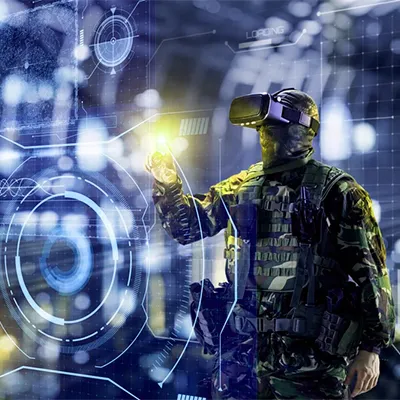
Nations across the world use AI in military surveillance to build stronger defensive measures and border protection in an age characterized by unyielding security threat advancement. AI technologies deliver strategic changes to border security through enhanced surveillance methods which yield better results in efficiency but also forecasting and active intervention capabilities. What precise methods enable AI to change military operations and border defenses and what does the future hold regarding AI systems across defense forces?
The Rise of AI in Military Surveillance
Defense organizations use AI-powered military surveillance systems because they need immediate threat detection capabilities and real-time intelligence. The human-operated manual observation method for monitoring extensive areas often leads to operator fatigue and mistakes due to human error. AI technology can simultaneously process large data volumes which helps to find abnormal patterns that manual examination would miss.
| Aslo Read: Top 10 Disruptive Technologies Changing the Face of Global Security |
Contemporary defense forces implement facial recognition with AI and motion detection systems generated by AI to detect threats instantaneously faster than any prior defense period. Security infrastructure formation relies on the combined operation of modern technologies.
Smart Surveillance Drones for Defense
Smart surveillance drones created a major advancement in aerial defense systems. AI-enhanced drones operate independently to monitor vital areas through which they detect unapproved movements before relaying dynamic information. The application of drone computer vision technology in military operations enables distinct separation of civilians from wildlife and potential threats which results in better accuracy while speeding up the response time.
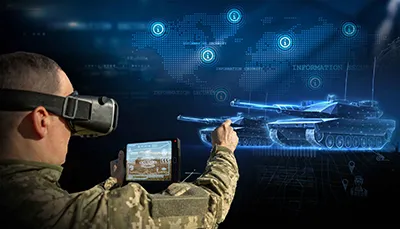
Security is improved through AI-powered sensor networks that expand drone operations by letting them modify their surveillance methods using live monitoring data. Defense forces obtain improved border security by utilizing AI algorithms that evaluate movement patterns in order to predict infiltration routes before taking preventive countermeasures.
AI-Driven Facial Recognition and Biometric Verification
AI applications for security have met significant controversy alongside their strong operational efficiency due to the implementation of AI-based facial recognition. Face recognition technology departments use widely to check and identify important individuals especially when monitoring border areas or military areas. Biometric security verification enabled by AI systems creates high-security areas which authorized persons only can access.
AI enables border checkpoints to rapidly authenticate people through database analysis functions in less than a second. Real-time surveillance analysis with AI assistance reduces human involvement to speed up operations and decrease entry permissions to unauthorized persons.
AI-Based Perimeter Defense Solutions
Protection of military bases along with national borders remains an enormous security challenge. Security agencies can achieve AI-based perimeter defense automation through which they can implement systems that find suspicious incidents and notify officials and execute necessary defensive operations.
Such systems contain AI technology that monitors motion across established borders until they detect unauthorized incidents. This activation delivers immediate notification of such intrusions. The analysis of previous border intrusions using machine learning allows security forces to develop improved responses against potential threats.
Predictive Analytics and AI in Border Security
Present-day security no longer accepts only reactive interventions. Defense systems will attain their future operational capabilities by backing border threat predictions delivered by artificial intelligence ahead of actual events. Through the analysis of past events and weather factors and international political dynamics artificial intelligence predicts areas that are most likely to experience an intrusion.
Through the implementation of smart border patrol analytics using AI then security forces no longer need to depend only on human intuition for operations. AI models analyze vulnerabilities to direct security patrols toward danger zones having the maximum risk factors. The performance of artificial intelligence in border security reaches its peak when it analyzes satellite pictures together with social media insights alongside sensors to create an extensive understanding of safety measures.
AI and Big Data in Border Security
Border security obtains maximum border defense optimization through the collaborative work between AI and big data analytical systems. AI analyzes numerous information sources to detect patterns together with correlations which human experts usually miss. Machine learning models process these datasets to strengthen border monitoring operations through machine learning technology which builds up a framework that responds to security threats while they appear.

Historical data about smuggling routes enables AI systems to identify hotspots which leads to recommendations for increased patrols operations in those particular areas. AI-based military surveillance systems integrated with sensor networks for security allow military forces together with border patrol agencies to outperform their adversaries.
AI in Maritime and Aerial Surveillance
The limit of territorial borders goes beyond mere ground borders since they encompass both maritime regions and aerial space. The surveillance capabilities of AI-developed technology now enable coastal region surveillance along with airspace protection through defense-centered smart surveillance drone operations. High-tech drones operating alongside AI detectors enable security authorities to get instantaneous information about both suspect activities and unauthorized vessels and suspicious vessel movements.
Security applications using AI facial recognition systems enable airports and seaports to check the identities of their travelers. Security verification processes empowered by AI biometrics grants authorized access to restricted areas thus preventing unwanted entry from unauthorized persons along with stopping potential terrorist events.
The Future of AI in Military and Border Security
The quick evolution of AI creates positive but complicated aspects in the development of AI monitoring systems intended for military applications. People actively discuss ethical matters concerning data privacy and potential AI bias as well as illegitimate data use. The advantages of security-driven AI sensor networks combined with assisted real-time surveillance analysis through AI technologies make the challenges easier to overcome.
Methods of border security are likely to become more automated because AI improves military computer vision technology thereby removing humans from dangerous areas. Defense organizations together with governments actively support the deployment of AI and big data in border security because this investment ensures security systems will stay resilient to emerging threats.
Security authorities pursue the development of a complete AI-controlled security system but uncertainty remains about when AI systems will completely replace surveillance and defense capabilities. The integration of AI-powered military surveillance systems and artificial intelligence in border security sets a certain pathway to become essential elements for national defense during forthcoming years.
 Our Services
 Media Pack Download
 Newsletters
 Industrial Events