

From DroneGun to SkyFence: The Most Powerful Anti-Drone Defenses Today
The drone technology known as Unmanned Aerial Vehicles (UAVs) transforms manufacturing in industrial settings from military defense to agricultural processes. The fast pace of drone technology development leads directly to raised security threats necessitating anti-drone solutions. Three sectors representing governments and military forces and private industry entities spend significant funds to build drone defensive measures for protecting critical infrastructure assets. This article investigates modern drone defense technologies which include signal jamming components and high-energy laser weapon systems and explores their capacity to defend airspace.
The Growing Need for Anti-Drone Technology
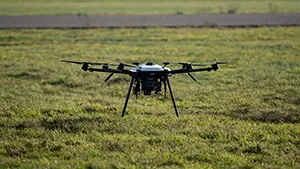
The trend of public drone use has heightened since drone regulations received relaxed policies. The phenomenon of drone operation poses multiple serious security hazards that range from unlawful observation to contraband transfer to terrorist targeting activities. Counter-drone technologies that have advanced because such measures have become essential to identify and stop threats before they result in destruction.
Key Threats Posed by Drones:
| Threat Type | Impact |
| Espionage & Surveillance | Privacy invasion, corporate data theft |
| Smuggling & Contraband | Illegal transport of drugs, weapons |
| Terrorist Activities | Potential attacks using drones |
| Airspace Violation | Disruptions in commercial aviation |
| Military Threats | Surveillance on defense infrastructure |
Private security firms and governments have started implementing innovative counter-drone systems because threats have increased. These advanced drone defense systems exist as the main topic of the following analysis.
1. RF Signal Disruption: The First Line of Defense
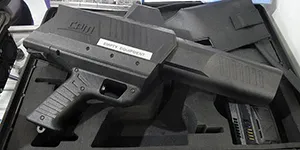
The disruption of RF (Radio Frequency) signals proves to be the most successful way to deactivate unauthorized drones. Drone operator communication links suffer disruption through this technology so the drone has to make either a landing approach or initiate a return to its starting position.
How Drone Jamming Devices Work:
• Powerful radio frequency jammers block communication between UAVs and their controllers.
• When the connection is lost, most drones are programmed to return home or land immediately.
• These systems are widely used for perimeter security at sensitive locations like government buildings and airports.
However effective RF jamming is it operates under specific operational constraints. Drones equipped with coded pre-launch flight sequences do not respond to jammed signals so they need more sophisticated detection techniques.
2. GPS Spoofing Techniques: Misleading Rogue Drones
GPS spoofing enables drone interception by transmitting imaginary location communications to the targets. The deception sends false signals to drones which makes them think they are at incorrect positions leading them to shift direction or arrive at designated areas.
Advantages of GPS Spoofing:
• Redirects drones without alerting the operator.
• Keeps the drone operational, making it useful for intelligence gathering.
• Works well when combined with other security measures like laser defense systems.
3. High-Energy Laser Weapons: The Future of Drone Warfare
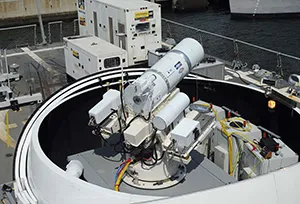
Military drone defense achieves its peak when relying on high-energy laser weapons systems. The components inside drones and their structural components can be harmed by precise laser beams through overheating or physical damage using today's defense technologies.
Key Features of High-Energy Laser Weapons:
• Can neutralize multiple drones simultaneously.
• Works at the speed of light, ensuring rapid response.
• Particularly effective against drone swarms used in military combat.
Military defense gets an enhancement through laser-based anti-drone systems while the United States along with China and Israel lead this development.
4. Kinetic Drone Interceptors: Physically Taking Down Threats
Physical action methods referred to as kinetic interceptors serve to eliminate UAVs. These include:
• Net-based capture systems, like the SkyWall100, which fires nets to ensnare drones mid-flight.
• Projectile-firing interceptors, such as specialized anti-drone drones that attack rogue UAVs.
• Explosive-equipped UAVs, designed for high-risk combat zones where immediate elimination is necessary.
Such countermeasures work well when electronic disruption methods prove ineffective or are banned.
5. Microwave Drone Neutralization: Electromagnetic Attacks
The electronic components of UAVs get disabled through the application of electromagnetic pulses from microwave-based counter-drone technology. Drone circuitry becomes nonfunctional through the frying process which makes the aircraft useless in flight.
How Electromagnetic Interference Works:
• Directs strong microwave signals toward the drone, disrupting its internal systems.
• Covers a wide range, eliminating multiple drones at once.
• Suitable for protecting large perimeters, such as military bases and government buildings.
Various worldwide military institutions have integrated microwaves into their counter-drone security systems.
6. Anti-UAV Radar Systems: Strengthening Detection Capabilities
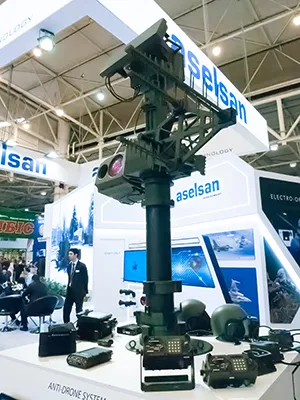
Successful drone protection begins with detecting commonly used drones in early stages. Anti-UAV radar systems with contemporary sensor components enable live observation of drones while detecting and identifying them.
Key Features of Anti-UAV Radar Systems:
• Can track multiple drones at once.
• Differentiates between birds and UAVs to minimize false alarms.
• Often integrated with AI-powered response systems for automated threat neutralization.
7. Commercial Drone Blockers: Protecting Public Spaces
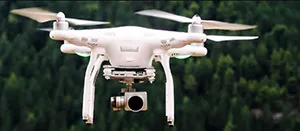
Modern military drone protection systems are advanced yet commercial sites need their own effective protection solutions. Through DroneShield and Dedrone those companies implement AI-based solutions with RF jamming technology to protect public areas from drone attacks.
Where Commercial Drone Blockers Are Used:
• Airports
• Government offices
• Concerts and sporting events
• Critical infrastructure sites
The Future of Anti-Drone Technology
All modern counter-drone systems need to maintain continuous advancement with drone system development. Increasing UAV prevention capabilities will depend on the deployment of automated systems with AI-controlled interceptions together with citywide connectivity for unauthorized UAV detection.
Upcoming Innovations in Drone Defense:
| Emerging Tech | Impact |
| AI-Powered Counter-Drone Systems | Autonomous identification and elimination of threats. |
| Swarm vs. Swarm Combat | Deploying drone swarms to neutralize rogue drones. |
| Advanced Directed Energy Weapons | More efficient laser and microwave-based defenses. |
| Blockchain-Based Airspace Security | Encrypted authorization systems for drone flights. |
Final Thoughts
Military and commercial drone applications keep rising which drives proportional growth in counter-drone technologies. Defense systems incorporate RF signal disruptors together with high-energy lasers and microwave neutralizers to extend present capabilities in airspace security. Changes in drone-based threats compel security experts to develop enhanced anti-drone protocols in order to remain victorious in the technological confrontation.
 Our Services
 Media Pack Download
 Newsletters
 Industrial Events