
ROVs in the Navy: Enhancing Maritime Security and Exploration
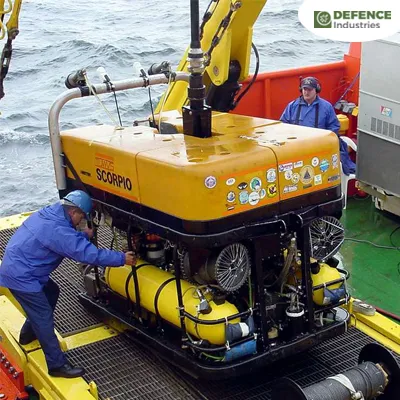
Recently, equipped by the navy, remote operated vehicles or ROVs have added great values to the existing security systems and improved marine exploration. These ROVs are a revolutionary improvement in navy marine security systems as they provide high accuracy and productivity for different naval operations.
The Evolution of Navy Maritime Security Technologies
The use of ROVs in the navy solves one of the technological advancement goals of the navy in the security of maritime systems. In the past, a lot of emphasis was placed on the physical human dive operations which posed great danger to the divers. These dangers have, however, been minimized by the use of remote-operated vehicles in defense and other underwater operations. These improvements have been useful in improving the security of naval vessels with the use of robotics to perform challenging operations, with low or no involvement of people.
Underwater Exploration with ROVs
Aside from security, exploration with ROVs added new horizons to maritime investigation. Functions of ROVs on maritime exploration also includes surveying of the ocean bed, exploring the marine environment, and the discovering underwater archaeological features. These capabilities have been also complemented by the trends of the naval technological advancements, many of which focus the idea to develop complex sensor and imaging systems. For example, after the International SeaPerch Challenge event organized by the United States Navy, it was obvious that they are interested in the development of equipment such as ROVs for sea exploration.
Autonomous Underwater Vehicles in Defense
Self-driven unmanned systems have therefore revolutionized naval operations as used by the defense. These vehicles that are able to navigate without involving actual human input supplement the role of the navy in surveillance and reconnaissance tasks as well as counter mining operations. Hemisphere has received a massive benefit from the integration of ROVs in naval missions since it answers the hazardous environment real-time without the need for manned mission interjections. The use of unmanned platforms to operate in conjunction with manned vessels demonstrated by the U.S. Navy in the Middle East is a good example of this trend enhancing maritime security by virtue of the use of technology.
Enhancing Naval Security with Robotics
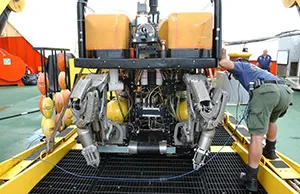
It has however taken the introduction of robotics in naval operations to enhance the security standards.
Application of robotics in increasing naval security include; ROV’s being used in hull inspections, security patrols in the port province and under water surveillance. The utilities of ROVs in underwater defense are numerous using the detection and disposal of underwater mines and surveillance of sunk structures. Practical application for safety in the maritime environment can be seen with the U.S. Navy’s ROV’s for explosive ordnance disposal (EOD).
Benefits of ROVs in Navy Operations
The uses of ROVs in navy operations cannot be overemphasized. They help increase the speed and effectiveness of operation, minimize harm to employees and, still, offer accurate numbers to work with. In employing ROVs for naval purposes, the finest devices developed are those that can resist the severest pressure and other circumstances in water. Secondly, the use of autonomous vehicles as used in the navy has aspects like having a longer working duration as well as being capable of performing monotonous tasks without getting weary. These advantages serve to enhance naval operations productivity in as diverse a spectrum of tasks as inspections and combat activities.
Modern Naval Technology Trends
Traditional naval trends are primarily focused on autonomous systems, artificial intelligence, and improved data analysis. This focus is evident in the development of new advanced systems for naval usage of ROVs where innovations are made targeting autonomy or better sensors plus compatibility with other naval equipment. The geographical spread of opportunities for the use of unmanned underwater vehicles makes it increasingly obvious that they are becoming fundamental in today’s naval operations.
Impact of ROVs on Naval Missions
Through the examination of the multiple operational scenarios, the effectiveness of ROVs on naval operations can be concluded. It has been used in search and rescue operation, underwater repair and intelligence gathering objectives. They are used depending on the nature of a mission meaning they are very valuable tools in the navy’s arsenal. Due to the fact that they can function in conditions that would be too toxic or prohibitive for human divers they add to the efficacy of the navy.
Maritime Security Innovations
The constant advancement in the concepts and aim to enhance security at seas has resulted to the ROVs feature like high definition cameras, sonars and others.
They have capacities to carry out meticulous inspections, accomplish other elaborate underwater exercises, and basically acquire significant intelligence. The navy has identified industrial and military partners critical in enhancing the capabilities of an ROV so that the navy can continue to offer the best security services at sea.
Applications of ROVs in Underwater Defense
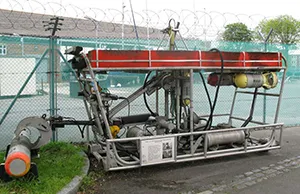
The use of ROVs in underwater defense covers the area of mine counter measures and mine hunting, surveillance and reconnaissance. Due to their covert nature of their operations, these organizations are well suited for operations that need subterranean work. The experience of the US Navy in using ROVs during mine countermeasures explains why they are useful in increasing maritime security.
Future Prospects
In future, the use of ROVs in the navy seems to hold a good prospect. Present research and development activities are directed at improving their independence, robustness, and compatibility with other naval platforms. The capability and possibilities for ROVs to scout the deep sea are enormous: new resources are found, marine wildlife can be studied and new geographic areas may be opened up. As technology progress even further in the future the role of ROVs within the navy will become more and more crucial to maintaining security at sea and, furthered knowledge of the underwater environment.
Therefore, this innovation of ROVs in the navy has opened a different paradigm of operation at the sea. Ideas they brought to the development of technologies for maritime security of navy and underwater explorations.
 Our Services
 Media Pack Download
 Newsletters
 Industrial Events