

Best Personal Protection and Survival Technologies for Modern Soldiers
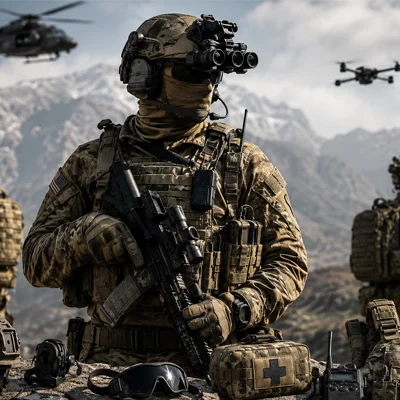
The nature of military operations has undergone a significant transformation in the last 20 years. Conventional battlefield threats are not the only threats soldiers are facing. The modern wars are frequently waged in urban settings, with the involvement of unmanned aerial systems, cyberspace and asymmetric attacks that can strike out of nowhere. However, in such settings, the protection of military personnel has become a top priority for defense organizations all over the world.
Consequently, the amount of investment in Soldier Protection and Survival Technologies has grown dramatically. In addition to helmets and body armour, defence agencies are seeking to develop “whole body protection” systems that will allow soldiers to stay safe, mobile and at full effect during a mission.
From complex materials used to create armor to health-monitoring wearables to help reduce the weight on soldiers' backs, modern protective technologies can help increase survivability.
Why Soldier Protection Matters More Than Ever
The effectiveness of soldiers on the ground is critical to the success of a military mission. Every injury avoided means a trained service member can continue contributing to operational objectives.
Modern battlefields present a variety of threats, including:
- Small-arms fire
- Improvised explosive devices (IEDs)
- Artillery fragments
- Blast overpressure
- Chemical and biological hazards
- Harsh environmental conditions
To mitigate those risks, military organizations are turning to an all-encompassing Soldier Protection Systems that integrates both physical protection, situational awareness and survival support technologies.
Today, it is not a single piece of equipment that is being aimed at, but rather a complete protective ecosystem surrounding the soldier.
The Evolution of Personal Protective Equipment
Until recent years, PPE for military operations was primarily limited to steel helmets, protective vests and simple field equipment. These solutions worked well for the time, but they restricted mobility and also were very heavy.
Today's PPE is engineered differently: it's about working as well as it can while still being as protective as possible.
The equipment used today generally consists of:
- Ballistic helmets
- Modular body armor
- Protective eyewear
- Hearing protection systems
- Flame-resistant uniforms
- Respiratory protection equipment
- Advanced tactical footwear
Material science has played a major role in this evolution. Lightweight composite materials now provide higher levels of protection than many older systems while reducing the strain on soldiers during extended deployments.
Body Armor Continues to Advance
Body armor is one of the most crucial protective technologies for the military.
Recent advancement in Body Armor and Soldier Survivability Solutions aims to enhance the ballistic and explosive fragments resistance of the body armor while maintaining equipment as light as possible.
The most popular armor systems of today are:
- Ceramic composite plates
- Aramid fibers
- Ultra-high-molecular-weight polyethylene (UHMWPE)
- Hybrid composite materials
They offer high levels of protection without restricting soldiers' mobility like previous generations of armor.
Modularity is also a significant development. Depending on mission requirements, soldiers can add or remove armor components. This flexibility means commanders can mix and match protection and mobility as necessary for their operations.
For instance, if a soldier is doing a recon, then they want to be fast and endurable, and if they are working in an area with high danger, they would want maximum armor.
Smart Helmets Are Becoming Battlefield Information Hubs
Military helmets have become much more than just protective equipment.
In the modern days, many systems are multifunctional, providing ballistic protection and communication and information sharing functionality as well. Such advancements are aiding in the evolution of helmets into part of a larger Advanced Soldier Protection Technology.
New helmet systems may include:
- Integrated communications
- Night-vision compatibility
- Hearing enhancement technology
- Heads-up displays
- Sensor integration
The aim is to get the information to soldiers that is relevant, but not distract them from the surroundings.
The ability to have faster access to information can help with the decision making process and respond quicker, in a more complex combat situation, when threats arise.
How to enhance Soldier Survivability through Integration
One of the biggest trends in military modernization is the move toward integrated Soldier Survivability Systems.
Instead of treating equipment as separate items, defense organizations are working to connect multiple technologies into unified systems.
A soldier may carry:
- Protective armor
- Communication equipment
- Navigation devices
- Health monitoring sensors
- Threat detection tools
Combined with these systems, commanders improve the visibility of the battlefield and soldiers receive timely information.
This comprehensive strategy benefits personal safety and mission success.
Health Monitoring on the Battlefield
With the advent of wearable technology it has become common for civilians and soldiers alike.
Military health monitoring systems can monitor the following indicators:
- Heart rate
- Body temperature
- Hydration levels
- Physical stress
- Fatigue
For instance, commanders are able to look for heat stress signs in their soldiers working in extreme conditions before a medical emergency happens. This ability may be very useful in extended missions in difficult environments.
Advancements in wearable technology promise to continue in the future and health monitoring is likely to become an integral part of future Advanced Soldier Survivability Systems for Combat Operations.
In addition to protection from combat, here are some items that can help you survive.
Survival Equipment beyond Combat Protection
But it's not only about avoiding enemy fire on the battlefield. A soldier's job requires him to work in remote areas where food, water, electricity and medical assistance may be scarce. Military Survival Equipment Systems come in handy there.
Some of the most critical survival technologies are:
Portable Water Purification
Clean water is still a necessity when there are military operations. When the resupply of fresh water is not feasible, portable purification systems enable soldiers to drink water from other sources without risk.
Advanced Medical Equipment
Over the years, combat medical kits have evolved into more sophisticated items. Kits may also include specialized trauma supplies which help to control bleeding and stabilize injured personnel until further help can be obtained.
Portable Power Solutions
Today's soldiers rely heavily on electronic systems, creating significant power requirements.
Modern power solutions include:
- Lightweight rechargeable batteries
- Solar charging systems
- Portable power packs
- Energy management technologies
Communications, navigation and surveillance equipment and other mission critical systems rely on reliable power.
The Importance of Tactical Personal Protective Gear
Tactical Personal Protective Gear (TPPG) effectiveness is more than just the protection it provides.
The equipment should also be comfortable, long-lasting and appropriate for long term use.
In rugged terrain and often inclement weather, soldiers can be burdened with equipment for many hours. The improper design of the gear can cause fatigue and affect operational performance.
Manufacturers are thus focusing more on:
- Ergonomic design
- Weight reduction
- Ventilation
- Moisture management
- Equipment compatibility
Emerging Technologies Shaping the Future
There are currently several technologies being developed to further enhance military protection.
Smart Textiles
Researchers are developing fabrics capable of monitoring physiological conditions and detecting environmental threats. These materials could eventually become part of standard military uniforms.
Exoskeleton Systems
The purpose of exoskeleton technology is to empower soldiers to carry heavy equipment without having to apply as much effort. These systems are still in the developmental stage, but could boost endurance and prevent injuries during vigorous operations.
Enhanced Situational Awareness Tools
AI and sensor fusion technologies are aiding soldiers in faster information processing.
These systems are designed to deliver pertinent information at the appropriate time, rather than overwhelming staff with information.
Such developments represent the next phase of Next-Generation Military Protective Equipment and Survival Gear.
Challenges Facing Military Protection Programs
Even after important advances, military organisations are still struggling with a number of challenges in implementing advanced protection technologies.
A major issue is the concern over balancing protection and mobility. Extra equipment may add weight, decreasing endurance and agility.
Cost is another consideration. High-tech systems often come with a high cost for purchasing, servicing and training.
Interoperability also remains important. New technologies need to integrate smoothly into the current military platforms, communication systems, and operational practices.
It will be vital to meet the challenges as defense organisations carry on modernizing protection capacities.
Conclusion
Today's military operations require more than ever to be done in terms of soldier safety. It is no longer helmets and armor to protect personnel today. A Soldier Protection Systems is a system that combines advanced materials, wearable technologies, survival equipment and battlefield awareness systems to provide a greater level of survivability for the soldier while on duty and reducing risk.
The defense industry is continually advancing protective technology, such as PPE, better Body Armor and Soldier Survivability Solutions and Military Survival Equipment Systems.
As military requirements evolve, investment in Advanced Soldier Protection Technologies, Tactical Personal Protective Gear, and Advanced Soldier Survivability Systems for Combat Operations will remain a key priority for armed forces around the world.
The ongoing development of Next-Generation Military Protective Equipment and Survival Gear reflects a simple objective: ensuring that soldiers have the protection, support, and resources needed to operate effectively in increasingly complex environments.
 Our Services
 Media Pack Download
 Newsletters
 Industrial Events