

2025 Trends in NBC (Nuclear, Biological, Chemical) Protection Gear for Armed Forces
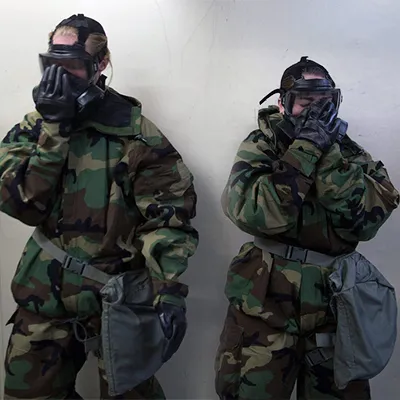
The 21st century battlefield can no longer be described by bullets and bombs, as more and more, it is developing as invisible threats: nuclear fallout, biological pathogens and chemical agents. Due to increasing geopolitical tensions and alterations in the methods of warfare, NBC-ready combat equipment has become an important source of protection of military units around the globe. By 2025, the level of innovation is turning the ways militaries plan and react to a CBRN (Chemical, Biological, Radiological, and Nuclear) attack on its head. This article discusses the recent developments in NBC protection in the military context on major developments of the CBRN Defense equipment, protective equipment in the military, and the new-gen NBC protection systems.
The Growing Necessity for NBC-Ready Combat Gear
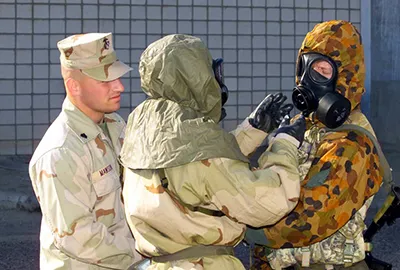
The modern day soldier does not fight in conventional environments anymore. Whether it is a part of the urban warfare or counter-terrorist actions, they are subjected to more and more contact with radioactive areas and chemical pollution, as well as biological weapons. This requires a higher order of preparedness. The NBC-ready combat equipment is no longer a mere regulator, but a potentially life-saving condition.
By 2025, more attention is paid to more sophisticated NBC protective clothing that would exhibit versatility, long durability, and compatibility with standard military uniforms. Here we have integrated sensor networks suits, live air quality monitoring, and anti-fog visor, which are all aimed at minimizing any cognitive load, at the same time offering maximum protection. Such advancements are similar to the military evidence against nuclear and biological attacks.
The Evolution of Military Protective Gear
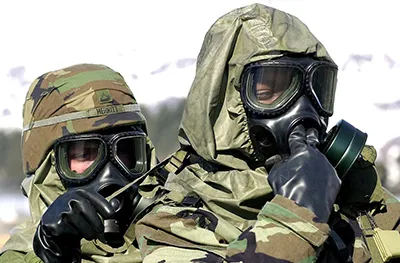
The difference of the military protective gear in 2025 compared to the current one is not only in being durable: it should also be intelligent. Military body armor made of intelligent fabrics with the inclusion of tiny-sensors is transforming the world of superior military equipment. As an example, real time diagnostics are now capable of giving warnings to soldiers and command centers when there is a breakdown of contamination or when there is a case of fatigue or change in temperature, enhancing not only survivability but also strategic planning.
The image of the cumbersome, limiting fits is being altered to the use of light-weight, breathable covering permitting enhanced stays in the polluted areas.
Such next-gen NBC protecting devices provide their self-decontamination, moisture control, and the capability to include a communicative device. Notably, these parameters help to highlight the benefits of CBRN suits to safeguard soldiers of war in dangerous situations ensuring minimal contact with hazards and maximum combat performance.
CBRN Protection Systems 2025: A Technological Leap
The CBRN protection systems are on a technological revolution as of 2025. Military Research and Development groups and Defense contracting companies are busy synergizing so that these systems are flexible to be compatible to current combat needs. We should take a look at some highlighting characteristics of CBRN protection systems 2025:
| Feature | Description | Impact |
| Self-Healing Materials | Fabrics that automatically seal punctures or abrasions | Enhances longevity and reliability in the field |
| Integrated Sensors | Real-time monitoring of radiation levels, contaminants and suit integrity | Gives real-time input so decisions can be made right away. |
| Modular Design | Interchangeable components for rapid adaptation | Enables customization for mission-specific needs |
| Cooling Technology | Built-in temperature regulation systems | Reduces fatigue during prolonged use |
| Voice Amplification Units | Enhances communication without compromising seal integrity | Facilitates teamwork in high-noise environments |
All these characteristics depict the great development of new NBC protective equipment, which is geared towards the changing demands of war situations.
Market Insights: Defense Spending on NBC Protection Gear
The global market in CBRN Defense Equipment is expected to exceed 20 billion dollars in 2027, with the CAGR of more than 5.3 percent between the years 2023 and 2027. The leading areas behind such growth are the United States, China, India, Israel as well as NATO-allied nations.
The following factors are responsible for that astounding rise in investment:
- Growing fear of bioterrorism
- Urban conflicts involving concerns in chemical risks being increased
Because nations all over the world are worried about personnel safety and war readiness, this highlights how important recent advancements in the field of NBC protection are in terms of military uses of this or that gadget.
Advanced Protective Equipment for Military: What’s New?
Wearables to AI-facilitated tracking, elaborate protective gear during military operations has not only become an amalgamation of biotechnology with military engineering but also an aspect of balance between the two. As an example, defense contractors in the U.S. and Israel have developed exoskeleton compatible NBC suits that in addition to providing more mobility also retain seal. The innovations indicate that the future will see NBC-ready combat equipment as a natural extension of the rest of the digital warfare.
Also interesting was the creation of adaptive camouflage which changes its color and textural values according to the environment-information- this is most useful during situations of biological warfare where an ability to blend into the environment may save your life.
Also the military PPE being developed to counter the nuclear and biological threats will encompass advancement in the respirator filters so that now they are better in detecting and neutralizing the air-borne pathogen due to the nano-catalysts and this has considerably reduced the risk of inhalation.
Future-Forward: How Advanced CBRN Suits Protect Soldiers in Hazardous Environments
To uncover the mechanism behind the protection of soldiers in the unsafe environments by means of the advanced CBRN suits, it is essential to take a closer look at their layered defence approach. These suits are now typically updated to include outer, middle and inner layers.
Furthermore, the donning and doffing features of these suits are high-speed essential in high-alert situations. It will take them less than 60 seconds to gear up and this is a significant change in the earlier models.
Embedded RFID tag tracking can enable the logistics team to determine the track record of use given to each suit thus enabling enhanced cycle in terms of inventory and maintenance. Act as major indicators of the fact that CBRN protection systems 2025 will be ahead of their earlier counterparts in terms of being smarter, faster and adaptive.
Case Studies: Real-World Implementation
Indian DRDO as an example has come up with indigenous NBC-ready combat equipment that could be used in high altitude missions. This equipment is intended to cover not only the biological event but also the chemical and is comprised of protective gloves, protective boots, and gas masks with better facial seals to be used by soldiers deployed to operate in Siachen-type regions.
The U.S. Department of Defense, in the meantime, is experimenting with AI-connected military protective equipment that connects to drones serving the battlefield and transmits the exposure information in real-time to command rooms, allowing faster evacuation or fast acting response to scenes.
Such applications place a heavy emphasis on where the next-gen NBC covering systems are going to be headed to namely, away to passive defensive to the dynamic, networked battlefield intelligence.
The Road Ahead: R&D, Training, and Standardization
It will need increased joint efforts of research institutes, defense industries and the military during the period of 2025 and more. The concern here is how to achieve not only latest innovations in NBC protection to be used by the military but also standardize and adapt them in all of the forces so that they can be interoperable.
Training is one of the key areas that will be taken seriously. Even the sophisticated CBRN Defense Equipment may fail because of the lack of the sufficient training of the troops in its exploitation. Therefore, digital training and AR-training programs are emerging to enable a quick deployment of the soldiers in the environment contaminated with NBC material.
The days ahead also require the transformation to reactive to predictive NBC defense. The commanders will be able to predict the CBRN risks rather than just responding to them thanks to artificial intelligence (AI), cloud analytics, and data integration.
Final Thoughts: Redefining Soldier Safety in the NBC Age
With more uncertainties arising in military confrontations, NBC-ready fighting attires have become the barrier between life and death. The idea of more advanced protective equipment for military combatants in 2025 signifies a wider realization: warfare in the modern world requires not only being prepared against bullets and bombs but also against less noticeable and less gruesome perceptual foes.
Through interdisciplinary research and development combining materials science, biotechnology and battlefield analytics, CBRN protection systems 2025 are becoming intelligent, lighter and more capable. Rather than the creation of advanced CBRN suits to protect soldiers in hazardous and hostile regions, this breakthrough is the significant shift in the evolution of military personal protective equipment (PPE) against nuclear and biological threats of involving risk level.
Arms race in the coming years will as much be an information and protection and less to do with fire power. And that is in a race, in which next-gen NBC protection systems will decide not only who battles, but on who will live.
 Our Services
 Media Pack Download
 Newsletters
 Industrial Events





.webp)