

Artificial Intelligence in Battlefield Decision-Making: Pros and Risks
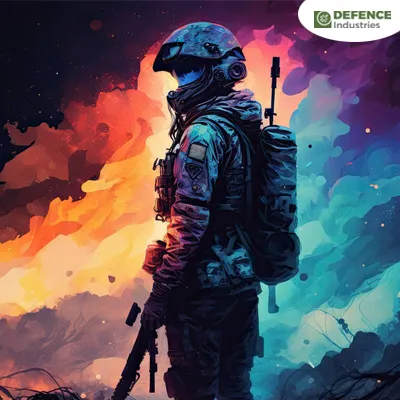
Effects of Artificial Intelligence - Modern use of AI in field related decisions has significantly altered the way strategies are prepared and implemented. In terms of military application, the use of AI has enabled the fulfilment of significant and innovative goals in terms of military AI. That though is not without its challenges, the positive impact of Decision Support System can be tempered by the negative impact of AI in making defensive methods in the military. In this article let’s consider the benefits and frameworks of Military AI, the threats of AI in soldiers, and the ways to minimize the threats of AI for military purposes.
AI in Military Strategy: Transforming the Battlefield
AI's application in military strategy has introduced revolutionary tools such as intelligent surveillance systems and target identification AI. These systems can process vast datasets, identify potential threats, and offer actionable insights at speeds humans cannot match. The integration of AI in military decision-making allows armed forces to analyze real-time battlefield data, enabling speed decision making that can be the difference between mission success and failure.
One of the greatest advancements seen in systems is the threat prediction system that helps in anticipating the movement of the enemy as well as any threat that can herald their arrival. This capability improves military operation with AI by shortening the reaction duration to threats and less danger to people.
Benefits of AI-Enabled Military Decision-Making
The benefits of military artificial intelligence extend across various domains, including:
Enhanced Decision-Making Speed
Commanders can make decision promptly by using AI in algorithms which analyze battle-related information in real terms. This speed decision making advantage acts as a guarantee that the right response is provided to urgently changing circumstances.
Improved Accuracy and Precision
Artificial intelligence like the target identification one mentioned above minimizes the chances of soldiers making wrong identification and elimination of threats. This precision reduces costs because of lesser expenditure on human lives, infrastructure and property.
Cost Efficiency
Tasks that require intelligent surveillance systems and decision-making models help to cut costs and is less reliant on people.
Better Resource Allocation
When it comes to the application of AI in military affairs, resource allocation is done the right way so that forces are the right way.
| Also Read: The Role of Artificial Intelligence in Countering Cyber Threats |
Advanced Threat Detection
These early enabling technologies of the deployment of threat intelligence is effective in acknowledging threats before they are used, thereby increasing protection.
Risks of AI in Military Applications
Despite its advantages, Artificial Intelligence in battlefield decision-making poses significant risks that cannot be ignored:
a. Cybersecurity Threats to AI Systems
One of the major disadvantages of having several AI systems integrated is that it is relatively easy to hack and launch cyber-attacks. This is because opponents can even falsify data within these systems hence altering or even derailing decisions on the same.
b. Accountability Issues
The outsourcing of important decisions to AI systems has put serious questions to the responsibility of AI decisions. Assigning culpability of actions that are performed by an autonomous system is legally and ethically a complex affair.

c. Risk of Malfunction or Misinterpretation
Malfunctions with AI algorithms result in either failure to identify enemies or predicting or perceiving them in a wrong way.
d. Escalation of Conflict
Because the employment of autonomous weapons and the application of AI-driven decision-making produce the trend of reducing the threshold of performing military operations, the possibility of an unintended process escalates.
e. Ethical Concerns
Some of the issues that AI has introduced especially in combat include the ability to have technologies make decisions over life or death situations.
Pros and Cons of Using AI in Military Divisions
| Pros | Cons |
| Faster and more accurate decisions | Increased vulnerability to cyberattacks |
| Enhanced situational awareness | Challenges in ensuring accountability |
| Reduction in human casualties | Risk of errors in decision-making algorithms |
| Cost-effective resource allocation | Ethical dilemmas in autonomous weapon use |
| Anticipation of future threats | Potential for misuse by rogue states |
Sophisticated uses of AI in military decision-making are opportunity and threat platforms that call for an effective utilization of advanced technologies.
Reducing the Risks of Artificial Intelligence for Military
To harness the full potential of Artificial Intelligence in battlefield decision-making while minimizing its risks, military organizations must adopt comprehensive safeguards:
1. Robust Cybersecurity Measures
Layers of security are important in any system and here the outer layers of defense need to be intact so that there no intruder can compromise the AI facilities. This requires incorporating high levels of security to the AI systems and the performing of security compliance that checks all the angles in an effort to reduce risks of cyber-attacks.
2. Transparent Decision-Making Frameworks
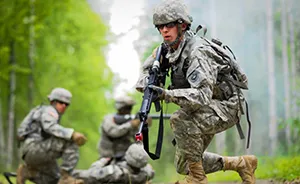
It is crucial to maintain that human supervision remains a part of important processes; therefore, definitive rules concerning AI decision-making responsibility are set.
3. Fail-Safe Mechanisms
Use of dual modes in the artificial intelligence and introduction of overrides minimize risks of system crashes.
4. Ethical AI Development
Besides, the cooperation with global organizations can develop principles that regulate the usage of AI in warfare, which defines the dangers of AI in the army configuration.
5. Training and Education
Informing military front line workers about both AI technologies and their risks prevents potential harm and makes decision making more effective.
Conclusion
AI applications have been incorporated in most of the battle related decisions and solutions providing support for better performance, accuracy and speed. Intelligent surveillance systems and other similar technologies seem to be quite helpful in current-day warfare and approaches to threat predictions. Nevertheless, possible security threats of AI use in military Sphere, and the problem of responsibility for AI actions also provoke the idea for cautious AI implementing.
Since there are advantages and disadvantage of military artificial intelligence, armed forces can now get most of what these technologies offer and at the same time minimizing on losses. In the next chapter the future of AI in military decision-making process will be discussed in view of these risks, suggesting that in the future any risk has to be prevented to make AI a force multiplier. Given the ever-improving technology as well as the constantly emerging issues on the usage of AI, the impact that this technology will continue to have to military strategy is a promise of farther beneficial opportunities as well as societal issues.
 Our Services
 Media Pack Download
 Newsletters
 Industrial Events