

The Future of Autonomous Weapons Systems: Are We Ready for AI in Warfare?
Introduction: The Dawn of AI in Warfare
The fast development of the sphere of artificial intelligence (AI) is changing many industries, and the military is not an exception. AI is taking its toll on modern warfare, starting with drones employed in surveillance and up to high-tech missile systems. Nevertheless, the creation and possible implementation of Autonomous Weapons Systems (AWS) weapon systems, which lack human control, is one of the most disputable and contentious topics.
Killer robots Known as autonomous weapons, they represent a type of military technology that can detect, target, and attack objects with minimal to no human involvement. As countries worldwide devote their defense budgets to AI and machine learning in research, the concept of having fully autonomous systems as a standard item in army arsenals appears more and more believable. The question is, however, are we prepared to use AI in war?
In this article, the writer investigates the opportunities, threats, and ethical issues related to autonomous weapons systems, including their abilities as well as the difficulties they present in the world of artificial intelligence.
The Emergence of Autonomous Weapons Systems:
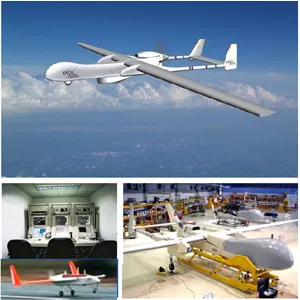
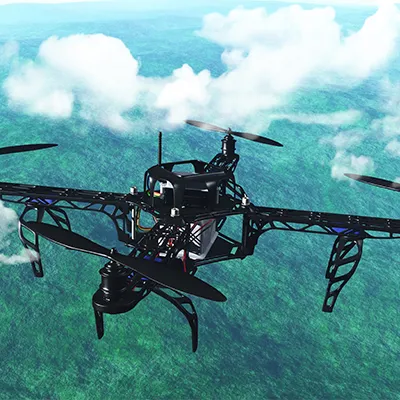
The concept of autonomous weapons systems are not in the far off future, they are already present at the battlefield in one form or another. The current military drones, such as the MQ-9 Reaper and X-47B can be programmed to act semi-autonomously, performing their tasks under human supervision. These systems are capable of identifying the targets, navigating airspace and even make real-time decisions but still human intervention is necessary in making critical decisions.
The second next frontier will be full autonomous system development. Such systems would be disadvantaged by human decision-making in real time and would solely rely on AI to complete the tasks that the soldiers or pilots have performed. Self-driving cars, drones, and even water solutions will be designed to make decisions using algorithms and deep learning models.
As an example, scientists are developing AI-controlled swarms of drones that can organize attacks and reconnaissance and even counterattacks without explicit human control. There would be a potential to use these drones in hazardous or hostile areas, which a human would not be safe or even possible to work in. However, what can be done when such systems fail? Or even worse when they are unpredictable?
The Benefits of Self-driving Weapons:
The champions of autonomous weapons systems support the claim that the technologies have the potential to provide immense military benefits. The most notable advantages are as follows:
1. Greater Productivity and speed.
The fact that autonomous weapons are able to process large quantities of data much quicker than a human operator is one of the main advantages of autonomous weapons. AI is capable of processing satellite images, sensor data, and similar information in real time in order to detect targets and threats and make decisions in a few microseconds. Comparatively, it might take minutes to human decision-making, exposing the soldiers to vulnerability or providing their enemies with an upper hand in the battle.
2. Precision and Accuracy
AI-based systems should be much more precise than human operators. Autonomous weapons can minimize collateral damage, which is possible with the assistance of machine learning and some sophisticated sensor technology that has high accuracy in hitting the enemy. Theoretically, the systems might reduce casualties on civilians in the war zones as long as they operate as intended.
3. Economy in the Long Run.
After full maturation, autonomous systems may be cheaper in comparison to conventional human-form military organizations. In the long term, expenses of deploying human troops such as training, healthcare and support might be cut. Theoretically, AI-driven systems would consume less logistical assistance, but the initial work and maintenance would be costly.
The Dangers and Threats of Artificial Intelligence in Warfare:
Although it has positive outcomes, there are some significant issues associated with the deployment of autonomous weapons systems. As efficient and precise as it may be, AI also comes with a number of risks and uncertainties that cannot be fully comprehended.
1. The Loss of Human Control
The loss of human control over life or death decisions is one of the most urgent issues of autonomous weapons. In modern systems, there is control by human operators, and the actions of a weapon can be overridden. This direct control would be done away with fully autonomous systems. The question that has been raised is: Who should be blamed in situations where an autonomous weapon goes wrong?
AI is not always right and an error in decision-making or writing of a code can be disastrous.
. Suppose an autonomous drone mistakes a civilian against an enemy combatant and initiates an assault. Such an incident is not very clearly held responsible because human operators might not even be present in making such decisions.
2. Ethical Issues and the Conscionability of AI in Warfare.
The ethical aspect of autopilot weapons is one of the issues of controversy. There are critics that putting a life and death decision-making process in the hands of machines is unethical in the first place. Military choices can never be made only according to some strategic calculations but rather they include the understanding of human feelings, circumstances, and morality which AI might not be capable of replicating.
One of the ethical issues is whether AI is able to make the right moral judgements in the complicated battlefield situations. Is it possible to have a machine to know the impact of collateral damage or make decisions based on military necessity and humanitarian needs? According to many experts, such decisions should always be grounded on human judgment.
3. The Risk of Escalation and the Arms Races.
With the introduction of self-directed weapons, the arms race may become more than previously seen. Countries with autonomous systems in place might be technologically ahead and rivals might work in haste to advance and or come up with analogous or even better technologies. This would disrupt international security especially when autonomous weapons are employed in a manner that circumvents the conventional military rules.
In addition, AI-related systems may find application in cyber war, or even in creating autonomous drones, which attack critical infrastructure. The security risk exists due to the possibility of non-state actors hacking or misusing AI systems.
4. Accidents and Malfunctions.
AI-based weapons are susceptible to any sophisticated software or hardware. What will occur when one hacks an autonomous system, or its software malfunctions? Unlike humans who can adjust and make judgment calls in a changing or uncertain environment, AI systems are under the restrictions of the programming. This may have unpredictable and even catastrophic results.
5. International Law Adherence.
The international humanitarian law (IHL) especially the Geneva conventions have severe restrictions regarding the way war should be conducted such as the protection of civilians and prisoners of war. The use of autonomous weapons begs questions on whether these laws are adhered to. As an example, can AI-centered technologies appropriately differentiate between fighters and civilians in a densely populated city? What can we do to make autonomous weapons follow the principles of proportionality and necessity?
The International Controversy: How to Regulate Autonomous Weapons
Due to the high-risk factors and moral issues, the international community has requested regulations related to the creation and operation of autonomous weapons systems. In the United Nations (UN), there has been a debate about whether there is a requirement or a necessity of an international treaty to prohibit or severely regulate AI-controlled weapons.
The road to regulation is not an easy one, however. Most nations, particularly those with massive military funds are afraid of limiting such technologies development, as this may mean they are placed at a strategic disadvantage. The controversy revolves around the priorities between innovation, safety, and morals.
The Campaign to Stop Killer Robots is a group of non-governmental organizations that promote the outlawing of fully autonomous weapons. They believe that these weapons are contrary to the ideology of human dignity and may result in the establishment of systems that are hard to manage once put into use. Military leaders, on the other hand, believe that lives can be saved through autonomous systems since there will be fewer human troops on the war front.
Are We Ready for AI in Warfare?
The technology of autonomous weapons is growing at a fast pace; however, the question of the readiness of AI in warfare has a complicated answer. On the one hand, AI potential regarding military processes cannot be denied, and self-driven weapons systems might lead to completely new approaches to the conduct of war, which will save people and raise the efficiency of the battle. Conversely, the ethical, legal, and security side of the matter is too deep and cannot be overlooked.
The evolution of AI in the military should be explained by the special attention to the long-term consequences. The necessity of the global regulation of systems is even more acute as we proceed to more autonomous systems. Ultimately, it is not whether we are willing to use AI in war, but whether we are willing to deal with the outcomes of such actions.
Conclusion: Uncertain Future
The future warfare will be characterised by autonomous weapons, yet the prospects are enormous both in terms of good and evil. The current controversy under such technologies points to the necessity of careful regulation, effective ethical principles, and collaboration on the international level. With the world entering the threshold of a new military technology, the question that the world needs to ask itself is: Are we really ready to head into the future where machines determine who lives and who dies on the battlefield?
 Our Services
 Media Pack Download
 Newsletters
 Industrial Events