

Next-Gen Fighter Jets: The Competition to dominate in the skies
Introduction
A new generation of air warfare is replacing the age of mass-produced fourth-generation combat aircraft: fifth-generation and beyond fighter jets, shaping them to be stealthy, networked and unmanned, and have a global scope. To the defence industries, procurement organisations, the shift is not just about a new airframe, but rather a systems-of-systems thinking, the supply-chain, export markets, sovereign technology and alliances. We discuss the motivation behind this change in this article, survey the large programmes in play, examine the implications of this on industries and give strategic recommendations on what B2B stakeholders in the defence aerospace industry should take away.
The Next-Gen Fighter Jet Race What It Reason Why It Matters.
In the perspective of national defence, air superiority is still one of the pillars of power projection. However, with adversaries coming up with more sophisticated integrated air-defence systems (IADS), hypersonic armaments, long-range missiles and artificial intelligence (AI)-powered sensors, the fourth-generation/4.5-generation platforms will be left in the dust. Therefore, leading defence services have been engaged in next-gen fighter programmes in order to dominate the skies and not just to be on par with competing countries.
Key drivers include:
- Stealth and survivability: Next-generation fighters have low observable (LO) signatures, internal weapons bays, advanced coatings and electronic warfare suites to be able to overcome advanced air-defences. India AMCA is one such example and is specifically made to have stealth capability such as having internal weapons bays and radar absorbing structures.
- Sensor fusion/network-centric warfare: The current platforms should incorporate information about satellites, unmanned systems, ground stations and other air resources to provide the commander with situational awareness and decision superiority. Combination of sensor data allows an aircraft to be a node in an integrated system.
- Unmanned teaming and AI: This concept is applied to manned/unmanned teaming in the next generation, with a manned fighter operating as a wingman to drone wingmen or even redirecting them. To take one example, the defence community is adopting autonomous or semi-autonomous systems more often as research in AI-driven agents in air-combat suggests.
- Long-range operations, cross-domain operations, cross-theaters operations: Capability to work across domains (air, space, cyber), over long ranges, supersonic/super-cruise, air-to-air refuelling, integration of ISR etc.
- Industrial/export imperatives: To defence-industry participants, next-gen fighters are big export prospects, supply-chain prospects, alliances and technology transfers. Indigenous programmes are sought in nations with localized programmes, so that they can acquire both capability and industrial dividends (jobs, exports, sovereignty).
The next-gen fighter race therefore is not just of the aircraft-type but rather of an ecosystem of technology, global alliances and defence-industrial policy. To B2B stakeholders (OEMs, Tier-1/2 suppliers, materials, avionics, engines, system-integrators), there are significant opportunities - and significant challenges.
Global Programmes in Play
This is a recap of some of the next-gen fighter programmes of the scale and its implications on industry and procurement.
United States-NGAD and 5th Generation+.
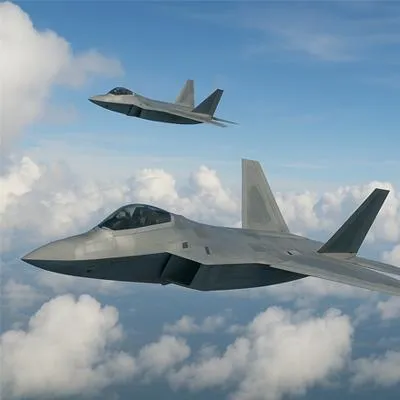
As a follow-up to the F 22 Raptor and F 35 Lightning 2, the Next Generation Air Dominance (NGAD) programme of the U.S. will provide a sixth-generation fighter (or a family of systems) to replace both.
Interesting industrial/market aspect: leading aerospace subcontractor Lockheed Martin already adds NGAD-inspired technologies into its F-35/F-22 lines, in effect turning it into a 5th generation plus at a lower cost.
Industry implication: To suppliers, it implies the need to have high-tech sensor suites, EW systems, stealth materials, new mission computers and modular architectures. Also a message: even old planes are getting next-gen technology-enhanced so aftermarket/modernisation players are also as timely as new ones.
India - AMCA, TEDBF and Indigenous Push.
India is also on the hunt of indigenous next-gen fighter capability. As one article states:
The two home-grown programmes, the AMCA and the TEDBF, represent India aspiring to be part of an elite club.
The AMCA (Advanced Medium Combat Aircraft) is expected to be introduced in the first half of 2030s, powered by two engines, has stealth characteristics, internal weapons bays and artificial intelligence support network.
The Indian government has unblocked big investment and involvement of the private sector, as seen in terms of industrial perspective.
To suppliers: Make in India-driven defence-industrial India implies localised subsystems, avionics, sensors, engines, composite and maintenance ecosystems are important. Alliances and joint ventures may be successful.
China -Shenyang J-35 and Export Ambitions.
China is developing stealth fighter programmes with the J -35 (FC-31 derivative) in both air-force and naval (carrier) applications.
The export-based model of China and potential to secure an emerging-market share in fighter exports poses competition issues to the Western OEMs and ally countries.
Industrial implication: To defend suppliers intending global markets, knowledge of cost-competitiveness, export-license regime, offset model and technology transfer arrangements are becoming important.
Europe / UK/Italy/Japan - GCAP / Tempest.
One of the largest joint programmes is the Global Combat Air Programme (GCAP) that incorporates the UK, Italy and Japan.
This is to provide a next generation fighter by the mid-2030s and to incorporate new digital cockpit, integration of drone teams and multinationals.
In the case of B2B: Multinationals establish access to tier-1/tier-2 suppliers in various partner countries, but International co-development regulations, export regulations and interoperability norms are required to be met.
Industrial and Supply- Chain Respects.
Next gen fighter jets are applied in the business-to-business defence aerospace ecosystem, which has ripple effects at numerous layers. Here are key considerations.
1. Propulsion and engine technologies.
The next generation fighters require greater thrust, fuel efficiency, super-cruise, adaptive cycle engines and new material. As an example, the AMCA programme of India is developing a 110 kN-class engine with Safran.
In the case of supplier companies: there are advanced turbines, composites, coatings, fuel systems, thermal management and after-treatment opportunities.
2. Invisible design as well as stealth materials.
Reduced radar cross-section, infrared suppressed signature, radar absorbent materials, internal weapon bays, conformal structure- these design characteristics drive the need of advanced composites, special coating, sensor windows and non metallic structure. There will be a demand for suppliers of advanced materials and manufacturing (e.g., additive manufacturing, carbon-fibre, ceramic matrix composites).
3. Electronic warfare and sensors, Avionics.
Sensor fusion, AESA radars, electronic battle suites, IRST (Infrared Search & Track), datalink, encrypted communications, sophisticated mission computers and AI-enabled decision support: these are what the next generation fighters will be. New needs are suggested by the works that show AI-controlled, as well as human-agent collaborative teaming.
The suppliers should be prepared to provide modular high-reliability computing platforms, secure software as well as scalable electronics.
4.System integration/open architecture.
Future generation fighters will not be independent platforms, but will be networked system-of-systems. The platform must be linked to drones, satellites, ground sensors, cyberspace, and space resources. To the OEMs and integrators, it implies open-architecture systems design, modular payload bays, up-gradability, and interoperability.
B2B, the firms will have high demand in providing integration-services, verification/validation, air-worthiness certification, cybersecurity and software-defined systems.
5. Localisation, offsets and Export markets.
Numerous countries that produce next-gen fighters focus on the local industry involvement and export-sanity. India is an example since it is requiring its AMCA project to have Indian-owned companies.
To manufacturers, this implies the preparation of local partner networks, offset fulfilment, technology transfer conditions, and export modification of important systems.
6. Maintenance, upgrade and lifecycle support.
Since next-gen fighters are costly assets, and their service lifespan (30-40 years and beyond) is high, maintenance, upgrades, digital-twin modelling, logistic-support and software updates are necessary. The B2B suppliers that will be interested in the after market-services sector will have chances in the field of sustainment, spare-parts, refurbishment and technology refresh programme.
Implications on Strategic Implications on Defence Procurement and Industry.
The strategic issues to be considered when it comes to procurement or industrial participation in next-gen fighter programmes include the following:
A. Timing and transition
A lot of countries are in a middle ground: phasing out old fleets, acquisition of intermediary platforms, and awaiting next-gen induction. India will be inducted to AMCA at the beginning of the 2030s, as an example. The procurement authorities must cope with the lack of capabilities (the “bow-wave” of retiring older jets) and ensure the new platforms address future threats, and not just the existing ones.
B. Balancing cost-versus-capability.
Next-gen fighters are costly. Certain commentary on the industry indicates that retrofitting older platforms (such as F-35/F-22) can provide more or less 80 percent of future capability at less than half the cost.
The choice of investing in completely new airframes or heavily upgrading available fleets should be on the shoulders of procurement planners, and the industry suppliers should also think of the large market in upgrades.
C. Supply-chain resilience and ecosystem risk.
This is vulnerable to geopolitical risks, export controls, sanctions, scarcity of rare materials (e.g. to stealth coats), and manufacture with long lead times. The B2B companies have to maintain diversified supply-chains, redundancy, localised capabilities (in particular under indigenous programmes) as well as robust IP governance.
D. Global export competition/industrial offset requirements.
Next-gen fighter Export markets will be very aggressive. The indigenous programme of India, the export drive of China, the European GCAP and U.S. offerings are all competing with each other in the competition. The companies belonging to the supply chain have to be aware of the export licensing, co-production models, partner country arrangements and offsets as value-chain.
E. Skills, human resources and information technology infrastructure.
The next-gen fighter will require a set of advanced systems engineering, manufacturing to digital-twin, lifecycle-modelling, simulation, AI/ML, digital thread and agile integration processes. Procurement agencies and industrial firms need to put on the priority workforce up-skilling, digital infrastructure and flexible manufacture.
Case Study: The AMCA Programme in India.
To further bring out the above in a narrowed out way, we shall zoom in on AMCA programmes in India. The AMCA is developed as a twin-engine, single-seat stealth multirole fighter with the ability to fight on air-superiority, deep strike, SEAD (Suppression of Enemy Air Defence) and electronic-warfare.
Key milestones:
- AMCA received approval to receive prototype production funds (~15,000 crore) by the Indian Cabinet.
- It is anticipated that the programme will occur around 2032-2035.
- A large proportion will be indigenous content and the Government has invited aerospace firms that belong to Indian owners to participate in prototype manufacturing.
- In the case of industrial suppliers: this implies local-tier involvement into India, demand for stealth material, avionics, mission-systems, engine co- development and subsequently export opportunity (India intends to develop a global supplier base).
- Procurement perspective: India needs to close the capability gap until AMCA is in service (and possibly purchase an intermediate platform) and it should have the ability to maintain future technologically-intensive aircraft.
The Positioning of the B2B Firms.
The following are practical recommendations to the companies that are dealing with defence aerospace business-to-business sector:
- Fit next-gen programs in the country: Which countries are developing next-gen fighters (US, India, UK/Japan/Italy, China) and how your product or service fits into their supply-chain (engine, sensors, materials, software, sustainment).
- Provide upgrade/retrofit opportunities: Due to the cost pressures, most air forces will opt to upgrade existing 4th/4.5-generation fleets to become fifth-gen plus and not necessarily buy new ones right away - offering a significant aftermarket market.
- Investigate modular systems, open-architecture systems: Have your subsystem designed such that it can integrate easily into multi-national fighter programmes, and can be plug-and-play, software defined architectures, and upgrades.
- Localise content and partner networks: Local sourcing and partner networks are relevant in local indigenous programmes (e.g. AMCA of India). Early development of joint ventures and qualification.
- Strategy on address export and offset: Learn about export licenses, offset requirements, technology transfer regulations and competitive forces in the international market. Certain countries can require local co-production or export quota.
- Invest in digital design/manufacturing and sustainment: Provide the digital twin modelling, predictive maintenance, logistics support, upgrade paths and lifecycle-services. These are among the ways of differentiating next-gen ecosystems.
- To reduce risk, diversify the supply-chain: in situations where rare materials are involved, global component risks, sanctions risks, and geopolitical risks: establish resilient supply-chains, dual-source, and consider localisation where it can be done.
Looking Ahead: What to Watch
- Slippage in the delivery vs timeline: The induction of the many next-gen fighter programmes is to be done in the mid-2030s, which is ambitious.
- Lags are frequent (engine development, stealth materials, integration issues). Procurement needs to strategize on temporary solutions.
- Manned-unmanned teaming coming to fruition: Just as AI-and-drone studies have shown, the future fighter might become the quarterback of drone swarms or tu-wingmen. Unmanned/autonomy Suppliers of unmanned/autonomy domains will engage with fighter programmes.
- Multi-domain integration: Air-platforms will be integrated with cyber, space and drone domains, which will drive the need of cross-domain sensors and mission-systems.
- Export market shake-up: Natives (India, China, Turkey) are now exporters of advanced fighters. The case of the Turkish TF-X (Kaan) is an example where the aircraft recently completed its maiden flight and seeks to compete in the export markets.
- Pressures of trade-off between costs and capabilities: Due to budget pressures, increasing numbers of countries are likely to implement upgrades of 5th generation aircraft instead of complete 6th-generation aircraft. Strong markets could be found by suppliers that are able to provide incremental upgrades.
- Localisation & supply ecosystems are important: Export choices are becoming more and more based on the whole industrial package, and not on aircraft performance alone- jobs, offsets, supply chains, maintenance.
- Software and digital take pre-eminence: The fighter of the 2030 will be as much software, sensor fusion, AI and networks as it is airframe and engine. B2B companies need to make such investments.
Conclusion
With the stakes high, in the air supremacy game, next generation fighter jets are a multi-dimensional competition: technological, industrial, geopolitical and economic. To the defence-industry B2B stakeholders, it implies that the opportunities are significant - but the challenges also are. Those that think not merely in aircraft, but think in terms of ecosystems: modular systems, resilient supply-chain, localisation partnerships, export preparedness and lifecycle support will be favoured by success.
You are providing the latest materials, sensors, avionics, simulation systems, sustainment services or integration platforms, the next-gen fighter wave is an opportunity. The big question to your firm is; Are you ready to be on the wave of stealth, network-centric air combat, unmanned teaming or will you be left to deal with legacy platforms as the other firms take over the skies of tomorrow?
It is high time to match, collaborate and innovate.
 Our Services
 Media Pack Download
 Newsletters
 Industrial Events