
Next-Gen Defense Gear: The Rise of Lightweight Materials in Ballistic Armor Development

One of the aspects that has always been at the center of military innovation is Ballistic Armor in the changing history of modern warfare. Since the heavy steel vests of the early 20th century, Next-Generation Defense Gear is transforming the way armed forces go about combat protection to the sleek, intelligent gear of today. The focal point of this change is Lightweight Materials in Ballistic Armor, a development that brings together the most advanced science, engineering precision, and artificial intelligence to create the most efficient Protective Armor.
The Changing Face of Combat Protection
For decades, the question of protection versus mobility has been a compromise. The soldiers had to decide between heavy Protective Armor that offered more combat protection and lightweight armor that enabled them to be agile but offered less protection. The latest developments in Advanced Armor Technology are, however, changing this equation completely. The advent of nanocomposites, ultra-high molecular weight polyethylene (UHMWPE), aramid fibers such as Kevlar, and graphene-infused layers has all played a role in creating Next-Generation Defense Gear, which is lightweight and tough.
The contemporary battles require speed, greater stamina, and cunning flexibility to react to various situations on the battlefield. This has challenged the engineers and the defense contractors to conduct research on Lightweight Materials in Ballistic armor that can sustain multi-hit capability and yet lower the load weight significantly.
Whether lighter armor will protect or not is no question, but how much more prudently it will protect.
Lightweight Materials in Ballistic Armor: Redefining the Battlefield
The defense sector all over the world is going through a radical material revolution. The conventional steel and titanium-based Ballistic armor systems are being substituted with composite structures that are strong and elastic at a quarter of the weight. These Ballistic armor Lightweight Materials are allowing soldiers to be able to carry additional ammunition, move quickly, and prolong their fighting durations without getting exhausted.
The evolution of these, to get a clue, may be compared with traditional and next-gen materials:
| Material Type | Density (g/cm³) | Key Advantage | Application |
| Steel | 7.8 | High hardness | Vehicle armor (older generation) |
| Titanium | 4.5 | Strength-to-weight balance | Aircraft and light vehicles |
| Aramid (Kevlar) | 1.44 | Lightweight and flexible | Body armor, helmets |
| UHMWPE | 0.93 | Ultra-light with high impact absorption | Soldier vests |
| Graphene Composites | 0.77 | Exceptional strength, conductivity | Future Advanced Armor Technology |
This change of lightweight armor Innovations in the sphere of military protection is not only about convenience, it is one of the keys to survival. Soldiers fitted with Next-Generation Defense Gear are capable of longer missions, have a greater alertness, and are subjected to fewer injuries as a result of weight-induced fatigue.
The Role of AI-Designed Armor Systems for Battlefield Scenarios
Along with material development, AI-developed body armor systems in battlefield conditions are changing the conceptualization and testing of Ballistic Armor. The role of artificial intelligence has become very significant in the analysis of impact dynamics, optimization of composite layering, and real-time threat responses.
The use of AI simulation enables the defense engineers to simulate thousands of battlefield scenarios in virtual space and only then create one prototype. These models can predict the behaviour of a Protective Armor system in the case of various ammunition, angles, or explosion intensity. The outcome is the Development of high-performance ballistic protection systems capable of adapting themselves to different degrees of threat on a real-time basis.
As an example, machine learning algorithms may discover weak points in Next-generation ballistic armor of military vehicles and propose structural improvements or replacement of materials to add protection without adding weight. AI also has predictive maintenance, which means that the armor systems in the tanks or the personnel carriers are operational to the full extent in the event of prolonged missions.
To put it briefly, the combination of AI-created battlefield-related armor systems and Lightweight Materials in Ballistic Armor has developed an ecosystem of intelligent protection - a self-learning, efficient, and adaptive one.
Next-Generation Ballistic Armor for Military Vehicles
Although the development of personal gear usually steals the limelight, Next-generation ballistic armor of military vehicles is also undergoing a similar revolution. The classic armored cars were very cumbersome because they were based on heavy plating of steel and thus slow and hard to wear down. Next to that is the introduction of Advanced Armor Technology, whereby the makers of these armor systems are coming up with hybrid armor technologies that use ceramics, composites, and nano-engineered polymers to produce agile but tough automobiles.
A good example is composite sandwich panels, which use impact-dispersing face plates made of ceramic and polyethylene back plates that absorb energy. These frames provide unsurpassed combat strength and reduce a vehicle's weight by almost 40%. This translates to a quicker deployment, better fuel economy, and higher maneuverability on various terrains.
Examples of the highly invested countries are the U.S., Israel, and India, which are putting resources into Innovations in lightweight armor to protect military forces in tanks, armored personnel carriers (APCs), and unmanned ground vehicles (UGVs). Next-generation defense gear allows the vehicles to be smarter and lighter at the same time, since this has been integrated into the vehicles to ensure protection is increased dynamically in line with the requirements of the operations.
Advanced Armor Technology: From Laboratory to the Battlefield
A complex combination of chemistry, material science, and computational modeling goes behind every breakthrough in Ballistic Armor. Advanced Armor Technology has not only surpassed the traditional ballistic standards, but 3D printing, nanotechnology, and energy-dissipating gels are the new direction to which it is headed. These inventions are welcoming Next-Generation Defense Gear, which has the capacity to withstand not just bullets, but also shrapnel, fragments of explosive bombs, and electromagnetic pulses.
The manipulation of the impact waves by the use of the microstructural design of the engines to play with the impact waves is considered and is one of the best directions. Combined with AI-based simulations, these materials lead to the Development of high-performance ballistic protection systems, which are an order of magnitude better than their predecessors.
Military applications are not the only places where such developments have been applied. The same Lightweight Materials in Ballistic Armor are also benefiting the law enforcement agencies and the private security sectors; safer and more agile Protective Armor is made in the fight against riots, anti-terror squads, and tactical teams.
Market Insights: The Future of Lightweight Ballistic Armor
The world market of Ballistic Armor and Protective Armor is expected to reach USD 15 billion by the year 2030; this is mainly due to the defense modernization initiatives, as well as the requirements of Next-Generation Defense Gear. The Lightweight Materials in Ballistic armor will take up almost 60 percent of this market, particularly in Asia-Pacific and North America, where military research and development expenditures were on their peak.
| Segment | CAGR (2025–2030) | Key Growth Driver |
| Personal Armor | 6.2% | Modern infantry upgrades |
| Vehicle Armor | 7.1% | Next-generation ballistic armor for military vehicles |
| Aerospace Defense Armor | 8.3% | Lightweight composites and Advanced Armor Technology |
| Smart Armor Systems | 9.5% | AI-designed armor systems for battlefield scenarios |
The market story is obvious - the age of heavy armor is coming to an end, and the future is in lightweight, adaptive, smart protection.
Innovations in Lightweight Armor for Military Protection
The latest discoveries in lightweight armor in military defense are dismantling the science fiction and sense of reality on the battlefield. Examples of nanocomposites made of graphene include nanocomposites that were 10 times stronger in impact than steel, yet were ultra-light. Equally, armor made out of fluids that harden on impact (so-called shear-thickening fluid (STF) armor) is also being incorporated into Next-Generation Defense Gear to achieve unparalleled versatility.
In the meantime, the Development of high-performance ballistic protection systems, drones, and vehicle hulls is being adopted using hybrid ceramic-metal structures and thermoplastic composites. The innovations create new dimensions of sophistication to the defense ecosystem, and Lightweight Materials in Ballistic Armor prove that this is without compromising on quality protection.
Development of High-Performance Ballistic Protection Systems
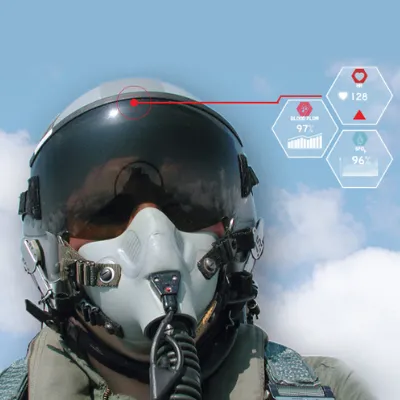
The defense-R&D in the modern context is not about incremental enhancement anymore; it is about the jumps in survivability. The Design Research of high-performance ballistic protection systems is conducted under cross-disciplinary approaches, where AI, material science, and robotics are combined. Smart Protective Armor that is fitted with embedded sensors is now able to keep track of temperature, impact stress, and fatigue level, and real-time data could be transmitted to command centers.
Such systems are also compatible with exoskeletons carried by soldiers, and are a part of a larger Next-Generation Defense Gear ecosystem. This kind of synergy further improves combat protection not through defense but as a data-driven weapon of armor.
Such a paradigm shift indicates the transformation of the reactive armor into the proactive armor, not the protective one against bullets, but the protective one before the subsequent hit.
The Road Ahead: Toward Intelligent and Sustainable Armor
The sustainability and self-repairing materials are the next stage of the Ballistic Armor development. Scientists are working on biodegradable composites and regenerative finishes, which enable Protective Armor to repair micro-fractures on its own once hit. This new generation of armor, together with AI-designed armor systems in battlefield conditions, will be able to think and act as well as heal - just as the Next-Generation Defense Gear.
Moreover, the defense organizations are considering the use of the circular economy in order to recycle and reuse older armor materials so as to establish a green production chain. This is not only mitigates the environment, but also hastens the world to Innovations in lightweight armor to military protection that follow the sustainability agenda.
Conclusion: The Future of Protection Is Light, Smart, and Adaptive
Lightweight Materials in Ballistic Armor is not only a development of materials but is also a change of philosophy in defense. With the technology of Advanced Armor Technology growing, the amalgamation of nanomaterials, artificial intelligence, and composite engineering will lead to Next-Generation Defense Gear that integrates intelligence, agility, and the ability to withstand combat guarding.
The defense industry is moving into a period where the boundary between technologies and defense is lost as Next-generation ballistic armor on military vehicles and AI-designed armor systems on the battlefield become more and more a part of a single entity. Limitations will continue to be challenged through the development of high-performance ballistic protection systems that bring not only protective but also predictive armor.
After all, the aim is eternal, to protect the protectors. What will be the coming frontier of global security, however, is how we will go about accomplishing that end, by using Innovations in lightweight armor as a way of protection in the military. The era of smart, light, and versatile Ballistic Armor has only recently started.
 Our Services
 Media Pack Download
 Newsletters
 Industrial Events