

How Defence Buyers Evaluate and Select UAVs in the Current Market
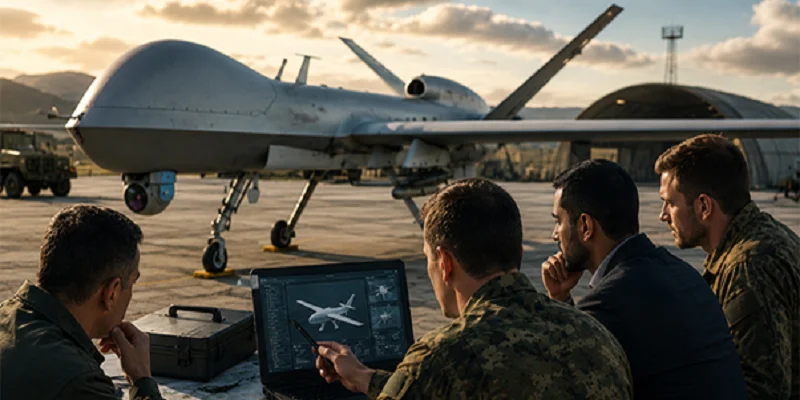
Unmanned aerial vehicles have quietly become one of the most decisive tools on the modern battlefield. From border surveillance to precision strike missions, military UAVs now sit at the center of defence modernization budgets across the world. But behind every drone fleet flying over a contested border or conducting a reconnaissance sweep, there's a long, often unglamorous process of evaluation, testing, and negotiation. That process is Defence UAV Procurement, and it's far more complicated than picking the fastest or flashiest aircraft on the market.
If you're trying to understand how defence buyers choose UAVs, the short answer is: it's never about one factor. It's a layered decision involving mission requirements, budget realities, geopolitical considerations, and long-term sustainability. Let's break down what actually happens inside a procurement office when a new UAV program is on the table.
Why UAV Procurement Looks Different Today
A decade ago, UAV procurement was mostly about acquiring intelligence, surveillance, and reconnaissance (ISR) capability. Today, the mission set has exploded. Armed forces now expect drones to handle electronic warfare, communications relay, loitering munitions roles, logistics resupply, and even swarming operations alongside traditional ISR.
This shift means defence drones are no longer evaluated as single-purpose assets. Buyers assess them as part of a broader ecosystem — how well a UAV integrates with existing command-and-control networks, how it performs alongside manned aircraft, and whether it can be upgraded as threats evolve. The Ukraine conflict and various regional flashpoints have accelerated this thinking, pushing procurement teams to prioritize adaptability over raw specifications.
The Core Pillars of UAV Procurement Criteria
When a defence ministry or armed forces branch opens a tender, the evaluation typically rests on a handful of non-negotiable pillars. Understanding these UAV procurement criteria helps explain why some manufacturers win contracts while technically similar competitors don't.
1. Mission Fit Over Raw Performance
The first question isn't "which drone is the best," it's "which drone solves our specific problem." A coastal nation monitoring maritime borders has entirely different needs than a landlocked country focused on mountain surveillance. Endurance, altitude ceiling, payload flexibility, and sensor suites are all weighed against the actual operational environment, not a generic wishlist.
2. Payload and Sensor Flexibility
Modern buyers want modularity. A UAV that can swap between electro-optical/infrared cameras, synthetic aperture radar, signals intelligence packages, or strike payloads offers far more long-term value than a fixed-configuration platform. This flexibility often decides contracts because it reduces the need for multiple specialized fleets.
3. Communication and Data-Link Resilience
In contested electromagnetic environments, a UAV is only as useful as its ability to maintain a secure link. Buyers scrutinize anti-jamming capability, encrypted data transmission, and the ability to operate under GPS-denied conditions. This has become one of the highest-weighted factors in recent evaluations, especially after several publicized incidents of drones being jammed or spoofed in active conflict zones.
4. Total Cost of Ownership
Sticker price rarely tells the full story. Defence buyers calculate lifecycle costs — training, spare parts availability, maintenance intervals, ground control station requirements, and attrition replacement rates. A cheaper drone with a high attrition rate or expensive proprietary parts can end up costing more over a five-year deployment cycle than a pricier, more durable alternative.
5. Interoperability with Existing Systems
Few countries build a UAV fleet from scratch. Most already operate a mix of legacy systems, allied equipment, and domestic platforms. A new UAV needs to plug into existing command structures without requiring a complete overhaul of doctrine or infrastructure. This is why interoperability standards, often aligned with NATO or regional defence frameworks, weigh heavily in scoring matrices.
Defence UAV Selection: The Evaluation Process, Step by Step
Defence UAV selection rarely happens through a single decision meeting. It typically unfolds across several structured phases:
Requirement definition comes first. Military planners define the operational gap — is it persistent surveillance, tactical reconnaissance, or strike capability? This document, sometimes called an operational requirement or statement of need, shapes every later evaluation.
Market survey and pre-qualification follows, where procurement teams identify manufacturers capable of meeting baseline technical and regulatory thresholds. This stage filters out vendors who can't meet export control requirements or lack a proven production track record.
Technical trials and field testing come next, and this is where theory meets reality. Prototypes are flown in conditions resembling actual deployment — extreme heat, high altitude, dense urban electromagnetic interference — to see whether performance claims hold up.
Cost and contract negotiation happens in parallel with technical evaluation in most modern procurement systems, since budget constraints often eliminate otherwise-strong contenders early.
Final selection and contracting closes the loop, often followed by phased delivery, training programs, and a probationary operational period before full-scale deployment.
UAV Supplier Selection: What Separates Winners from the Rest
UAV supplier selection is as much about the company as it is about the aircraft. Defence buyers are effectively entering a multi-year, sometimes multi-decade relationship, so vendor evaluation goes well beyond the product brochure.
Track record matters enormously. Has the manufacturer delivered similar systems on time and on budget to other militaries? Production capacity is scrutinized too — a company with an impressive prototype but limited manufacturing scale raises red flags for buyers who need dozens or hundreds of units delivered on schedule.
Support infrastructure is another deciding factor. Can the supplier provide local training, spare parts logistics, and software updates without excessive delay? Many recent tenders now include specific clauses requiring in-country maintenance facilities or technology transfer agreements, particularly in nations building domestic defence industrial capacity.
Geopolitical alignment also plays a quiet but significant role. Export restrictions, sanctions regimes, and diplomatic relationships can eliminate otherwise-qualified suppliers before technical evaluation even begins. This is one reason why military UAV procurement programs increasingly favor domestic or allied-nation manufacturers over open global competition.
Tactical UAV Systems: A Growing Priority
While large strategic UAVs capture headlines, tactical UAV systems have become the workhorses of modern militaries. These smaller, more mobile platforms support frontline units directly, offering real-time reconnaissance without depending on higher command infrastructure.
Buyers evaluating tactical systems focus heavily on portability, rapid deployment time, and ease of operation by frontline soldiers rather than specialized crews. A tactical UAV that requires extensive training or heavy ground equipment loses appeal quickly, since these systems are meant to be responsive and expendable at the unit level. Battery life, quick-launch capability, and ruggedness under field conditions often outweigh sensor sophistication in this category.
Emerging Trends Shaping Defence Drone Decisions
A few trends are reshaping how procurement teams think about defence UAV procurement right now.
Swarm capability is moving from experimental to operational consideration, with buyers asking whether a platform can coordinate with multiple other UAVs autonomously. Counter-UAS resilience is now a standard evaluation criterion, since any drone fielded today must assume it will face electronic and kinetic countermeasures. AI-assisted target recognition and autonomous navigation are increasingly requested features, though most buyers remain cautious about full autonomy in strike decisions due to policy and ethical review processes.
Cost-effective attritable drones are also gaining traction. Rather than investing heavily in a small number of exquisite platforms, several defence forces are shifting toward larger fleets of lower-cost, expendable systems that can absorb losses without crippling operational capability.
Frequently Asked Questions
What is the biggest factor in defence UAV procurement decisions?
Mission fit combined with total lifecycle cost typically outweighs any single technical specification. A UAV must solve the specific operational problem while remaining sustainable to operate and maintain over years of service.
How long does military UAV procurement usually take?
Depending on complexity, formal procurement cycles can range from 18 months for smaller tactical systems to several years for large strategic platforms requiring extensive testing and contract negotiation.
Why do interoperability standards matter in UAV selection?
Because most militaries operate mixed equipment fleets, a new UAV must communicate and coordinate with existing systems without forcing a costly overhaul of command infrastructure.
What role does supplier reliability play in the decision?
A significant one. Buyers weigh production capacity, after-sales support, and long-term maintenance commitments as heavily as the aircraft's technical performance, since procurement is a long-term relationship, not a one-time purchase.
Final Thoughts
Selecting a UAV for military use is a balancing act between technical capability, financial sustainability, and strategic alignment. As threats evolve and battlefield conditions grow more complex, the criteria guiding defence UAV selection will keep shifting too — favoring adaptable, resilient, and well-supported systems over platforms that look impressive on paper but struggle to deliver in the field. For defence buyers, the goal has never simply been to acquire a drone. It's to acquire a capability that will still be relevant, reliable, and mission-ready years down the line.
 Our Services
 Media Pack Download
 Newsletters
 Industrial Events