

Emerging Technologies Shaping the Future of Defence: Innovations Leading the Charge
It is today’s world characterized by an extremely high pace of development, and the emerging technologies that form the future of defence are the key to changing the strategies of military and security. New perspectives in military and security technologies are defined by a number of serious innovations which are connected with artificial intelligence, quantum computation, autonomous robots. Rather than merely enabling improvement in the operational capacities of defence forces, these innovative developments are transforming the character and nature, even the existence, of wars and security.
The Impact of Innovation in Defence Technology
Technology and innovation integration in the defence sector has always been important in the preservation of the prime form of leverage. However, the level of advancement of emerging and disruptive technologies has never been seen before set at such a fast pace. This acceleration is taking the future of defence to the next phase where not only conventional warfare but also digital and cyber domains come into fray.
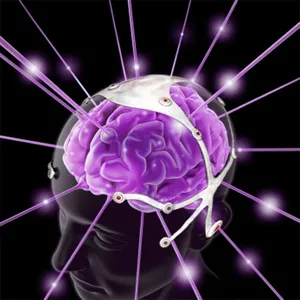
The use of Artificial intelligence in defence technology is one of the most important technologies of the future. AI is virtually destroying major areas of the military such as information gathering and processing, weapons systems and decision-making procedures. This real-time computation capacity analysis information to enable the defence forces to counter threat a timescale that was unheard of in the past.
Quantum Technology for Defence: A Game Changer
Another big idea that is being pursued avidly is the quantum technologies for defence. The capability of quantum computing to solve sophisticated computations that would impossible to solve by classical computing is set to revolutionize several aspects of military computing. Quantum technology and its employment in military capabilities involve; Communications security, which is highly difficult to infiltrate, Cryptography, and improvements in Radar and sensor technology. These are real innovations not just mere ideas or theories, but they are actually under development and are currently under experimentation by the defence departments of various countries.
The future of defence is highly likely to rely on technologies for security and defence based on artificial intelligence and quantum computing. These technologies allow for new kinds of war: cyber war; electronic war; which is not a fight but the fight for control of information.
Emerging Military and Security Technologies: Shaping Tomorrow’s Battlefields
The war theatre of the future will be defined by new and advanced technologies in military and security that include but not limited to artificial intelligence as well as quantum computing and other disruptive and emerging technologies.
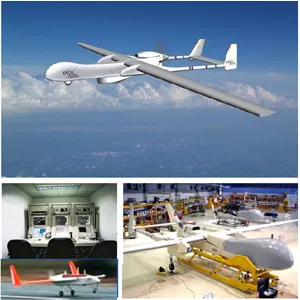
Drones and robotic vehicles are being developed for performing tasks that are lethal to human life and artificial intelligence algorithms improve the effectiveness of their functioning. These systems employ Artificial Intelligence in Defence Technology for control, target acquisition and to complete operations with little human interaction.
In addition, quantum technology for the defence is expected to bring about a radical change in the military’s communication networks as it creates near un-compromisable encrypted channels. This is particularly important given that the threats in the cyber space are increasingly being mutants and increasingly becoming endemic. Quantum technology in the military is also being considered for the next generation of sensors that can perhaps see a low observability aircraft or submarine that cannot be seen using current radar systems.
The Role of Technology and Innovation in Defence Strategies
Technologies of the future also remain in development and their development is not only adding to the capabilities of the armed forces but also changing the approaches to defence and policies. Advent of science and technology in defence sector is behind the current changes towards integrated and netted operations. Owing to these enhancements, the capability of the multiple domains of operations that include land, sea, air, space, and cyber domains is becoming a thing of reality.
For instance, when using warfare, AI-enabled applications give the commanders real time analysis of the warfare domain, thus making them make the right decisions in time. In the same manner, quantum tech for defence is being worked on characterize geographical spaces as accurately as possible to enhance the operation of strategic long range missiles and other smart ammunition.

Similarly, quantum technology for defence purposes is being created to enhance the reliability of server navigation, which is mandatory for strategic missile systems, and other ballistic projectiles with precise targeting.
Emerging and Disruptive Technologies: Challenges and Opportunities
The benefits of the new military and security technologies are inestimable, though it is clear that they also draw a certain number of issues. Unlike in other industries, technology and innovation in the defence sector is fast and as such the industry must keep pace with it by investing heavily. It is not enough for defence organizations to produce such technologies but also for these organizations to properly incorporate these technologies in existing systems and strategies.
In addition, concerns arise particularly regarding the ethical and legal use and development of emerging and disruptiveness technologies. Some of the debates regarding the application of these technologies in a war have been occasioned by issues such as accountability that arise from loose control over weapons such as drones. This is why, as the technologies building the future grow more sophisticated, the guidelines for the use of these technologies are to be developed within the context of conformity with international law.
Conclusion: Technologies for Security and Defence in a New Era
The future of defence is traced on the emerging technologies that have been presented as having the potential to transform the ways in which the militaries of countries carry their operations. From Artificial intelligence in defence technology to the quantum technology for military uses, these are the innovation that are creating for the new age warfare. More nations are also dedicating resources to technology and innovation in defence in future the parity in international system shall remain determined by he who masters these emerging and disruptive technologies. Incorporation of these technologies in defence plans will be the key to the success of operations and protection of countries in the future.
 Our Services
 Media Pack Download
 Newsletters
 Industrial Events