

Developments in Hypersonic Missile Technology
A. Introduction
Overview of hypersonic missile technology
Hypersonic means any vehicle moving at a speed exceeding five times the speed of sound or Mach five, with regard to missile technology. Such missiles can change their course at high speeds, and they are thus very hard to discern and shoot down. Modern hypersonic missile is significantly faster than traditional missiles; it can cover vast distance and strike with good precision, which is why it occupies a priority place in modern defences. It is their development that is changing the nature of military, and the strategies of world defence.
Importance in modern defence
Currently, hypersonic missiles are critical to any modern defence since, although most existing missile defence systems cannot intercept them, they bombard their objective accurately and in a short time. Because of their speed and directional control, which enables them to target valuable persons and properties, they afford a military power a huge tactical advantage in combat. It is changing the ways nations design and implement military strategic plans; thus, underlining the need for enhanced defence force.
B. Missile Technology Control Regime (MTCR)
Role of MTCR in regulating missile technology
The Missile Technology Control Regime (MTCR) is a policy that has been adopted internationally specifically in an attempt to halt the distribution of technology in the production of missiles designed to carry bulky payloads such as weapons of mass destruction. It provides policy frameworks and measures for providing and exporting missile technology and related equipment to member countries so that advanced missile technology wouldn’t be used by unfriendly or unpredictable governments.
Impact on hypersonic missile development
The MTCR affects the hypersonic missile development through putting certain measures on the export control of the technologies or items relating to hypersonic missiles between nations. These regulations act as barriers that slow down the advancement of the technology used in the development of hypersonic missiles, as well as restricting the access to essential components. Nevertheless, developed countries can acquire a loophole through which they continue carrying out their research and development in accordance with these guidelines.
C. Hypersonic Technology Demonstrator Vehicle (HSTDV)
Description and significance
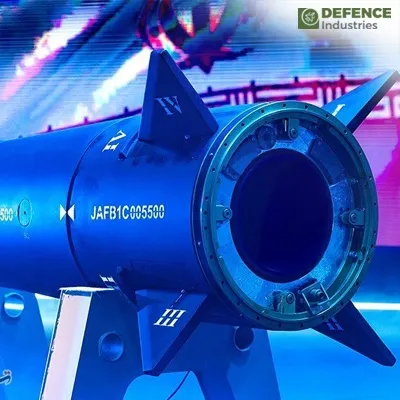
The Hypersonic Technology Demonstrator Vehicle also referred to as HSTDV is a project that aims at designing as well as developing a Hypersonic aircraft. It serves the purpose of experimental OF other technologies necessary in hypersonic missiles like propulsion and ‘lift to weight’ ratio in areas like aerodynamics.
Recent tests and advancements
Some of the latest tests that have been conducted of Hypersonic Technology Demonstrator Vehicle or HSTDV have proved that these vehicles can attain the speed and sustain it which is hypersonic. Such advances include better types of propulsion and better designs of aerodynamic thing that lead to better and reliable performance. These successful tests are considered to be rather great achievements in the sphere of the creation of hypersonic technology which can be applied in the near future in the systems of the defence industry.
D. Indian Aerospace Defence News
Latest updates on India's hypersonic missile programs
India has recently made considerable advancements in Hypersonic missile systems of which the Hypersonic Technology Demonstrator Vehicle or HSTDV is a testimony as it performed critical tests. These tests have affirmed India’s competence in the realm of hypersonic technology not only in design and construction but also in sustaining it, thus placing India in the league of other nations with sophisticated hypersonic technology. As the advancement of hypersonic technology mission is still under progress, the further research and development are directed towards the improvement of speed, range, and accuracy of hypersonic missiles for the augmentation of national security.
Key developments and achievements
India also has several milestones in its hypersonic missile programs for instance in reliable flight tests of the Hypersonic Technology Demonstrator Vehicle (HSTDV). These tests have proved that India can go hypersonic and have built considerable progress in the fields of propulsion and aerodynamics. These are impressive accomplishments on the road to attaining hypersonic missile infrastructure for operations; improving the Indian defence and strategy.
E. Sagarika Missiles
Overview of Sagarika missile system
The Sagarika missile system also known as K-15 is a third generation underwater launched ballistic missile intended to be deployed with Indian nuclear submarines. It is accurate and has the capability to strike deep in an enemy territory the nuclear warheads, thus enhancing India’s nuclear credibly. Sagarika missile system adds advantage to the Indian navy arsenal, and also pose a serious threat to any sea borne threat to the Indian coast.
Integration of hypersonic technology
Hypersonic technology is used in the enhancement of speed and evasive tactics in missiles such as the Sagarika to make it difficult for the enemy to capture or shoot down, as well as increasing on the probability of a successful attack. This development enables faster resulting and increased organizational adaptability in both security and strike situations which, in turn, enhances India’s security by augmenting its range and potential of its missiles.
F. Hypersonic Weapon Systems
Definition and characteristics
Hypersonic weapon systems are missile capabilities which have the flying capabilities featured in velocities over Mach 5. They employ enhanced and intricate thrust and aerodynamic technologies to get to such speeds and perform quick attacks that are accurate and fluid. Hypersonic weapons are indeed a new generation of military equipment that give countries quite efficient means of threats and strikes in different contemporary battles.
Current global developments
At the moment, major powers are engaged in hypersonic weapon systems race where they try to develop and use these systems. Currently, countries such as the United States, Russia, China, among others, are found to be developing hypersonic missiles because of the game changing effects these missiles are expected to impact on the conduct of warfare. They include propulsion, the ability to manoeuvre and the principles of how hypersonic missile can be incorporated into the current systems. This contest unearths the significance of hypersonic technology in determining new generation of military conflicts and global security system.
G. Hypersonic Technology Development
Key research and development milestones
A number of important events in hypersonic technology can be determined, including the ones related to propulsion, aerodynamics, and material science. These progress have made it possible for missiles to sustain hypersonic speed which in turns improve their performance. Studies also cover ways to eliminate technical issues for example heat control while at high speed to increase the efficiency of the hypersonic weapons systems for use in the armed forces. The former continues to exist, extolling efforts that aim at incorporating these technologies into usable defence applications for emerging security requirements around the world.
Major countries and organizations involved
Major countries and organizations in the world are already engaging themselves in the invention of hypersonic technology. Pioneering the technology are the United States of America, Russia and China which have invested big bucks in research, development, testing and deployment of hypersonic missiles. Similar to the situation in China, other countries such as India and some European countries are also enhancing their competence in this area. Furthermore, organizations that build and design defence systems, as well as research organizations across the world, engage in the development of hypersonic technology in regard to achieving technical dominance in military operational situations in contemporary warfare.
H. Defence Technology
Broader context of hypersonic missiles within defence technology
Hypersonic missiles are indeed a new class of weapons that would be faster, smarter, and more accurate than the existing ones. Due to their inclination to move at more than five times the speed of sound, the Russian military/release threat hammers current concepts of missile defence. This technology is altering the tendencies in the defence strategies throughout the world by stressing on the responsive techniques in various defence strategies emphasizing fast response and counter solutions to the threats. Including hypersonic missiles in the inventories of the military forces provides an increased strategic option and improves the security status of nations due to boosting of the more competitive security solutions.
Impact on global military strategies
There are new threats within the sphere of hypersonic missiles, which radically change the concept of warfare by the appearance of new characteristics such as speed, distance, and uncertainty in the near future. Due to their speed and accuracy in attacking a target, they pose a daunting advocate to conventional structures of defence thus forcing countries to change how they approach deterrence and defence. The studies related to hypersonic technology promote the development of new missile defence systems and alliances in order to counteract the threats that it poses. The nations are striving in developing and deploying possession of these missiles, and they compelled to shape geopolitics and strategical estimations globally.
I. Missile Guidance Systems
Importance of advanced guidance systems for hypersonic missiles
Sophisticated control and navigation systems are used in hypersonic missiles because of their great velocities and flexibility. These systems guarantee high accuracy of aim and positioning particularly in the missile systems where changes in course and targeting systems are executed at very high speed indicating the system’s capacity to provide the missile with a means of achieving its intended target with high levels of efficiency. The guiding systems make hypersonic missiles more efficient tools in the offense and defence in different military applications, and they are flexible enough to complete strategic tasks in various military conditions.
Technological innovations and challenges
Some of the great innovations being incorporated in the hypersonic missiles today are those related to power, material and aerodynamics, which gives these missiles great speeds and flexibility. These are beneficial to them as they improve their operations and contribution to the strategy. However, building hypersonic tech has its problems among them being heat shielding from the high velocities, good guidance and the general engineering hurdles that have to be addressed. Overcoming these factors is important for achieving the objective of hypersonic missiles in modern strategies of warfare.
J. Hypersonic Speed
Explanation of hypersonic speed and its advantages
Hypersonic speed means the velocities crossing the Mach five or five times the speed of sound. The advantages of hypersonic speed are quick response time and the minutest possibility of interception; hypersonic missiles are thus ideal for both attack as well as defence. It increases the tactical maneuverability as well as operational versatility within Military strategies to swiftly mobilize and accurately engage key enemy targets –the dynamics of the contemporary warfare - speed and accuracy.
Comparison with traditional missile speeds
The presences of hypersonic missiles boost their velocities to more than 5000 km/h, which is much higher than that of conventional missile velocities with velocities not exceeding 1000 km/h. The fact that hypersonic missiles can be moved at vastly different velocities can increase the distance travelled faster and faster, whereby they cannot be intercepted by conventional defence systems as easily. They are faster and nimbler, thereby enabling the armed forces to adopt the much-needed quick response and complex countermeasures in today’s warfare strategies.
K. Hypersonic Weapons
Potential applications and strategic importance
Hypersonic weapons stand for a qualitative shift in herd weapons systems making it possible to produce a weapon that could move like a missile but strike like a bullet. Some of the possible uses cut across tactical ones such as the surprise attacks on high-value targets as well as the strategic ones involving threats to deter enemies. Thus, speaking of hypersonic weapons, its strategic value is based on their ability to disrupt existing defence systems and force their opponents to create effective countermeasures, thus adjusting military strategies worldwide to the requirements of increased vulnerability and adaptability to emerging threats.
Future prospects and implications for global security
The future advancements of hypersonic weapons depict higher aspects of speed, precise accuracy, and operational efficiency that may possibly redefine the framework of world security in the future. These weapons are becoming more widespread and might change the factors that define strategy between countries, resulting in changes in defence positions and affiliations. Their use might increase the possibilities of an arms race and increase tensions, which requires responsibility in spreading these weapons as well as discussion at the international level. It will be necessary to strike a fine line between the positive impacts of such technologies on strategies and the negative effects they will have on stability to help in achievement of global security in the future.
Conclusion
Summary of key points
All in all, hypersonic missile technology is a great leap forward in weapons systems, speed and accuracy, and tactical capacity of military forces. It is revolutionizing the tactics of defence across the globe by improving the mitigation of quick threats and altering the missile defence conventions. Based on the current advancement and usage of hypersonic weapons, it is evident that this weapon will have the ability to change global warfare and therefore change the world security systems and this makes it fit for management to ensure that welfare in international relations is not compromised on.
Future outlook for hypersonic missile technology development
As for the future of developing hypersonic missile technology, the prospect seems bright due to improvements in propulsion system, material science and technology, and the guidance system. More developments are expected to further improve their functional dependability and extend their versatility across the militaries’ tactical frameworks worldwide. However, the issues like technology barriers and inter-country legalization require proper cognizance to augment its intrinsic potentiality with a reliable and safe impression or future complexion of political maps of the world.
 Our Services
 Media Pack Download
 Newsletters
 Industrial Events