

Best Precision Targeting Technologies for UAVs and Combat Aircraft
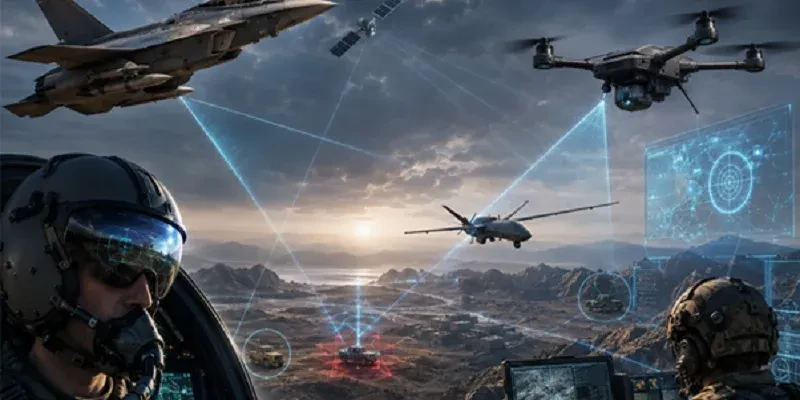
Modern warfare has moved far beyond the days of dropping unguided bombs and hoping for the best. Today's battlefield runs on data, sensors, and split-second decision-making, and nowhere is that more obvious than in how militaries locate, track, and engage targets. Precision targeting has become the backbone of modern air power, and the technologies behind it are evolving faster than most people outside the defense industry realize.
Whether it's a small reconnaissance drone flying over a border region or a fifth-generation fighter jet screaming through contested airspace, the systems that identify and lock onto targets are what separate a successful mission from a costly failure. This article breaks down the most important targeting systems shaping the future of aerial combat, why they matter, and where this technology is headed next.
Why Precision Targeting Matters More Than Ever
Before diving into the hardware and software, it's worth answering a simple question: why does precision targeting matter so much right now?
The short answer is accountability. Modern military operations, especially in populated or politically sensitive areas, demand accuracy that minimizes collateral damage while maximizing mission success. A single misidentified target can have consequences that ripple far beyond the battlefield — diplomatically, legally, and morally. That's why nations are pouring billions into advanced military targeting systems that can distinguish a legitimate threat from a civilian vehicle in a fraction of a second, often from tens of thousands of feet in the air.
There's also the tactical reality of contested environments. Enemy air defenses are getting smarter, jamming is more sophisticated, and stealth alone isn't enough anymore. Aircraft and drones need targeting systems that can operate reliably even when GPS is denied or communications are disrupted.
Core UAV Technologies Driving Precision Targeting
Unmanned aerial vehicles have transformed from simple surveillance tools into some of the most sophisticated weapons platforms in existence. A lot of that transformation comes down to the sensors and processing power packed into these aircraft.
Electro-Optical and Infrared (EO/IR) Sensors
EO/IR turrets remain one of the most trusted tools in any UAV's arsenal. These gimbal-mounted cameras combine high-resolution daylight optics with thermal imaging, allowing operators to track targets in total darkness, through smoke, or in poor weather. What makes modern EO/IR systems stand out isn't just image quality — it's the onboard stabilization and auto-tracking algorithms that keep a target locked even as the aircraft banks, climbs, or takes evasive action.
Synthetic Aperture Radar (SAR)
While cameras struggle with cloud cover and darkness, radar doesn't care. SAR technology lets UAVs build detailed ground images regardless of weather or lighting conditions, which is critical for persistent surveillance missions. When paired with Ground Moving Target Indicator (GMTI) capability, SAR can even track vehicles in motion, feeding real-time data into a precision targeting pipeline.
Artificial Intelligence and Automatic Target Recognition (ATR)
This is arguably where the biggest leap forward has happened in the last few years. AI-powered Automatic Target Recognition allows onboard computers to sift through massive amounts of visual and radar data, flag potential threats, and classify them — often faster and more consistently than a human analyst staring at a screen for hours. These algorithms are trained on enormous datasets of vehicles, weapons systems, and infrastructure, allowing them to reduce false positives and speed up the decision cycle from detection to engagement.
It's worth noting that AI in this context is generally used as a decision-support tool rather than a fully autonomous trigger-puller, since most militaries still require a human in the loop for lethal engagement decisions — a policy debate that continues to shape how these systems are developed and deployed.
Precision Targeting Systems for UAVs: The Guidance Layer
Identifying a target is only half the equation. Once a target is confirmed, the aircraft or its munition needs a reliable way to actually hit it. This is where UAV precision guidance systems come into play.
GPS/INS Integration
Most modern guided munitions rely on a blend of GPS and Inertial Navigation Systems (INS). GPS provides pinpoint location data, while INS uses accelerometers and gyroscopes to maintain accuracy even if satellite signals are lost or jammed. This redundancy is critical, since adversaries increasingly use electronic warfare to disrupt satellite navigation.
Laser Designation
Laser-guided systems have been around for decades, but they remain remarkably effective. A laser designator — either mounted on the UAV itself or operated by ground forces — paints a target with an invisible beam, and the munition's seeker head homes in on the reflected energy. It's a proven, relatively low-cost method that continues to see upgrades in range and resistance to atmospheric interference.
Data Link and Sensor Fusion
Perhaps the most important trend in this space is sensor fusion — combining data from multiple sources (radar, EO/IR, signals intelligence, and even satellite feeds) into a single, coherent targeting picture. Data links allow this information to be shared in real time between the UAV, command centers, and other aircraft, creating a networked battlespace where every platform contributes to a shared understanding of where the threats are.
Aircraft Targeting Technologies for Combat Jets
While drones have captured a lot of attention in recent years, combat aircraft still rely on some of the most advanced targeting hardware ever built.
Helmet-Mounted Display Systems
Fighter pilots increasingly use helmet-mounted cueing systems that project targeting information directly onto their visor. This allows a pilot to simply look at an enemy aircraft or ground target to designate it, cutting down reaction time dramatically compared to older head-down cockpit displays.
AESA Radar
Active Electronically Scanned Array (AESA) radar has become the gold standard for modern fighter jets. Unlike older mechanically steered radar, AESA systems can track multiple targets simultaneously, resist jamming more effectively, and switch between air-to-air and air-to-ground modes almost instantly. This versatility makes AESA radar a cornerstone of aircraft targeting technologies in platforms ranging from the F-35 to newer generation fighters being developed around the world.
Targeting Pods
External targeting pods, mounted under the fuselage or wing, combine laser designators, infrared cameras, and range finders into a single package. These pods have been refined over the years to offer longer detection ranges, better image clarity, and tighter integration with onboard weapons systems, allowing pilots to identify and engage targets from much greater standoff distances than was possible a generation ago.
Next-Generation UAV Targeting Systems for Improved Accuracy
Looking ahead, several emerging technologies promise to push targeting accuracy even further.
Swarm coordination is one of the more fascinating developments. Rather than relying on a single drone to identify and track a target, coordinated swarms can triangulate positions from multiple angles, cross-verify data, and reduce the chance of misidentification. This distributed approach also makes the overall system more resilient, since losing one drone doesn't compromise the entire mission.
Machine learning-based predictive tracking is another area seeing rapid investment. Instead of just reacting to where a target currently is, next-generation systems are being trained to anticipate where a moving target will be a few seconds into the future, accounting for terrain, speed, and typical evasive patterns. This predictive capability is especially valuable against fast-moving vehicles or aircraft.
Finally, quantum-resistant and jam-resistant navigation is becoming a priority as electronic warfare capabilities spread to more actors on the global stage. Engineers are exploring alternatives to traditional GPS, including celestial navigation techniques and inertial systems enhanced with AI-based drift correction, to ensure next-generation UAV targeting systems for improved accuracy remain functional even in heavily contested electromagnetic environments.
Frequently Asked Questions
What is precision targeting in military aviation?
Precision targeting refers to the combination of sensors, guidance systems, and software used to identify, track, and accurately engage a specific target while minimizing unintended damage.
How do UAVs achieve precision guidance without a pilot onboard?
UAVs rely on a mix of GPS/INS navigation, EO/IR and radar sensors, AI-based target recognition, and real-time data links to ground operators, allowing remote or automated decision-making with high accuracy.
What makes AESA radar better than older radar systems?
AESA radar can track multiple targets at once, resist jamming more effectively, and switch rapidly between different operating modes, giving pilots a more complete and reliable picture of the battlespace.
Are targeting systems on combat aircraft fully autonomous?
Most current systems are designed to assist human decision-makers rather than act independently, particularly for weapons release decisions, though automation plays an increasing role in detection and tracking.
What's next for UAV targeting technology?
Expect wider adoption of AI-driven predictive tracking, coordinated drone swarms for multi-angle verification, and navigation systems designed to function reliably even when GPS is jammed or denied.
Final Thoughts
The evolution of precision targeting systems for UAVs and combat aircraft reflects a broader shift in how modern militaries think about accuracy, accountability, and battlefield awareness. From EO/IR sensors and AESA radar to AI-driven target recognition and swarm-based verification, these technologies are converging toward one goal: identifying the right target, every time, with minimal room for error.
As electronic warfare threats grow and battlespaces become more contested, the next wave of innovation will likely focus on resilience — making sure these systems keep working even when adversaries do everything they can to disrupt them. For anyone following defense technology, this space is worth watching closely, because the pace of change shows no signs of slowing down.
 Our Services
 Media Pack Download
 Newsletters
 Industrial Events