

Best Armored Vehicle Protection Technologies Enhancing Battlefield Survivability
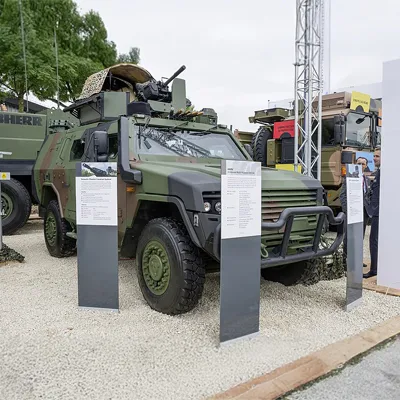
The current war is changing at a speed that requires incessant innovation in the defense platforms. Since the asymmetric warfare in cities to the high-intensity peer fights, the military forces have been subjected to more sophisticated threats like improvised explosive devices (IEDs), rocket-propelled grenade (RPGs), anti-tank guided missiles (ATGMs), loitering munitions, and top-attack systems. Armored Vehicle Protection Systems have now taken over the center stage in the warfare survivability and success in this dynamic threat environment.
To the defense manufacturers, procurement agencies and systems integrators, the interest is no longer restricted to heavy plating. Rather the industry is moving in line with integrated, multi-layered protection system which consists of high technology materials, intelligent sensors, digitalized control systems and active and passive armors of military vehicles. The article dwells into the topic of the most appropriate armored vehicle protection technologies in the context of the war on the current era, analyzing the ways in which next-generation armored vehicle survivability solutions are redefining the resilience in operations.
The Strategic Importance of Battlefield Survivability
Battlefield survivability is a quality of a vehicle that is easy to hide, to endure attacks, and to remain active in a hostile environment. Practically, it involves crew protection, protection of mission-critical systems and post impact mobility.
Conventional armor on military vehicles has been aimed at kinetic energy penetrators and shaped-charge warheads. The contemporary battlefields however demand a holistic approach. The protection should consider multi-directional attacks, munitions that are delivered by drones, cyber-electronic warfare, and combined-arms operations.
To defense procurement stakeholders, survivability metrics are becoming the significant factor to make an acquisition decision as much as firepower and mobility. Survivable vehicles which can continue functioning after being hit are decisive tactical advantages. This change has pushed the pace in investing in new technologies in the protection of advanced armored vehicles that combine physical armoring, electronic countermeasures, and smart response systems.
Evolution of Military Vehicle Armor
The development of armour of military vehicles is a kind of a compromise between the protection, weight, and mobility. Early steel based armor systems offered good ballistic protection with a heavy weight impact on cars. The overweight increased maneuverability, fuel use, and drove to its limits.
The contemporary automotive armor designs use composite materials, ceramics, high-hardness steel alloys and reactive components. The modular armor packages provide mission-specific configurations, meaning that the operators can upgrade or downgrade the levels of protection depending on the threat estimates.
An oversimplified chronological comparison of the evolution of armor can help show the evolution:
| Generation | Primary Material | Protection Type | Operational Impact |
| First Gen | Rolled homogeneous steel | Kinetic protection | High weight, limited modularity |
| Second Gen | Composite and ceramic layers | Ballistic and shaped-charge resistance | Improved weight-to-protection ratio |
| Third Gen | Reactive and hybrid systems | Multi-threat mitigation | Modular, adaptive protection |
| Fourth Gen | Integrated active and passive systems | Kinetic, chemical, drone, top-attack | Networked, intelligent response |
This shift highlights the way intricate armored vehicle security has shifted further than the stationary shielding to the purpose of active, stratified security eco-systems.
Passive Protection: The Foundation of Vehicle Armor Systems
The armored vehicle defense is still based on passive protection. These systems do not need the use of external power and active intervention. They instead use material properties and structure design to absorb, deflect or dissipate the incoming energy.
Small arms fire, artillery fragments, and kinetic penetrators are the types of firearm defense against which ballistic protection systems are intended. They usually take the form of layered structures which interlace ceramics to fracture projectiles, compound backing to dissipate remaining energy and structural reinforcers to avoid spall.
Some major elements of passive vehicle armor systems are underbody blast protection, spall liners, add-on armor kits, and slat armor to overcome shaped charges. Contemporary designs use V-hulls in mine-resistant automobiles to divert blast energy off occupants.
Passively, in terms of B2B, suppliers of armor are emphasizing on lightweight materials that enhance fuel efficiency and mobility. The study of nano-structured ceramics and more advanced fiber composite has made significant improvements to the performance of the military vehicle armors and also lowered the total weight.
Active Protection Systems (APS): Transforming Defensive Doctrine
Active Protection Systems (APS) are one of the biggest innovations in the system of armored vehicles protection. In comparison to passive armor, APS identifies the threat that is coming in and eliminates it before hitting.
The APS solutions usually comprise radar or infrared cameras, threat classification programs, and countermeasure launchers. After identifying a projectile, the system estimates the path and uses interceptors to destroy or divert the projectile.
APS are of two major types:
The hard-kill systems are the ones that intercept the incoming missiles or rockets in a physical manner through explosive countermeasures.
Soft-kill systems are systems that are used to interfere with guidance systems by putting up smoke screens, electronic jamming or infrared decoys.
The combination of active and passive systems of armouring military vehicles generates a multi-layered defence system. Passive armor takes care of residual threats, and APS greatly eases the possibility of being struck directly.
To defense integrators, the adoption of APS opens up new challenges in terms of interoperability of the systems, power management, and compatibility of digital architecture. However, APS is an emerging area of core capability in next-generation armored vehicle survivability solutions.
Protection against Emerging Threats
The contemporary battlefields are being overwhelmed with the proliferation of drone attacks, loitering munitions. Such threats carry out attacks against the upper parts of cars, which used to be perceived as less vulnerable.
As remedies to such hazards, the manufacturers are coming up with stronger roof armor, overhead cage and directional active protection arrays. The electronic warfare integration is also contributing to the interference of the drone control signal.
Also, top attack missiles that have tandem warheads need multi-layered ballistic defense systems that can overcome precursor charges before the primary penetrator takes effect. State-of-the-art armored vehicle strategies are now being developed with composite-reactive hybrids which reply dynamically to consecutive effects.
Modern warfare has been characterized as the capability to overcome these dynamic threats with regard to the best armored vehicle protection technologies.
Digitalization and Smart Armor Architectures
The contemporary battlefields are being overwhelmed with the proliferation of drone attacks, loitering munitions. Such threats carry out attacks against the upper parts of cars, which used to be perceived as less vulnerable.
As remedies to such hazards, the manufacturers are coming up with stronger roof armor, overhead cage and directional active protection arrays. The electronic warfare integration is also contributing to the interference of the drone control signal.
Also, top attack missiles that have tandem warheads need multi-layered ballistic defense systems that can overcome precursor charges before the primary penetrator takes effect. State-of-the-art armored vehicle strategies are now being developed with composite-reactive hybrids which reply dynamically to consecutive effects.
Modern warfare has been characterized as the capability to overcome these dynamic threats with regard to the best armored vehicle protection technologies.
Weight Management and Mobility Optimization
Maintaining the mobility and augmenting levels of protection is one of the key engineering issues in the advanced protection of armored vehicles. Overweight reduces the speed, agility, and transportability.
Manufacturers of defense are taking this problem into consideration with the aid of modular armor combinations and scaling concepts of protection. The mission profiles can be configured to different vehicles, and this enables the operators to compromise between survivability and mobility needs.
Protection design is also being affected by the electric and hybrid propulsion systems. The more the power is available, the more active protection systems can be supported in vehicles without compromising the operational range.
The lightweight ballistic protection systems have a strong business case in especially expeditionary operations where speed of deployment and air transport is vital.
Integration Challenges and Industrial Collaboration
Finding next-generation solutions to armored vehicles survivability needs requires defense supply chain cooperation.
Equipment manufacturers, sensor suppliers, electronics companies and vehicle OEMs need to coordinate with one another.
The major items on the integration list are compatibility of power supply, mitigation of electromagnetic interference, redundancy of the system and high level of cybersecurity. Protection systems have become digitally interrelated, which means that they can be the targets of the electronic warfare and cyber attacks.
The procurement agencies are demanding more open architecture platforms where they can upgrade in future. Interoperable designs and modular designs lower the cost of the lifecycle and ease the technology refresh processes.
To hasten the innovation process and to suit the developing military needs, industrial partnerships and co-development programs are gaining momentum as a customary practice.
Lifecycle Management and Sustainment
Other than acquisition, lifecycle management is a very important factor in the performance of armored vehicle protection systems. The maintenance of armors, calibration of sensors, and countermeasures replenishment must be maintained.
Predictive maintenance strategies are possible due to condition-based monitoring systems. Evaluating the performance data of the ballistic protection system, and the active protection system, operators will be able to plan the upgrades and the repairs on time.
Contracts to sustain are now including software upgrades on threat detection algorithms in order to keep vehicles abreast with new weapon technologies.
In the case of defense contractors, all-inclusive packages of support build the long-term relationships with customers and provide better positioning against competitors.
Future Outlook: The Next Era of Protection
The future of the military vehicle armor is intelligent, adaptive systems that can react to the complex threats on their own. Studies are ongoing in electromagnetic armor and state-of-the-art energy-absorbing metamaterials and AI-enhanced analytics of threat.
Such passive protection measures can, in the future, be used to add to current active systems of protection by offering scalable mitigation to swarms of drones and small-scale projectiles.
Material science, digital engineering, and artificial intelligence are converging to create a new wave of armored vehicle protection systems with agility, adaptability, and resiliency as its main focus.
The demand of best armored vehicle protection technologies to modern warfare will keep on increasing as the global defense budgets spend their expenditure on modernization. The competitive environment will be characterized by suppliers who can provide integrated, upgradeable and lightweight solutions.
Conclusion
The protection of armored vehicles has improved past the use of heavy steel plating to complex and multi-layered defense ecosystems. Introduced today, the vehicle armor systems are composed of ballistic protection system, active protection system and intelligent digital architecture to improve survivability in the battle field that is becoming more complex than ever before.
Developed armored vehicle defenses are not limited to enhancements and additions but rather a strategy need. Through the adoption of both active and passive armor to the military vehicle, the defense forces will be able to counter various threats including kinetic penetrators, drone attacks etc.
Next-generation solutions to armored vehicle survivability in the next few years will be focused on modularity, lightweight materials, network-based detection, and AI-based defense. To both the defense makers and procurement agencies, one of the key approaches to operational superiority and personnel security on the battlefield today is an investment in new armored vehicle protection systems.
 Our Services
 Media Pack Download
 Newsletters
 Industrial Events