

A Comprehensive Guide to Materials Used In Vehicle Ballistic Protection
In recent years the need for ballistic protection for armored cars has risen with improvements in military vehicle ballistic protection, and military ballistic protection for commercial use armor. Likewise, as the intensity of threats increased, the types and efficiency of the available materials in providing added protection have also diversified. In this article, the most important materials applied to the vehicle ballistic protection are described – the new fibrous composited for the ballistic protection, the recent trends of lightweight ballistic armouring, etc. It is necessary to know about these vehicle armor protection levels and effects of such material for industries that are interested in security and durability.
1. Understanding Ballistic Protection and Its Levels
Ballistic protection levels speak of the extent of protection offered against certain projectiles by a material or armor. Various organizations as well as testing standards define them based on some characteristics that include the speed at which the projectile moves, force that is exerted by the projectile and the caliber of the projectile. Hence, in bulletproof automobiles and armored military automobiles, these standards have to be achieved so as to get appropriate level of protection against different threats.
Different tiers for the vehicle armor protection are designed for different purposes. Lower levels may be possible for civilian car application while high levels are possible in military vehicle ballistic protection. The key player in the ballistic protection for the armored vehicles has been headed by RUAG, a major defense firm, which has strived to evolve materials as well as test procedures to respond to these levels.
2. Key Materials Used in Vehicle Ballistic Protection
The materials applied in the vehicle armor do differ since each offers unique characteristics based on its application and protective measure to be provided. Here’s an in-depth look at the most common materials:
Carbon Fiber
It is said that carbon fiber possesses high strength along with lightweight properties. And it has been applied in ballistic control due to its high strength to weight ratio. However, being lightweight in structure, carbon fiber is well suited for lightweight ballistic armouring applications. While not as effective by itself to stop high velocity objects/Projectiles, it is commonly a second layer that when combined with another material make a layered composite that offers more stopping power.
If incorporated with other materials such as ultra-high molecular weight polyethylene (UHMWPE) or-high strength steel alloy the carbon fiber layers offer enhanced strength and flexibility to the armor configuration thereby enhancing the structural strength of bullet proof vehicles without the need for extra weight to hinder mobility.
High-Strength Steel Alloys
High-strength steel alloys (HSS) has been traditionally associated with body armor production because of its high durability and reliability in civilian vehicle ballistic protection Original from military ballistic protection, armor protected military and civilian vehicles.
These alloys possess both high durability and high resistance so that they can effectively take and distribute the force of a blow; therefore they are a crucial ingredient in the higher ballistic protection levels.
However, HSSs are usually heavy – that is why HSSs are sometimes used selectively, or reinforced by lighter structural members, for example, fiber composite materials to provide ballistic protection. The overall weight v protection issue remains a problem, but new alloy developments have rendered steel as a viable option, even for applications, where weight saving is paramount such as amoration fabrics.
Ultra-High Molecular Weight Polyethylene (UHMWPE)
Ultra-high molecular weight polyethylene (UHMWPE) is a synthetic or manmade material that has quickly found its way into used in such application as material used for protection of bodies of individuals and vehicles. UHMWPE is quite effective to ballistic impacts and has a reputation of an efficient energy müller. As a projectile impacts on UHMWPE, the fibres within this material inhibit the penetration of the projectile by dissipating the force.
In bulletproof vehicles and in soldiers’ protective clothing as well as in various levels of ballistic protection of civilian vehicles, UHMWPE is either used as a base material or in conjunction with other materials. Due to its small mass, it is especially desirable for those areas where portability and mass are the key factors – for example, in creating lightweight protective equipment, or bulletproof vests. Due to its peculiar properties, UHMWPE is gradually taking a prestigious position in the fibrous composite materials, used for ballistic shields.
3. Research Progress in Armor Protection Materials
Armor protection materials research has continued to target the highest protection levels, material weight, and product costs. Current investigations track the efficiency of blended materials that integrate carbon fiber, high strength steel alloys and UHMWPE. This hybrid design approach helps the armor designers to reap the full advantages from each material.
Other areas researched include more enhanced fibrous composite materials for ballistic protection whose goals focus on more flexibility and impact strength. This has brought new and lighter weight but very effective armoring material important for gun turrets and other weak points of armored vehicles.
Testing methods for ballistic protection levels have also evolved where a high-speed camera or computer simulation helps provide a better idea of material performance. There are professional companies like RUAG, which are the members of the companies carrying out the research of ballistic protection for armored vehicles and share their data and innovations with the industry.
4. Applications of Ballistic Protection in Military and Civilian Vehicles
Ballistic protection materials serve diverse functions in both military vehicles and bulletproof vehicles for civilians. Let's break down these applications:
Military Vehicles
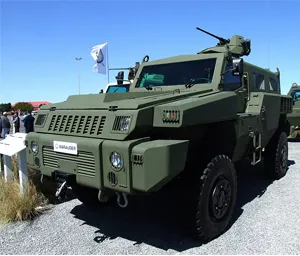
In ballistic vehicle protection, armor requirements include an ability to withstand a situation ranging from high velocity to explosion. High hardening steel and ultra-high molecular weight polyethylene are prominent materials that give high ballistic protection ranges needed in defense vehicles. Armored personnel carriers, tanks and other military equipment sometimes need specific features, for instance, guard for gun turrets. Techno-advancements in fibrous composite materials used for ballistic protection have enabled designers come up with lighter turrets, yet very strong as to offer protection to occupants while at the same time enable the vehicle to be mobile.
Civilian Bulletproof Vehicles
When it comes to body armor in civilian vehicles there is an understanding that the protection offered by military-grade ballistic materials must be discrete and functional. Fibers such as carbon fiber and UHMWPE aid in attaining protection without increasing the size or easily noticeable weight of vehicles. Passenger Protected vehicles are designed to withstand threats from small-arms fire and in some cases, high power rifle shots, this is within a consideration of practicality.
5. Innovations in Lightweight Ballistic Armoring
Ballistic armoring of relatively lighter weight has emerged as a special concern because of need for fuel efficiency and mobility. Due to emerging technologies in carbon fiber composites and fibrous composite materials, the design for ballistic protection has become flexible and durable to warrant use of light armor. These materials are gradually incorporated into the design of the new generation automobiles to guarantee that the automobiles can provide the desired levels of armor protection added to automobiles without the disadvantage of using massive and bulky traditional armor.
In lightweight ballistic armouring, material engineers incorporate the standoff and impact of carbon fiber and UHMWPE with the strength of high strength steel alloys at predetermined positions. This hybrid configuration gives a high measure of protection while at the same time being comparatively light, and is used in both military and civilian applications.
6. Future Trends in Ballistic Protection Materials
Forthcoming research in armor protection material research will lead to more advancement in military vehicle ballistic protection and military grade ballistic protection for civilian vehicles. They also have been focusing on developing new ‘further enhanced’ composite materials that may be used instead of metal in any aspect. For instance, nanomaterials, and or unique ceramics could provide for enhanced energy absorption, impact-tolerance and lighter overall weight.
Companies like RUAG and other defense contractors are research strategies for enhancing ballistic protection for armored vehicles whilst at the same time, lowering the BP of steel used in the manufacturing of such vehicles to have even higher ballistic protection levels that are less invasive to the environment. That is why, the majority of the materials used and the component parts are environmentally friendly, and the goal is to meet the environmental objectives of the world.
Conclusion
This article looks at the new materials that have entered the field of vehicle ballistic protection including carbon fiber, high strength steel alloys as well as the Ultra High Molecular Weight Polyethylene (UHMWPE). These materials together with fibrous composite materials for ballistic protection offer workable solutions to military bogey ballistic protection and military quality ballistic protection for civilian bogeys.
Yielding to the progressive enhancement on the research and technologies, the bulletproof vehicles are going to be stronger, lighter, and more versatile, accommodating rising global needs for different levels of vehicle armor protection in the modern era. Recognizing the characteristics and uses of those materials, industries can keep defending the military and civilians from the constant threatening.
 Our Services
 Media Pack Download
 Newsletters
 Industrial Events