
Micross Launches Next-Generation Standard-Performance Nuclear Event Detector
Micross has announced the commercial launch of its Standard-Performance Nuclear Event Detector (NED), a next-generation radiation detection solution that delivers major gains in sensitivity, response speed, and system efficiency. The new NED is designed to safeguard mission-critical electronics used in demanding environments such as aircraft, unmanned aerial systems, defence weapons platforms, satellites, and military ground vehicles.
The Standard-Performance NED is manufactured by Micross in the United States, with its Micross-designed ASIC produced by Jazz Semiconductor Trusted Foundry, Inc. (JSTF). JSTF is a US-based trusted foundry, a wholly owned subsidiary of Tower Semiconductor, and a US Department of Defense DMEA Category 1B Trusted Supplier. The device is offered as a standard commercial off-the-shelf (COTS) solution.
“Jazz Semiconductor Trusted Foundry is pleased to support the commercial launch of Micross’ critically important Standard-Performance NED,” said Scott Jordan, President of JSTF. “This programme highlights our commitment to delivering trusted ASIC manufacturing for advanced defence and aerospace technologies.”
Setting a new standard in nuclear event detection
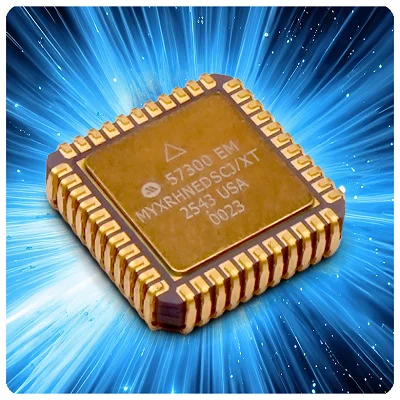
The Micross MYXRHNEDSCJ series sets a new benchmark for nuclear event detection and system protection. The Standard-Performance NED is currently available in limited quantities for evaluation, with full production of Extended Temperature Range (XT) and MIL-PRF-38534 Class H compliant versions planned for later this year. Both variants offer:
- Twice the radiation dose-rate sensitivity
- SWaP-optimised, low-power design with integrated differential line drivers and receivers
- More than 50% faster response time at 10× overdrive dose rate (3–5 ns at 20–50× overdrive)
Unlike traditional NED designs developed more than four decades ago, the Micross solution integrates differential line drivers and receivers directly on-chip. This removes the need for external drivers, reducing board space, shielding requirements, system weight, and overall response latency that can significantly slow legacy systems.
Designed for fast and reliable protection
Advancements in Micross’ internally developed PIN diode and IC architecture enable rapid prompt-dose radiation detection and industry-leading response times. These enhancements help protect critical electronics while supporting continued system operation during nuclear events. The NED is designed for easy integration into a wide range of subsystems, including power supplies and data communication networks. Its SWaP-optimised architecture ensures flexible deployment across varied operational environments.
Key features
- Gamma dose-rate sensitivity threshold: 1 × 10⁵ to 2 × 10⁷ rads (Si)/sec
- Radiation-hardened performance:
- Total dose survivability: 1 × 10⁶ rads (Si)
- Dose-rate operate-through: 2 × 10⁹ rads (Si)/sec
- Dose-rate survivability: 1 × 10¹² rads (Si)/sec
- Neutron fluence operate-through: 5 × 10¹³ neutrons/cm²
- Integrated differential drivers and receivers for improved noise immunity and reduced SWaP
- Operating temperature range: –55°C to +125°C
- Compact 44-pin non-hermetic J-lead SMT package (0.650 in × 0.650 in × 0.113 in)
Performance advantages
- Faster detection and system response
- Improved noise immunity
- Reduced system size, weight, and power consumption
- Higher reliability in extreme radiation conditions
Micross also provides customisation options to tailor response time, sensitivity, dynamic range, and form factor to specific mission needs, with application engineering support throughout the design-in process.
“Micross’ next-generation NED delivers faster, smaller, and more reliable nuclear event detection,” said John Santini, Chief Technology Officer at Micross Components. “By applying modern design methods to proven technologies, this device clearly outperforms legacy solutions and offers enhanced protection for critical electronics.”
The Standard-Performance NED is available now for evaluation in limited quantities, with full production of XT and MIL-PRF-38534 Class H versions scheduled for later this year.
Source: prnewswire.com
 Our Services
 Media Pack Download
 Newsletters
 Industrial Events