

Aptiv’s Winchester Interconnect Expands RF Connectivity Portfolio with VITA 67.2 Product Line
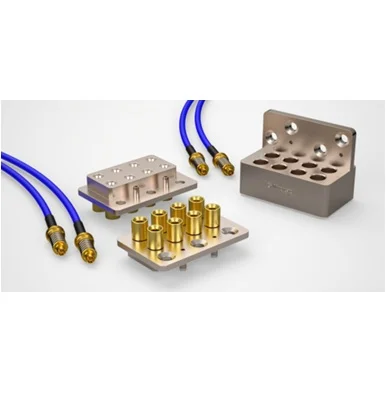
Aptiv PLC and its Winchester Interconnect business have introduced a new VITA 67.2 RF connector product line designed to meet the growing demand for high-density, high-frequency connectivity in aerospace and defence systems. The new solution integrates up to eight RF signal channels directly within a standard OpenVPX backplane slot, significantly reducing the need for external coaxial cabling while creating additional space for computing power, sensors and advanced signal-processing capabilities.
As defence platforms become increasingly sophisticated, system designers face mounting pressure to deliver greater bandwidth and functionality within tighter size, weight and power (SWaP) constraints. Traditional external RF cabling adds weight, complicates maintenance and introduces potential failure points in harsh operating environments. By embedding RF signal paths within the connector architecture, Winchester Interconnect’s VITA 67.2 solution helps address these challenges while supporting the industry’s transition towards open standards such as the Sensor Open Systems Architecture (SOSA).
"With the addition of VITA 67.2 solutions to our growing line of multiport gangmate interconnect products, we are further solidifying our ability to support next-generation high-density RF applications," said Leslie Sullivan, Director of Product Management. "This latest addition allows us to further expand our robust, high-performance interconnect portfolio while offering customers reliable, space-saving solutions for use in today's demanding aerospace and defense platforms."
Key Advantages of the Vita 67.2 RF Connector Product Line
- Field-Serviceable Blind-Mate Engagement: Modules push straight into the backplane and seat automatically, with no precise alignment or twist-to-lock step, reducing board swaps from a multi-step process to a single push-in motion.
- Built-In Float: Each RF contact moves in multiple directions to absorb the small manufacturing tolerances that exist on every backplane, keeping signal quality consistent through repeated installations and high-vibration environments.
- Higher RF Density per Slot: Up to eight SMPM (Sub-Miniature Push-on Micro) coaxial contacts per module, raising channel count without enlarging the footprint.
- Standard VPX Footprint: Installs into the 6U Open VPX slot positions (P5/J5 and P6/J6) used across the current defense computing base, fully compatible with VITA 46.
- Wide Frequency Range: DC to 26.5 GHz standard, with options to 40 GHz for next-generation high-bandwidth designs.
- Qualified for the Hardest Environments: Stainless steel housing and gold-plated contacts, environmentally qualified to MIL-STD-810 and VITA 47 for shock and vibration.
Built for the Programs Driving Defense Modernization
The new connectors target the systems where RF density and field serviceability matter most:
- Electronic Warfare (EW) and Electronic Counter Measures (ECM): Higher channel counts per chassis support the broader frequency coverage and faster response cycles required of modern jamming and countermeasure systems.
- Signals Intelligence (SIGINT): Dense, low-loss RF paths enable wideband simultaneous capture across multiple bands without external cabling penalties.
- Radar and Sonar Systems: Transmit and receive module connections for digital beamforming arrays across X-band, Ku-band, and beyond.
- Avionics and Secure Communications: Reliable, vibration-tolerant RF links for flight-critical platforms.
- C4ISR Platforms: Direct backplane integration between high-performance VPX compute modules and RF front-end systems, reducing harness complexity in dense sensor-to-shooter architectures.
Built to the OpenVPX (VITA 65) standard, the new connectors interoperate across the broader VPX ecosystems, giving dense integrators a connector they can specify with confidence today and a supplier that is investing alongside the open-standards roadmap shaping the next decade of defense electronics.
Source: businesswire.com
 Our Services
 Media Pack Download
 Newsletters
 Industrial Events