

Transforming Defense Communications: The Strategic Integration of 5G in Aerospace and Military Networks
The need to establish communication systems that are more responsive, more secure, and quicker is at an all-time high as far as the world of modern warfare and aerospace operations is concerned. The traditional communication systems that were once commendable have been limited in their capability when applied to the complexity, and speed of the combat and aerospace environment that is present today. That is where 5G in defense systems comes in not as a technology enhancement, but as a strategy.
What therefore is the future of Defense Communication Systems in a hyper-connected world? The convergence of 5G-powered military networks is expected to deliver not only enhanced throughput but become ultra-low latency, dynamically flexible spectrums, and excellent encryption mechanisms that will operate within a mission-independent critical environment.
It is time now to cross over how strategic integration of 5G in the defense machinery is making it possible to offer a new dimension of communication, planning, and execution of the conflict between the air and ground defense troops.
The Evolution of Military Communication: A Need for Speed, Security, and Synchronization
The current military operations rely on real-time intelligence, high resolution surveillance, unmanned system, and synchronization of troop movement- all of which produce immense amounts of data. The traditional models of defensive communication have begun to fall short of the stress considering such dependence on connectivity.
By providing a high-speed, secure alternative to address these challenges, data transmission rates of 5G in the defense are expected to make defending operations much easier in contested environments and allow defense forces to protect communications even in contested environments. 5G-enabled military systems offer multi-gigabit-per-second speed that increases the effectiveness of streaming live drone footage, updating battlefield maps in real time, or managing large command, and control systems remotely
How 5G Enhances Real-Time Communication in Military Operations
Real-time communication and speed are the founding blocks of successful military interaction. It may be the timely organization of the multi-branch mission or adjustment to the emergent changes on the battlefield, but response time can make the difference between a successful mission or its failure. The out-of-this-world question is how 5G will make real-time communication possible during military activities, the answer is a combination of extremely low latency which is usually less than 1 millisecond.
This enables perfect transfer of mission-critical data between field units and command centers in real-time. Some of the applications of this concept will be in an unmanned drone surveillance or an air-to-ground attacking coordination process where the necessary system to enable this flow of data needed to be seamless and given through the 5G platform of command and control platforms in defense. Furthermore, the 5G enabled mobile command units can now act as fixed bases, having complete availability to satellite feeds, encrypted networks and logistics information.
Secure Military Communication with 5G: A Cyber-Resilient Framework
The vulnerability of 5G's military deployment is among its most contentious issues. Is this technology that is saturated and developed as a civilian technology safe enough to be utilized as defense? The solution is individualization. There is also secure military communication in 5G that is facilitated by using 5G networks privately and not connected to otherwise relying on commercial 5G providers and including military level encryption and access management.
Also, the network can be sliced- a 5G feature. What this implies is that every operation, be it reconnaissance or logistics can have its own slice with varied security and performance instantiations. Not only is 5G in defense systems a faster and more advanced security model, but it is also much more difficult to breach.
5G Applications in Defense Operations: From UAVs to Soldier Wearables
The diversity of the uses of 5G in the defense system is overwhelming. Use in aerospace 5G internet access can be used to transfer telemetry and diagnostic data between aircraft and the ground control in a relatively short time. This would allow predictive maintenance to avoid failures increasing the amount of downtime.
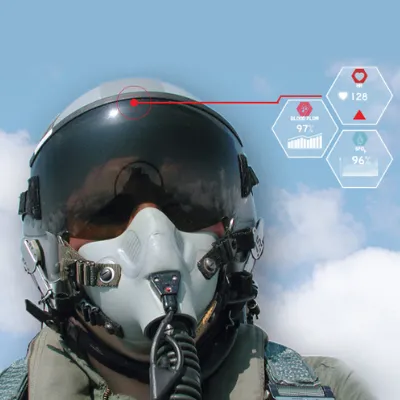
During ground operation the military is testing 5G connected networks with wearable technology to ensure a soldier tracks his vital signs, his location, and even his ammunition supply as it happens. This is then combined with wider next-gen defence communication systems and this enables command centers to constantly check the health and effectiveness of the units.
Now we can take a comparative table of traditional and 5G-advanced defense systems:
| Aspect | Traditional Systems | 5G-Enabled Systems |
| Latency | 10–100 milliseconds | <1 millisecond |
| Bandwidth | Limited (MBps) | Multi-Gbps |
| Device Capacity | Dozens per node | Thousands per node |
| Mobility Support | Low to moderate | High-speed mobility up to 500 km/h |
| Encryption & Security | Strong, but static | Dynamic, multi-layered, slice-based security |
| Scalability | Moderate | Highly scalable with software-defined capabilities |
| Application Support | Radios, satcom, limited data | Drones, AR/VR, wearables, autonomous vehicles |
As portrayed, 5G's contribution to aerospace and defense communication is not constant but rather transformative.
Next-Gen Defense Communication Networks: Bridging Earth and Sky
The new generation defense communication networks are not only faster or more efficient, the philosophy of operations is being redefined. The clear concept of separation of terrestrial, aerial and satellite communication systems no longer exists. All these platforms are intact that can be brought under a common platform with the implementation of 5G in defense systems.
Aerospace fighter jets and surveillance planes can be used as nodes of 5G connectivity in the air to cover the battlefield and transmit data flow of ground forces to the satellites without delay. Locally, 5G enables mobile operations centers on the ground and robotic systems to synchronize data in real-time and navigate with the AI-driven decision making.
This convergence of the physical and virtual is where the really strategic potential of 5G enabled military networks are possible. The defense sector is in a position to go from isolation to integration and from reactive to predictive.
Market Insights: A Growing Investment in 5G Defense Technologies
Frost & Sullivan, a market research firm, predicts that the world would invest more than $40 billion in 5G in defense systems by 2030. Telecommunications titans are already collaborating with defense companies such as Lockheed Martin, Raytheon, as well as Northrop Grumman, to create battlefield-ready 5G network infrastructure.
The serious intent to use 5G within the system of modern defense communication system is highlighted by the fact that the U.S. Department of Defense has invested the amount of money worth $600 million in the testing program of the 5G devoted to the testing of the bases. Similar programs are also sought by the NATO, the U.K. Ministry of Defence and DRDO (India).
So what is fueling this? The simple potential of 5G in military activity: not only driverless convoys and border protection, but also smart base, or battlefield AR/VR training simulations.
Challenges in 5G Integration in Defense Systems
There are still some challenges that are associated with 5G integration into the defense systems even place in spite of the enormous potentials of the same. One of such problems is spectrum allocation, which the military needs to have exclusive frequencies that would not disturb the networks of the civilians. Further, both backward compatibility and interoperability within NATO forces is a crucial issue.
Security itself is still a moving target, but 5G helps to increase it. When open interfaces and software-defined networking are embraced, the issue is that vulnerabilities can be replicated without proper testing and constant surveillance.
But, nevertheless, all this can be overcome. Strategic requirements of 5G-enabled command and control systems in the military are the reason why this innovation velocity ensures that the solutions may be actively developed by the entities in defense research labs and even by a dozen defense-tech firms.
The Road Ahead: From Pilot Projects to Full-Scale Deployment
A lot of countries find themselves at the pilot testing stage, whereby they use the 5G-enabled military networks in closed systems like smart bases, naval shipyards, and command cars. Taking the deployment to a larger scale will entail a change in the approach taken in procurement, budgetary allocation and training programs.
In due course the way 5G can optimize real time communication in military firing missions, will itself redefine the mission architecture. The nature of the future conflicts may be described as a flock of autonomous drones controlled through 5G or logistics chains to be controlled by AI, edge analytics managed through the real-time usage of wearable by soldiers.
With evolution of such next -gen defense communication networks the dependency of the military on its old radio and satellite system is gradually going to diminish. Rather, self-healing, a dynamic 5G mesh network as well as cloud-native architecture will become the standard.
Conclusion: Why 5G is More Than a Technology - It’s a Strategic Asset
The effects of 5G on aerospace and defense communications are much more of a reach than offering better bandwidth. It is all about mobilities, it is about resilience and tactical superiority in peace and fighting. When it allows a network of smart, real-time connectivity on all tiers of functionality, the 5G in the military establishment is bound to become the nervous system of the contemporary warfare.
This is not about getting even with the new advances in the field of military communication with a 5G leap and re-establishing the concept of aerial command through command and control systems managed using 5G, it is about being way ahead of the game.
The military who get to conquer the power of 5G in the military universe will not only be technologically ahead of everyone but also strategically unbeatable. The field of the future warfare is made digital, and 5G in defense technologies is creating the light in the darkness.
 Our Services
 Media Pack Download
 Newsletters
 Industrial Events