

Top Night Vision and LWIR Technology Breakthroughs for Modern Warfare
Introduction
Ability to visualize what others cannot see is now the edge between winning and losing a combat in the contemporary security setting. Whereas, traditionally military power was being measured only in terms of fire power, it is currently being equally gauged in terms of perception i.e. capability to observe, detect, and neutralize threats under all kinds of conditions. It is here that night vision technology in the defense and Long-wave infrared (LWIR) imaging come into the limelight. Cumulatively, they have revolutionized the perception by the armed forces of the battlefields, reconnaissance and attainment of tactical supremacy.
The development of these tools, whether night vision devices in the military sense or the development of infrared imaging devices adds to the fact that it has literally been revolutionary. Modern warfare optics and its sophisticated night vision systems needed in the military had become such a race that research and development has boomed across the globe. Not only to address the threats we have today, but also in hopes of predicting the challenges we will face in the future, defense organizations are placing significant investment on the night vision and thermal imaging solutions.
This article examines the greatest advancements in such technologies, their use, and how they are defining the future of the current optics technology in the defense centrality.
The Evolution of Night Vision Technology in Defense
Night vision technology as it applies to defense can be traced back to World War II when crude devices provided soldiers with a crude edge in the low-light battlefield. Possessing a huge and power-demanding initial form, such systems were dependent on image intensification. Flash forward to the present day and the revolution has been spectacular.
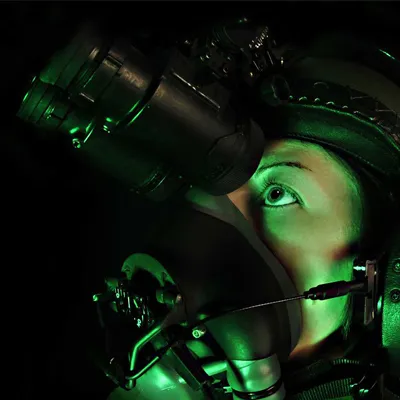
The night vision devices of the military are presently pocket-sized, light weight and very useful in a moonless starless scenario. When combined with the infrared imaging systems they enable forces to see movement ultimately detect friend/foe and provide mapping of entire battle terrains in spite of the darkness. The most important is the way in which low-light surveillance solutions have merged with advanced combat optics, allowing people to collect intelligence in the clearer manner, never before seen.
The Rise of Long-Wave Infrared (LWIR) Imaging
The working principle of Long-wave infrared (LWIR) imaging is in contrast to that of conventional movement in night vision. It receives heated radiation of objects, which means that it is a strong complement to image intensification technologies. As opposed to other optical systems, LWIR sensors in defense applications offer the ability to see through occlusions such as smoke, fog, and even camouflage, a benefit to the military by providing huge tactical value.
LWIR sensors possess a lot of beauty because they are versatile when it comes to application into defense. They may be mounted on airplanes, drone, armored vehicles, and handheld devices as well. With advanced night vision military systems that have LWIR sensors, soldiers will be able to see through the dark, hidden snipers, vehicles approaching, or enemy movements behind some obstacles.
Night Vision and Thermal Imaging Solutions in Modern Warfare
The combining of night vision and thermal imaging technologies is one of the most important trends of the last ten years. Rather than having to decide between the use of light amplification and thermal detection, soldiers now can use hybrids which combine both. Such dual capability settings give a higher level of situational awareness that gives the military personnel the ability to make life-saving decisions in seconds.
As an example, in urban warfare or the battle in thick wood, modern warfare optics combining the features of both technologies results in a threat recognition immediately. Infrared imaging systems enhance the details, giving a clear operational view of what is happening, whereas thermal imaging only creates heat signatures. The combination has become characteristic of contemporary defence optics technology and is transforming the battle field strategies.
Low-Light Surveillance Solutions: Beyond the Battlefield
Although vested in the field of combat, low-light surveillance products have found applications in border security, vigilant patrols and counter terrorism operations as well. The development by countries notably invested in night vision technology in the defense forces is not only about preparation of war but homeland security as well.
Defense-oriented surveillance drones with LWIR sensors are now patrolling dangerous areas and on-demand infrared imaging systems reliably guard vital assets on a round-the-clock basis. This dual-use of the high-tech night vision builds a picture as to why governments are spending billions of dollars in improving the latest night sight and night vision processes in the military science.
Market Insights: Growth of Defense Optics
The defense optic market is witnessing a tremendous growth across the globe with significant impacts of developing night vision and thermal imaging applications and modern warfare optics. Reports on the defense market indicate that the military infrared imaging device and advanced night vision devices market are to have a skyrocketed growth in the coming decade.
| Technology Segment | Market Growth Projection (2025-2035) | Key Applications |
| Night vision technology in defense | 8% CAGR | Infantry, reconnaissance, covert operations |
| Long-wave infrared (LWIR) imaging | 10% CAGR | Drone surveillance, armored vehicles, aircraft navigation |
| Military night vision devices | 7.5% CAGR | Tactical field operations, night patrols |
| Low-light surveillance solutions | 9% CAGR | Border monitoring, counter-terrorism, coastal security |
| Modern defense optics technology | 11% CAGR | Hybrid fusion optics, AI-powered targeting systems |
These figures point to the increasing interest of night vision technology in the areas of defense and LWIR sensors in defense application as nations modernize their defense forces.
Advanced Night Vision Systems for Military Operations
Advanced night vision systems of the latest generation used by military are much more advanced than the previous generation of them. Combined with Artificial Intelligence (AI), they have resulted in predictive analytics, target recognition and automatic threat detection. The use of infrared imaging equipment, where machine learning is involved, helps soldiers to determine the type of a weapon as well as anticipate motion flows based on heat tracing.
There is also the new trend of using wearable night vision equipment on the military forces combined with augmented reality screens. This combination of over ridings and military modernisms is evident in the way that the modern defense optical device coupled with the digital interface is setting out to make the soldiers view maps, tactical information and enemy location right inside their line of vision which was something present in science fiction not so long ago.
The Role of LWIR Sensors for Defense Applications
There is no conceivable way to speak about the optics of contemporary warfare without highlighting the importance of LWIR sensors as the object of military usage. The sensors have proved indispensable in asymmetrical wars where the foes tend to slip in precarious areas or in mixed locations with civilians.
The defense-related LWIR sensors mounted to Unmanned Aerial Vehicles (UAVs) are able to locate hidden LEDs, follow insurgents, and alert command posts with up-to-date information. It is this capability that renders them invaluable to night vision and thermal imaging devices assisting operational decisions at any level.
Modern Defense Optics Technology: Shaping the Future
The history of the modern defense optics technology is yet to be made. Miniaturization, higher power efficiency and quantum imaging integration are likely to be witnessed in the next few years. The end result that the high end night vision equipment are aiming at in the military is to provide troops with near omniscient capability in battlefield overview.
Consider a situation whereby the technology of night vision in the field of defense flows smoothly to satellite reconnaissance, drone feeds and optics being used by soldiers. With the help of infrared imaging systems and low-light surveillance solutions, such fusion will render it nearly impossible to stage surprise attacks and will change the essence of war forever.
Challenges and Ethical Considerations
Nevertheless, night vision technology on defense and Long-wave infrared (LWIR) imaging are impeded despite the fast rate of innovation. Energy consumptions, extremely high prices, and also the rugged durability needed in extreme climates are still a hindrance. Furthermore, there are ethical issues with the military's extensive usage of night vision equipment. When used by hostile forces, such technologies may be everything as empowering as the national armies.
Governments are thus trying how to control the proliferation of the modern defense optics technology and at the same time, not losing their advantage in their armies. Innovation and control are a fragile issue.
Conclusion
The advancements in night vision technology in the defense, and the Long-wave infrared (LWIR) imaging are not merely those that constitute the advances in the field, but are game changers. Modern militaries can rule the battlefield like never before by using night vision and thermal Imaging Solutions, infrared imaging systems and LWIR sensors.
The boundary between day and night in the battlefield is fading as hi-tech night vision equipment capable of use in warfare by the military develops, assisted by AI and the digital medium. Whether you are talking low-light surveillance solutions closing borders to advanced defense optics technology transforming tactics, the future of warfare is a place where what you can see is always clear and what you cannot see is kept to scrutiny.
The next decade will see the determination of the victors in battles, as much based on those who see first, who see better and who interprets the information most accurately, as on those who have the greater firepower. In that regard, the true weapon of actual war may not be gun or the drone but the eye enriched with the wonders of night vision where the military defense and the Long-wave infrared (LWIR) imaging are also in the picture.
 Our Services
 Media Pack Download
 Newsletters
 Industrial Events