

Cybersecurity in Defense: How Military Networks Are Evolving to Combat Cyber Threats
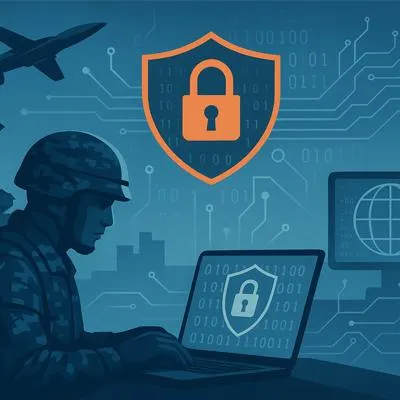
The role of cybersecurity in defense cannot be overestimated in the age when digital networks create the basics of military action. Military forces worldwide are becoming more reliant on advanced communication and information networks to deal with logistics, communication, and improved battlefield awareness. Nevertheless, the increased usage of these systems becomes the main target of cyber attackers who want to disorient the work, steal valuable information, or destroy the critical infrastructure. The more sophisticated cyber threats are, the more sophisticated the tools and approaches used by military forces to counter their threats need to be.
The Evolving Menacing Landscape.
Defense cyber threats are no longer speculative topics with theorists and academics talking about them but are tangible and tangible individuals are facing actual threats. Sponsored by the state, hacktivists, cybercriminals, and even lone-wolf attacks have also been targeting military systems, hoping to find the weaknesses and have an advantage over the opponent. Cyberattacks are currently ranked as one of the topmost national security threats according to the U.S department of defense, and the pentagon has cited cyber threat as one of the greatest challenges to global security.
There are numerous types of cyberattacks on military networks including:
Denial-of-Service (DoS) and/or Distributed Denial-of-Service (DDoS) Attacks: Flooding of networks to disable networks used in a military.
Malware and Ransomware: It is also the introduction of malicious code and can corrupt or shut down computer systems or demand ransom to restart operating again.
Data Leaks: Stolen intelligence, operation schemes and classified messages.
Espionage and Information Warfare: Infiltrating data to influence decision making, opinion or military preparedness.
These attacks are also getting higher and more advanced in terms of their techniques as they employ advanced systems like AI-powered malware, zero-day exploits and social engineering to get around the old-fashioned defenses. The possible consequences of these threats are overwhelming, as it can be the loss of classified military intelligence to the paralyzing of entire fleets or even weapons.
Military Networks Under Siege
The systems at risk are critical, which is why the urgency of the military network development should be considered. Military activities also depend on networks whenever it comes to real-time communications between units, satellite navigation, sharing of intelligence among others as well as operational command and control (C2). A cyber-attack of such networks will jeopardize the success of missions, place the lives of people at risk, and undermine national defense capabilities.
In 2007, a massive international cyberattack was recorded in Estonia when Russian hackers caused a wave of DDoS attacks on critical infrastructure, including government and military websites, in the country. This was like a wake up call to the world defense community on the potential vulnerability of military networks. The event underlined the importance of cybersecurity in national security which increased and most countries began to invest in more secure defense systems.
The Evolution of Cybersecurity in Military Defense
There is also a dramatic change in the cybersecurity strategies and technologies of the military networks in the face of the growing threats. Defense has now expanded past the conventional perimeter defenses (firewalls, encryption etc.) and contains the latest technologies and methods. This change is informed by the fact that the cyber threats cannot be solved using the old-world strategies only. The following are some of the major ways through which military networks are enhancing to fight off cyber threats:
1. Combined Cybersecurity Structures.
The current military cybersecurity approaches are more than ever before integrated. Instead of relying on isolated cyber defense forces or systems, the military has adopted a more unified perspective and has synchronized cyber operations, information operations, and electromagnetic warfare into a single network to counter and respond to the cyberattacks.
The U.S. cyber command (USCYBERCOM) is an example of an organization that has gone a long way in merging cyber capabilities and military operations. USCYBERCOM has the responsibility of protecting DoD networks, as well as assisting in operations and disrupting cyber activities by adversaries. The fact that the command is being incorporated into the larger defensive strategies is an indication of the increasing awareness that cyber defense is a force multiplier in modern warfare.
2. Machine Learning and Artificial Intelligence in Cyber Defense.
With the persistence of cyber threats in terms of complexity, the necessity of automation and sophisticated detection mechanisms has grown to be urgent. Artificial intelligence (AI) and machine learning (ML) are the two fields the military is considering to boost their cyber defense. The AI and ML systems can quickly identify and respond to abnormal behaviour, learn over time to identify and forecast future attacks as well as make real-time decisions on how to counteract emerging threats.
As an example, artificial intelligence-based cybersecurity applications can sort through large volumes of data that military networks create to identify the behavioral patterns of a cyberattack.
3. Threat Hunting and Advanced Intrusion Detection Systems (IDS).
Threat hunting is another important military cybersecurity evolution. Threat hunters are actively involved in finding possible vulnerabilities, lurking malware, and indications of ongoing cyber threat in the military networks. It is a break away from the old forms of defense where most strategies tend to be based on a reactive approach involving detection and reaction once the attack has been executed.
The new advanced intrusion detection systems (IDS) have included heuristic and behavioral analysis that is able to detect not only those malware signature signatures but also new and unknown malware attack methods. These IDS systems can understand threats in terms of behavior and activity therefore are far more useful in detecting zero-day vulnerabilities and sophisticated attack strategies.
4. Zero-Trust Architectures
Zero Trust is quickly turning into a military cybersecurity principle. No party (internal or external to the network) is trusted in default in a Zero Trust architecture. This is unlike the traditional defense models which simply give implicit trust to internal users or systems.
With a Zero Trust, all access requests to the military systems, both user and device, are to be continually authenticated by means of multi-factor authentication, behavior analysis, and context-dependent security policies. This minimizes the chances of sideways moving in the network, which the attackers may end up increasing their privileges after having the first access.
5. Cybersecurity Workforce Development and Training.
Technology is as advanced as it can be but still human error is a major cause of breach of cybersecurity. The military has been greatly increasing the rate of training and workforce development to ensure that the military personnel are familiar with cyber threat identification and response. Cybersecurity training is no longer exclusive to the technical personnel, but to all service members since even basic awareness can stop significant breaches.
6. Teamwork and Knowledge Exchange.
Since the current cyber threats have transnational characteristics, cooperation among nations, defense agencies, and the private-sector players is important. International distribution of threat intelligence, attack practices, and cybersecurity equipment can enable a superior defense position. To illustrate this, the NATO Cooperative Cyber Defence Centre of Excellence (CCDCOE) engages in training member states to amplify their cyber defense capabilities to enable the militaries respond to cyber attacks as one unit in a concerted effort.
Cyber Defense Technologies in Use Today
A variety of innovative technologies are being used by the military forces to enhance cybersecurity. Among the most influential technologies, there are:
Next-Generation Firewalls (NGFWs): This is an improved firewall, which has features as application control, intrusion prevention systems (IPS) and deep packet inspection to avert ill-purposedness in real-time.
Endpoint Detection and Response (EDR): EDR systems will offer 24x7 monitoring of the endpoint devices (laptops, mobile devices, etc.) and in this regard besides being able to detect suspicious behavior within a short period of time, it will also be able to detect the lateral movement within the network.
Blockchain and Cybersecurity: The blockchain technology is reviewed by some military agencies to ensure the safety of communications, protect the important data, and provide the integrity of the supply chain. The ledger system of blockchain is immutable, which is why it is especially appropriate to use it to build tamper-proof records of military transactions.
Quantum Cryptography: The military is also studying quantum cryptography to secure the transmission of message and data. Based on the concept of quantum mechanics, the technology will provide virtually unbreakable encryption.
Looking Forward To The Future of Cybersecurity in Defense:
The future of military cybersecurity is defined by the further development of technologies, more extensive application of cyber capabilities to defense strategies, and the persistent emphasis on creating resilient and adaptive systems able to react to the arising threats.
Cyber resilience, i.e. the capacity of military networks to stay functional even in case of a successful cyberattack, is one of the areas that may grow further. The defense measures in the future will not be limited to the prevention of attacks but will also include the ability of the military forces to recover rapidly and continue to be efficient in the context of a cyber crisis.
In addition, the emergence of autonomous systems (drones and AI-guided weapons) also offer opportunities and threats to military cybersecurity. It will be important that such systems are immune to cyber threats in order to help sustain the efficiency of military operations in the future.
Conclusion
Military networks should be developed to be a step ahead as cyber threats continue to become more sophisticated. The use of innovative technologies, such as AI, machine learning, and Zero Trust systems, and effective training and cross-national collaboration will be the primary component of enhancing the cybersecurity of the military in the future. The dynamic nature of cyber warfare requires the defense sector to be swift, innovative and active to ensure national security in the cyberspace era.
 Our Services
 Media Pack Download
 Newsletters
 Industrial Events