

Ballistic Protection in the Navy: A Comprehensive Overview
Whenever you reflect on warfare at sea, your mind may first wander to submarines, aircraft carriers or far-fetched missile systems. But have you ever wondered how naval personnel and vessels protect themselves from modern ballistic risks? Rest assured that we welcome you to the exciting world of Naval Ballistic Protection, which is the meeting point of science, strategy, and technology to formulate defense mechanisms that save life and protect assets.
Why is Naval Ballistic Protection So Critical Today?
Naval warfare is increasingly changing in the last decades. In the age of proliferation of high speed missiles, drones and precision guided threats, ballistic protection systems are no longer optional – they are necessary. Whether it’s a ballistic missile defence system protecting an entire fleet or a personal armour system to ensure individual sailors are protected, the range of ballistic threat mitigation has developed very rapidly.
As a result, it raises a strong question: What are precisely the Navy’s layers of defense against ballistic attacks, and how do they work?
The Anatomy of Naval Ballistic Protection
Naval Ballistic Protection is a conglomerate of defensive strategies and technologies in a layered architecture. These include:
| Layer | System/Component | Function |
| Ship-level Armor | Naval armor protection, modular armor systems | Resists hull breaches and fragmentation |
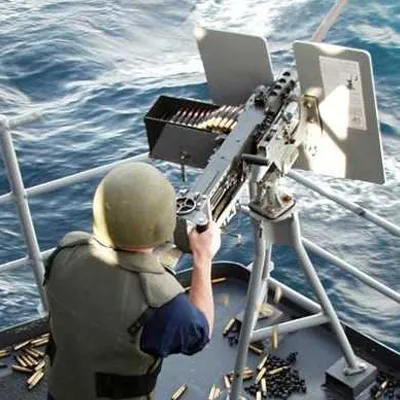
| Personal Gear | Personal armor systems, enhanced protective gear | Shields sailors from small arms and shrapnel |
| Detection & Tracking | Ballistic missile defence system | Identifies incoming threats in real time |
| Specialized Devices | Ballistic laser eye protection system | Protects eyesight from directed energy and laser attacks |
This layered system is a comprehensive ballistic protection system that allows response to multiple threat scenes.
Naval Armor Protection: Reinventing the Ship’s Skin
You may not believe it but modern warships are not unbreakable. Their ability to survive in naval operations depends largely on naval armor protection which has moved on from heavy steel plating to such complex armor technologies as composite ceramics, Kevlar layers and titanium alloys.
You may not believe it but modern warships are not unbreakable. Their ability to survive in naval operations depends largely on naval armor protection which has moved on from heavy steel plating to such complex armor technologies as composite ceramics, Kevlar layers and titanium alloys.
What’s interesting, though, is the ingenuity of modular armor systems. These systems enable navy engineers to upgrade or change individual armor sections without refurbishing the whole ship. This modularity provides cost-effectiveness and operation flexibility – two important benefits in the ever-changing combat spheres.
What if a ship could ‘heal’ its armor after collision? Wouldn’t that be a revolution? Scientists are already working on developing self-repairing protective armor solutions as a future possibility.
Multi-Threat Protection: Adapting to Evolving Battlefields
The bullets and missiles are no longer enough. Naval forces must defend against a variety of threats, including repelling drones, EMPs, directed-energy weapons and cyber-influenced ballistic targeting systems, a multi-threat protection challenge.
Here, ballistic protection standards come into play. These internationally recognized benchmarks define how resistant to impact, penetrable, and rugged tactical protection equipment is. These standards make sure that whatever type of ship, aircraft or naval-sailor there is, they will be adequately maintained to withstand various combat situations.
Personal Armor Systems: Protecting the Backbone of the Navy
Let’s not forget man himself. Naval officers and soldiers’ lives are protected using personal armor systems and improved protective equipment for both high mobility and prolonged usage. These include:
- Bullet-resistant vests
- Flame-resistant suits
- Ballistic laser eye protection system
- Blast-resistant boots and gloves
Among the most exciting innovations is the ballistic laser eye protection system which filters out the bad laser wavelengths that can blind personnel while engaging in electronic warfare. Who would have believed that even the eyes need such armor, unique?
Advanced Armor Technology: Materials of the Future
Would GPUs, carbon nanoparticle, or smart fabrics ever become the Navy’s armor? Researchers think the answer is yes. These materials are being tested in regard to their lightweight material and high strength which are suitable for next generation ballistic protection systems.
In addition, the new technology of advanced armor incorporates energy-dissipating substances which absorb the force of impact before it penetrates the inner parts of armour or hull. This substantially increases survivability in environments at a high risk of attack.
The convergence of nanotechnology with the solutions for protective armor may revolutionize naval defense ever.
The Role of Ballistic Missile Defence Systems
At strategic level, the guidance used is the long range shield for the navy’s ballistic missile defence system. It comprises:
- Early warning radar
- Satellite tracking
- Interceptor missiles
- Command and control systems
These systems are not only reactive – they are predictive. They monitor, disposition and engage several threats simultaneously and serve as the first line of ballistic threat prevention for a whole fleet.
Here’s an engaging stat: Some ballistic missile defence systems have ranges up to 1,500 km in detecting and neutralizing threats.
That’s like shooting a missile out of the sky while it’s still in international waters.
Tactical Protection Equipment for Special Operations
When Navy seal’s or special ops units conducting high risk missions, they rely on tactical protection equipment geared to deliver multi-threat protection in hostile situations. This gear needs to be light, but tough, concealed but useful.
Components include:
- Tactical helmets with communications
- Modular body armor with ballistic plates
- Low-visibility ballistic protection system suits
This raises an interesting question: How do designers strike the balance between comfort and protection?
The answer comes down to modular armor systems and the use of breathable materials which respond to changes in temperature and stress. After all, comfort is a way of enduring wars.
Ballistic Protection Standards: The Unseen Backbone
Prior to any system or gear being deployed the ballistic protection must withstand severe testing. These standards measure:
- Resistance to projectile penetration
- Blunt force trauma impact
- Heat and chemical resistance
- Environmental durability
Adherence to these benchmarks guarantees that improved protective clothing will operate dependably under pressure - be it frigid (arctic) cold, scorching (desert) heat, or water’s deep-sea moisture.
Future Trends and Final Thoughts
With the change of maritime threats Naval Ballistic Protection stratagem will change as well. Picture protective armoured solutions that form their shape in real-time or with an AI-driven ballistic missile defence system to get to it faster. The future also may contain exoskeletons that can be worn and augmented vision by means of ballistic laser eye protection system.
Tactical protection equipment is beyond just surviving; it is about succeeding in the worst war situations. The Navy’s investment in high-tech armor technology, personal armor systems, and multi-threat protection clearly indicate a trend that is headed in a direction of innovation and safety direction.
So, next time you see some naval man-of-war tearing its way across the water or a sailor ready for his fight, bear in mind all the science, strategy, and human ingenuity that keeps him out of harm’s way. And ask yourself: What is the extent of what technology will deliver in terms of creating the perfect ballistic protection system?
 Our Services
 Media Pack Download
 Newsletters
 Industrial Events