
Armoured Fighting Vehicles: Types, Key Upgrades, Market Trends and Top suppliers
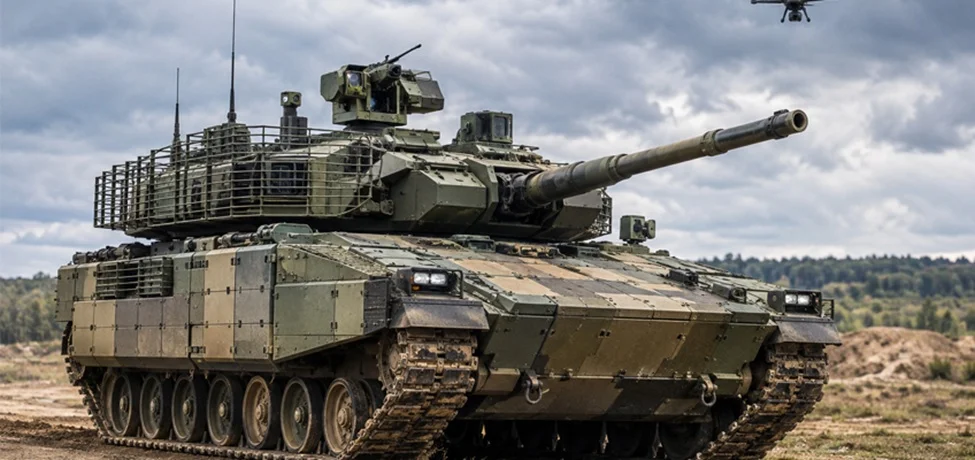
For decades, the armoured fighting vehicle was seen as a settled piece of military hardware: heavy steel, a big gun, tracks or wheels. That picture no longer holds. Cheap drones, loitering munitions and smarter anti-tank missiles have forced armies to rethink how these machines survive and what they should do.
This guide covers what an armoured fighting vehicle is, how the main types differ, which upgrades matter most, where the market is going and who builds these vehicles.
What is an armoured fighting vehicle?
An armoured fighting vehicle (AFV) is a military vehicle that combines armour protection, mobility and firepower. It is built to operate in combat zones where unprotected vehicles would not last long. The term covers main battle tanks, infantry fighting vehicles, armoured personnel carriers, reconnaissance vehicles and specialised variants such as mortar carriers, recovery vehicles and mobile gun systems.
The idea is simple: carry soldiers and weapons into contested ground without exposing them to every bullet, shell fragment and blast. The execution gets more complicated every year.
Types of armoured vehicles
The categories overlap, and plenty of vehicles blur the lines. Still, there are five main types of armoured vehicles that most defence analysts discuss.
Main battle tanks (MBTs). These are the heavyweights, designed for direct assault, with a large-calibre gun, thick composite armour and a crew of three or four. Examples include the Leopard 2, M1 Abrams, K2 Black Panther and Challenger 3. Tanks remain essential for breaking through defended positions, but they are expensive and need strong infantry and air-defence cover.
Infantry fighting vehicles (IFVs). An infantry fighting vehicle carries a squad of soldiers and fights alongside them. The key difference from a simple carrier is firepower: an IFV typically has an autocannon of 25 to 40 mm, often with anti-tank missiles, and firing ports or sensors that let troops engage from within the vehicle. The CV90, Bradley, Puma, Lynx, Boxer-based variants and the Redback are well-known examples. The infantry fighting vehicle has become the workhorse of modern mechanised forces.
Armoured personnel carriers (APCs). APCs prioritise moving troops safely rather than fighting. They usually carry lighter weapons, such as a machine gun or small cannon. Many are wheeled, which makes them faster on roads and cheaper to maintain. The Patria AMV, Stryker and many MRAP-style vehicles fall here.
Reconnaissance and light armoured vehicles. Built for speed and surveillance, these scout ahead, relay targeting data and screen larger formations. They trade heavy armour for sensors, agility and stealth.
Specialist variants. Armoured recovery vehicles, bridge-layers, engineer vehicles, self-propelled artillery and air-defence platforms all share chassis with combat vehicles. Common platforms keep logistics simpler and costs lower.
Tracked or wheeled?
This is one of the biggest design debates in the sector. Tracked vehicles handle rough terrain and carry heavier armour. Wheeled vehicles are cheaper to run, quicker over long distances and easier to deploy across regions. Many armies now operate both, using tracked platforms for heavy fighting and wheeled ones for rapid response.
Key upgrades reshaping modern armoured vehicles
Buying a new vehicle is only one path. Because AFVs last 30 to 50 years, armoured vehicle upgrades are often more practical than starting over. The broader process of armoured vehicle modernization generally focuses on a handful of areas.
1. Active protection systems (APS)
If one technology defines the current era, it is the active protection system. Traditional armour absorbs a hit. An APS tries to stop the hit from landing at all. Sensors such as radar or optical detectors spot an incoming anti-tank missile or rocket-propelled grenade, and the system fires a countermeasure to destroy or deflect it before impact.
Well-known examples include Trophy (Rafael and partners), Iron Fist (Elbit Systems), Meteor, and the Russian Arena and Afghanit systems. Several European and Asian developers have introduced their own versions. Because anti-tank threats keep multiplying, an APS has shifted from a luxury add-on to a standard requirement in many modern tenders.
The next challenge is counter-drone protection. Current systems were mostly designed for fast, direct-fire projectiles, not small drones attacking from above. Developers are now working on sensors, jammers and softkill or hardkill responses for that threat.
2. Better armour and top protection
Modular armour packages let crews add or replace protection depending on the mission. Roof and top-attack protection has become a priority after drones and top-attack munitions proved how vulnerable the upper surfaces of vehicles are. Anti-drone cages, slat armour and electronic jamming are now common sights on the front lines.
3. Digital architecture and situational awareness
Modern vehicles are increasingly networked. Updated electronics, 360-degree camera systems, battle management software and secure communications let crews share information in real time. Many armies are retrofitting older vehicles with open architecture so new software can be added without rebuilding the electronics from scratch.
4. Firepower and turrets
Upgrades include stabilised autocannons, programmable ammunition, remote weapon stations and unmanned turrets. Unmanned turrets are attractive because they free up space in the hull and keep the crew inside the protected citadel. Missile integration, such as Spike or similar systems, gives IFVs real anti-tank reach.
5. Powertrain and mobility
Heavier armour and electronics add weight. Upgraded engines, transmissions and suspensions keep vehicles mobile. Hybrid-electric drives are also being tested, mostly for silent watch capability and lower fuel demand.
6. Autonomy and crew assistance
Driver-assist features, remote operation and optionally manned concepts are still developing, but several programmes are already testing them. Expect more automation in the coming years, mainly to reduce crew workload and risk.
Armoured fighting vehicle market trends
The armoured fighting vehicle market has found renewed momentum. Several forces are at work.
Rising defence budgets. Many countries, especially in Europe and the Indo-Pacific, have raised defence spending. Armoured vehicles are one of the most visible beneficiaries, as armies replace ageing fleets and rebuild stockpiles.
Lessons from recent conflicts. The war in Ukraine showed that armour is far from obsolete, but it also showed how exposed vehicles are without proper protection, electronic warfare cover and infantry support. Procurement priorities have shifted accordingly toward survivability, drone defence and rapid repair.
Modernization over replacement. Budgets are not unlimited, so many forces choose to upgrade existing vehicles rather than buy new ones. That keeps the retrofit and upgrade segment strong.
The active protection system market is growing. The active protection system market is widely expected to grow as more countries make APS fitment standard. Both hardkill and softkill solutions are attracting investment.
Localisation and partnerships. Governments increasingly demand local production, technology transfer and joint ventures. International partnerships are common, with local industries building or assembling vehicles under licence.
Fewer, smarter, more connected vehicles. Rather than simply adding more tanks, forces are investing in networking, sensors and integrated systems that make each vehicle more effective.
Challenges remain: supply chain bottlenecks, long development timelines, high unit costs and the constant need to balance protection, weight and mobility.
Top armoured vehicle manufacturers
The list of armoured vehicle manufacturers includes both established giants and fast-growing regional players. Here are some of the most recognised names.
- General Dynamics Land Systems (USA): Maker of the Abrams tank and the Stryker family, and a major supplier to the US Army.
- BAE Systems (UK/Sweden/USA): Builds the CV90 through BAE Systems Hägglunds, the M2 Bradley upgrades and the AMPV.
- Rheinmetall (Germany): A leading force in tanks, IFVs and ammunition, with the Lynx and Puma programmes, and a partner on the Boxer.
- KNDS (Germany/France): Formed by Krauss-Maffei Wegmann and Nexter, it produces the Leopard 2, Leclerc and VBCI, along with many specialised vehicles.
- Hanwha Aerospace and Hyundai Rotem (South Korea): Fast-rising exporters, with the K9 howitzer, Redback IFV and the K2 tank gaining international orders.
- Patria (Finland): Known for the AMV and the multinational CAVS programme.
- Leonardo (Italy): Produces the Centauro and Lynx collaboration vehicles, plus turrets and systems.
- Elbit Systems and Rafael (Israel): Leaders in active protection, turrets and vehicle upgrades.
- Aselsan and Otokar (Türkiye): Expanding in turrets, vehicles and protection technology, with a growing export footprint.
- Oshkosh Defense and Textron (USA): Strong in tactical and light armoured vehicles.
India's domestic ecosystem is also worth watching, with state-owned and private companies working on tanks, light tanks and wheeled vehicles under indigenisation policies.
How to choose or evaluate an armoured vehicle
For procurement teams, analysts and anyone following the sector, these questions matter most:
1. What is the mission? A vehicle for peacekeeping differs from one for high-intensity war.
2. How survivable is it? Look at armour levels, mine protection, APS integration and top protection.
3. Can it be upgraded? Growth potential in power, weight and electronics is critical.
4. What are the lifecycle costs? Maintenance, spares and training often exceed the purchase price.
5. Can it be produced and supported locally? Supply security matters as much as performance.
Frequently asked questions
What is the difference between an infantry fighting vehicle and an armoured personnel carrier?
An APC mainly transports troops safely to the fight. An infantry fighting vehicle also fights, with a heavier cannon, missiles and sensors, supporting soldiers directly in combat.
What is an active protection system?
It is a defensive system that detects incoming anti-tank threats and neutralises them before they hit the vehicle, using radar or sensors and a countermeasure.
Are tanks still relevant?
Yes, but they rely on combined-arms support, drone defence and electronic warfare. Their role is evolving rather than disappearing.
Why do armies upgrade vehicles instead of buying new ones?
Upgrades cost less and are faster to deliver. Retrofits of protection, electronics and weapons can extend a vehicle's service life by decades.
Which companies lead the armoured vehicle industry?
General Dynamics, BAE Systems, Rheinmetall, KNDS, Hanwha, Hyundai Rotem, Patria, Leonardo, Elbit and Rafael are among the leading names.
The road ahead
The armoured fighting vehicle is not going away, but it is changing fast. The next generation will be more connected, better protected against drones and missiles, and increasingly upgraded through software rather than steel alone. For governments, the smartest path often combines selective new purchases with steady modernization. For suppliers, the winners will be those who can deliver protection, flexibility and reliable support at a reasonable cost.
Whether you follow defence policy, procurement or industry trends, the armoured vehicle sector will stay one of the most closely watched areas of modern military technology.
 Our Services
 Media Pack Download
 Newsletters
 Industrial Events