

Advanced Smart Life Support Systems Enhancing Safety and Performance for Pilots and Aircrews
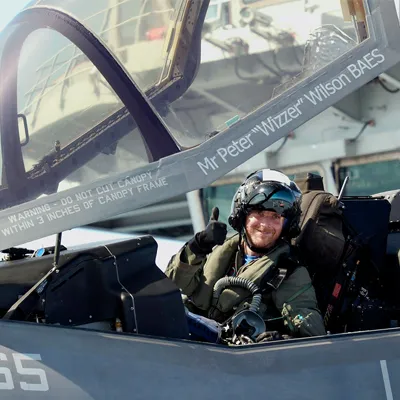
The military aviation is changing at an amazing rate, and one of the most serious questions that arises is how we will be able to safeguard the pilots and the aircrews in a world where speed, altitude, and danger levels are continually growing. With the increasing speed of airplanes and the growing workload in cockpits, the demand for Pilot Equipment that transcends traditional designs has never been greater. The current defence forces are looking towards Smart life support systems for the fighter pilots, and it is a combination of intelligent sensing, automation, and real-time physiological monitoring to redefine operational safety.
Against this shifting environment, the spotlight has been heavily drawn to create new Aircrew Protection and make missions effective with the use of interconnected, data-driven ecosystems. It does not just exist in hardware enhancement, but also in changing the way that Pilot life support systems predict and react to the needs of the body in extreme conditions.
The Shift toward Intelligent Aviation Safety Technologies
Contemporary military operations are characterized by multifacetedness, uncertainty, and decisions in a split second. The Aircrew life support equipment used in the past was designed to be stable, yet today the battlefield needs flexibility. This is where Advanced Aircrew Safety Systems would be introduced, with the modules tailored with the help of AI, intelligent fabrics, sophisticated oxygen control systems, and automatic emergency management.
Previously, the Military aviation safety systems primarily observed external conditions like the change of altitude or pressure. The future, however, lies in the systems, which will be able to read the environmental conditions and the physiological data at the same time. It may be the G-force tolerance, thermal stress, oxygen uptake, or the level of fatigue; upcoming Aerospace life support systems are designed to maintain the pilot stable, alert, and safe during all parts of a mission.
Massive investments in Next-Gen Pilot Support Technology are driving this change worldwide, with countries investing in the mass of operations and the ability to survive in disputed airspace.
Why Smart Life Support Systems Are Becoming Essential
Any fighter pilot is exposed to the danger of hypoxia, spatial disorientation, G-induced Loss of Consciousness (G-LOC), thermal load, and high-altitude stress. These threats are compounded by the fact that aircraft are becoming the fifth and sixth generations. The rational development of the same is thus to the more intelligent Advanced life support technologies to the military aircrews, which integrates cognitive assistance and biometric feedback mechanisms.
The peculiarity of modern Pilot Equipment is that it is now not a passive one. It instead becomes a dynamic part of the mission, continuously processing real-time data and adapting to have the pilot functioning at maximum effectiveness. Equally, Aircrew Protection innovations make sure that the margin between survival and collapse is increased due to advanced engineering.
Smart life support systems are fast taking their place in military aviation, which affords fighter pilots communication with aircraft avionics and allows the platform and human physiology to work in perfect harmony. It forms a closed ecosystem where safety and performance strengthen each other.
Integrating AI and Wearable Technology into Aircrew Safety
Blistering integration of AI-based health monitoring has changed the patterns of operation of Pilot life support systems on operational altitudes. These systems have sensors in flight suits and helmets that measure oxygen saturation, heart rate variability, respiration, and even cognitive load. Anomalies are automatically corrected by the Advanced Aircrew Safety System to change the airflow, adjust pressure suits, or provide alerts to the aircraft systems and the pilot.
This degree of decision-making assistance is vital, especially with increased mission automation and pilots being tasked with supervisory functions. The predictive analytics are also provided through AI integration so that instead of letting life-threatening incidents impact the safety of the Military aviation, the systems are capable of detecting the event and putting out the fire.
Having AI-assisted adaptive control loops, modern Aerospace life support systems can control oxygen delivery with higher accuracy, minimizing the exposure to hypoxia, which in the past continued to pose a significant challenge to pilots when they engaged in high-intensity fights.
Market Overview: A Growing Global Emphasis on Aircrew Safety
To appreciate the magnitude of change within the aviation defence industry, it will be convenient to consider the trends of growth that have led to the introduction of Next-Gen Pilot Support Technology. The following table is an example of the changing investment priorities within the world's air forces.
Market Trends in Smart Life Support Technologies
| Region / Segment | Focus Area | Investment Growth (2024–2030) | Key Drivers |
| North America | Advanced life support technologies for military aircrews | High | Sixth-gen aircraft programs, improved pilot survivability |
| Europe | Aircrew life support equipment | Moderate–High | NATO modernization, integrated oxygen systems |
| Asia-Pacific | Smart life support systems for fighter pilots | Very High | Expanding air defence capabilities, indigenous fighter programs |
| Middle East | Pilot Equipment | High | Harsh climate challenges, mission endurance needs |
| Global Market | Aerospace life support systems | Rapid Growth | AI integration, data-driven safety advancements |
As indicated in the table, there has been a swift global pace of interest in more connected, intelligent, and robust Advanced Aircrew Safety Systems. It is a universally accepted fact in defence ecosystems that improved pilot cognition, resilience, and physiological resilience are the only ways in which modern air combat can be sustained.
The Next Generation of Pressure Suits and Oxygen Systems
The redesigned pressure suits that have adaptive inflation technology are one of the largest advancements in Aircrew Protection. The suits react to G-load changes dynamically and with accuracy in timing, which was not possible in older systems. The suits are enhanced with digital controllers, and they serve as an extension of the body of the pilot, which is core in Next-Gen Pilot Support Technology.
There have also been dramatic improvements in oxygen management. In the past, the problems with onboard oxygen generation systems were contamination and instability in the flow. Contemporary Pilot life support systems incorporate fault-tolerant filtration, filtered oxygen supply systems, and intelligent regulators monitoring the shifts of altitude and breathing of the pilot in real time.
The development is a milestone in the history of aviation safety systems in the Military, where automation and physiological sensing are becoming a valid operational requirement.
Cockpit-Centric Integration and the Rise of Intelligent Helmets
One of the most densely laden information-dense setups in the history of the world is the modern fighter aircraft cockpit. This is why Smart life support systems of fighter pilots should be prepared to operate in the future with avionics and tactical displays to prevent bombarding the pilot.
The future smart helmets will have thermal control, inbuilt oxygen sensors, and intelligent visors. They also integrate several layers of Pilot Equipment into unified ergonomic designs that enhance situational awareness, besides enhancing comfort.
The ensuing case is the emergence of intelligent helmets as the basic building blocks of the advanced life support technologies to be used in the military aircrews, which will help maintain the mental and physical stability of pilots in the presence of cognitive fatigue.
It is also through this integration that the workload on pilots is reduced, which makes the Aerospace life support systems simpler and mission-oriented.
Thermal Management: The Invisible Challenge
The phenomenon of thermal stress is not as frequently discussed as G-forces or hypoxia, but it has a great influence on long-term missions. Dehydration and fatigue may be caused within a very short period of time because of high cockpit temperatures and heavy equipment, and poor air circulation.
The future directions in Aircrew life support are active cooling vests, temperature-sensitive smart fabrics, and a liquid-cooling circuit breakthrough. Such improvements are the key feature of progressive Advanced Aircrew Safety Systems, where temperature regulation is an adaptive and automated procedure.
Thermal stability is essential not only to allow comfort but also to be good cognitively. Mission is an activity that is increasingly longer in duration, and thus a key concern to all Military aviation safety systems is optimal body temperature maintenance.
The Human-Machine Interface: A New Era of Aircrew-Centric Design
The adoption of a human-machine interface philosophy that looks at maximizing performance without jeopardizing physiological safety is progressively being adopted by modern combat aircraft designers. In that regard, Pilot Equipment is included in the aircraft ecosystem instead of additional equipment.
Instantaneous data interchange between pilot and platform reestablishes the frontiers of Aircrew Protection. The Next-Gen Pilot Support Technology ensures that the pilot is the strongest link in the chain of missions- not the weakest through adaptive automation.
The possibility of advanced life support technologies to train the military aircrew using the information about the mission and the parameters of performance optimization is an excellent example of a strong tendency: biotechnology and aerospace engineering are combined. This is the basis of modern Aerospace life support systems, in which digital intelligence increases human capability.
Looking Ahead: The Future of Pilot and Aircrew Safety
In the next decade, a revolutionary change will be the transformation of hyper-connected Smart life support systems of fighter pilots to be autonomous in decision-making, read danger, and save the pilot even before it dawns on him or her that they are in danger. These ecologies will be based on improved biometrics, neural interfaces, machine learning, and predictive modelling.
Air forces all over the world are becoming familiar with the fact that survivability is not merely a question of armour or aircraft manoeuvrability. It concerns the collaboration of the physiology of the pilot and the intelligence of the aircraft. Therefore, funding for Advanced Aircrew Safety Systems and futuristic Pilot Equipment will continue to accelerate.
The overall goal will always be the same, that is, the need to protect the operational efficiency and minimize the risks that high-performance military flying carries with it. With the increasing emphasis of governments and even aerospace manufacturers on the emerging technologies, Pilot life support systems, Aircrew life support equipment, and Military aviation safety systems will continue to develop into smooth, reacting, and highly intelligent monitors of the contemporary cockpit.
Conclusion
Our future in air combat is determined by the degree to which we protect the human who is at the center of all missions. The future of pilot safety is already being developed with radical changes in advanced life support equipment to aid military aircrews. Intelligent helmets, adaptive suits, improved physiological, artificial intelligence-controlled oxygen, and embedded cockpit ecosystems are making Aerospace life support systems digital life partners of pilots.
The future travel will bring even greater sophisticated Smart life support systems to fighter pilots that would redefine the limits of human strength, stamina, and performance. The outcome is a new generation of Pilot Equipment, Aircrew Protection, and mission-ready innovation that makes pilots and aircrews safer, sharper, and more capable than ever before.
 Our Services
 Media Pack Download
 Newsletters
 Industrial Events